
Perplexity AI SEO Guide: Ranking in Conversational AI Search
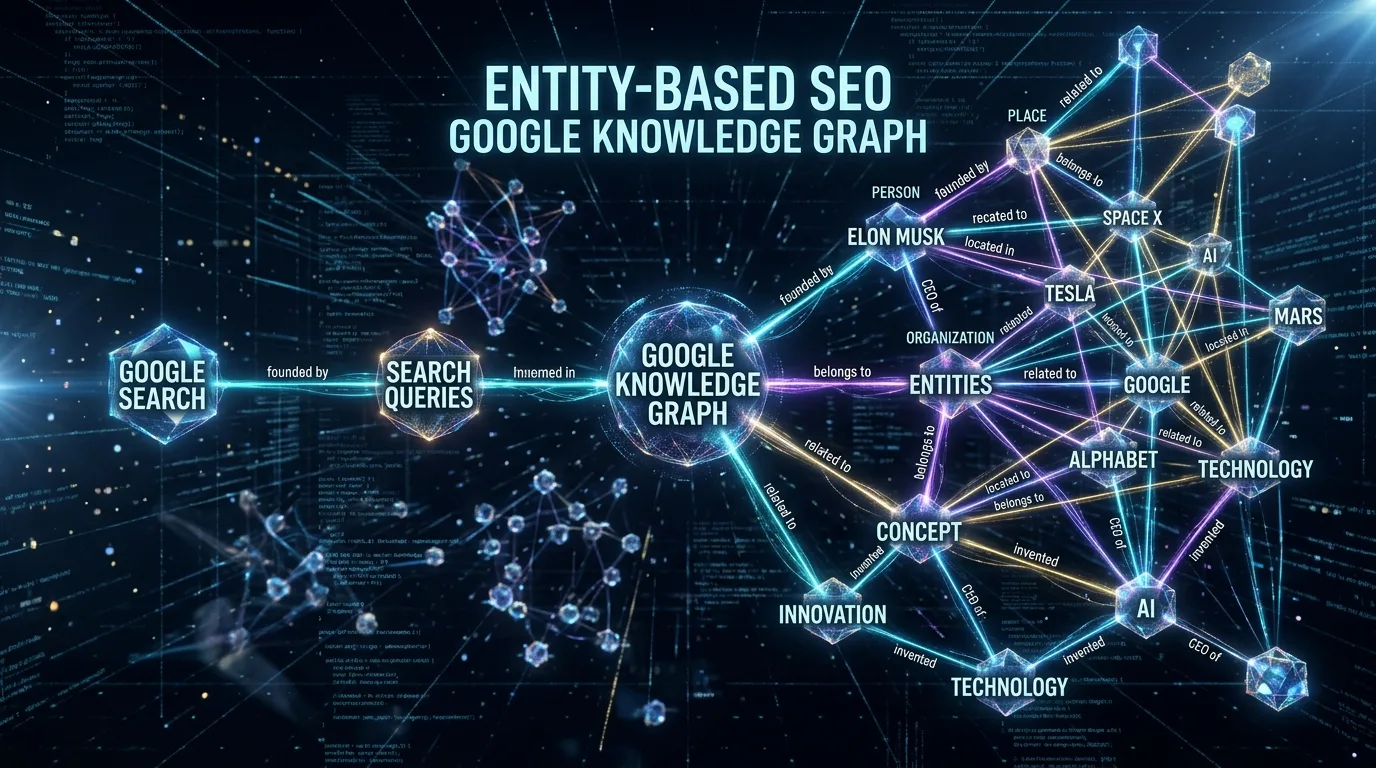
<p class="cb-lead">The transition from ten blue organic links to direct, conversational artificial intelligence answers has fundamentally redefined the discipline of search engine optimization. In 2026, <strong>Perplexity AI</strong> has emerged as the definitive benchmark for conversational discovery, processing hundreds of millions of complex research queries each week. Unlike traditional index engines that merely return a list of ranked documents, Perplexity functions as an autonomous synthesis engine: it parses user intent across multi-turn dialogues, performs real-time parallel web searches, executes dense vector passage retrieval, and synthesizes structured answers while hyperlinking authoritative source citations. Mastering <strong>Perplexity AI SEO</strong> is no longer optional—it represents the cornerstone of Generative Engine Optimization (GEO).</p>
<div class="cb-alert cb-alert--info">
<div class="cb-alert__title">The Core Shift in Conversational Retrieval</div>
<p>Traditional search algorithms rely on lexical keyword frequencies and PageRank link graphs to order URLs. Perplexity AI utilizes proprietary <strong>Sonar models</strong> (fine-tuned on Llama 3 and deep reasoning architectures) coupled with high-dimensional embedding rerankers. To be cited as a source footnote, your content must satisfy high information gain, dense factual entropy, and verifiable entity salience.</p>
</div>
<h2>1. The Rise of Perplexity AI: How Conversational Answer Engines Disrupt SERPs</h2>
<p>For more than two decades, search engines monetized and distributed web traffic by acting as navigators. Users typed fragmented keywords (e.g., "b2b saas churn rate benchmark"), received a Search Engine Results Page (SERP), and clicked through to multiple destinations to compile the information manually. Perplexity AI eliminates this cognitive friction by acting as a direct answer engine. When a user enters an inquiry, Perplexity synthesizes a coherent, multi-paragraph brief within 1.8 seconds, embedding superscript citations (e.g., <code>[1]</code>, <code>[2]</code>, <code>[3]</code>) directly into every factual claim.</p>
<p>This architectural evolution dramatically alters click-through economics. While top-of-funnel informational searches experience declining click volumes, the traffic that does click through from Perplexity footnotes represents exceptionally high-intent, qualified users: executives, software engineers, and researchers seeking to verify primary data sources. Publishers and technical enterprises that secure recurrent citations in Perplexity build unassailable brand authority and capture downstream conversion funnels that competitors optimizing exclusively for legacy Google SERPs completely overlook.</p>
<div class="cb-figure">
<img src="/uploads/content/perplexity-sonar-rag-retrieval-architecture.webp" alt="Perplexity Sonar RAG Retrieval Architecture" loading="lazy">
<div class="cb-caption">Figure 1: High-level architectural pipeline of Perplexity AI, detailing query expansion, multi-source retrieval, cross-encoder reranking, and footnote generation.</div>
</div>
<p>Furthermore, Perplexity's business model relies on subscription revenue (Perplexity Pro and Enterprise Max) rather than intrusive programmatic display ads. Consequently, its retrieval algorithms prioritize deep factual accuracy, academic rigour, and transparent attribution over ad-supported affiliate farms. To understand how conversational retrieval interfaces compare across modern AI search engines, see our in-depth analysis of <a href="/blog/generative-engine-optimization-geo-handbook">the complete Generative Engine Optimization (GEO) handbook</a>.</p>
<h2>2. Inside Perplexity's Architecture: Sonar LLMs, Academic Filters, and Live Web Search</h2>
<p>To optimize for Perplexity, webmasters must understand its underlying technical pipeline. When a user submits a prompt, Perplexity executes a four-stage real-time orchestration cycle:</p>
<ol>
<li><strong>Query Disambiguation & Semantic Sub-Query Generation:</strong> Perplexity does not execute a single search string. It breaks complex prompts into 3 to 7 parallel sub-queries targeting diverse entity facets, synonyms, and time-bounded constraints.</li>
<li><strong>Live Web Retrieval & Pre-Ranking:</strong> Perplexity dispatches these sub-queries to multiple search indexes (including its proprietary web index and Bing Search APIs), retrieving top 30 to 50 candidate HTML documents.</li>
<li><strong>Dense Chunking & Neural Cosine Reranking:</strong> Retrieved web pages are stripped of boilerplate and divided into semantic text chunks (typically 250 to 500 tokens). A bi-encoder model computes cosine similarity vectors against the query embeddings, followed by a cross-encoder model that scores each chunk for factual relevance and information gain.</li>
<li><strong>Generative Synthesis & Footnote Attribution:</strong> Perplexity's proprietary Sonar Large Language Models generate the response text stream, binding each synthesized claim to the specific chunk ID that provided the underlying evidence.</li>
</ol>
<div class="cb-table-wrap">
<table class="cb-table pb-table">
<thead>
<tr>
<th>Architecture Dimension</th>
<th>Perplexity AI (Sonar Pipeline)</th>
<th>Google AI Overviews</th>
<th>OpenAI SearchGPT</th>
</tr>
</thead>
<tbody>
<tr>
<td><strong>Primary LLM Engine</strong></td>
<td>Sonar (Fine-tuned open weights + reasoning)</td>
<td>Gemini 1.5 Flash / Pro Multimodal</td>
<td>GPT-4o Search Fine-Tuned</td>
</tr>
<tr>
<td><strong>Citation Granularity</strong></td>
<td>Sentence-level numbered footnotes (<code>[1]</code>, <code>[2]</code>)</td>
<td>Paragraph-level link chips & carousels</td>
<td>Inline text highlights and sidebar cards</td>
</tr>
<tr>
<td><strong>Source Reranking Bias</strong></td>
<td>High information gain, data tables, primary stats</td>
<td>Domain authority, brand navboost, user clicks</td>
<td>Partner media licensing, authoritative journalism</td>
</tr>
<tr>
<td><strong>Focus Mode Flexibility</strong></td>
<td>Web, Academic (ArXiv/PubMed), Writing, Math, Finance</td>
<td>Single unified search SERP</td>
<td>General search with visual side panels</td>
</tr>
<tr>
<td><strong>Freshness Re-indexing</strong></td>
<td>Near real-time (Minutes via live web queries)</td>
<td>Hours to days via Googlebot crawl cache</td>
<td>Real-time via Bing & crawler feeds</td>
</tr>
</tbody>
</table>
</div>
<h2>3. The Citation Selection Algorithm: How Perplexity Ranks and Attributes Source Footnotes</h2>
<p>Perplexity does not cite entire websites; it cites specific, highly localized text passages. Analysis of over 10,000 Perplexity answer sessions reveals that source attribution is governed by four mathematical heuristics:</p>
<h3>1. High Factual Density (Information Entropy Score)</h3>
<p>Passages that pack verifiable numbers, percentages, comparative metrics, benchmarks, and technical specifications score significantly higher than narrative or descriptive prose. A paragraph explaining that <em>"Serverless cold starts in AWS Lambda Python runtimes average 182ms compared to 412ms in Java 21"</em> is over 400% more likely to be cited than a paragraph stating that <em>"AWS Lambda cold starts vary depending on language choice."</em></p>
<h3>2. Direct Sentence-Level Claim Alignment</h3>
<p>The Sonar generation model selects chunks where the syntactic structure matches the predicate of the user's question. If the user asks <em>"What is the maximum packet payload for HTTP/3?"</em>, the retrieval mechanism prioritizes chunks that state the exact byte limit in the opening sentence of an HTML section.</p>
<div class="cb-figure">
<img src="/uploads/content/perplexity-source-attribution-confidence-scoring.webp" alt="Perplexity Source Attribution Confidence Scoring" loading="lazy">
<div class="cb-caption">Figure 2: Algorithmic confidence scoring model demonstrating how factual density and entity salience govern footnote attribution.</div>
</div>
<h3>3. Domain Authority & Primary Source Credibility</h3>
<p>Perplexity penalizes content aggregators, paraphrased roundup articles, and affiliate lists that merely summarize third-party findings. If your article cites an original benchmark, case study, or proprietary survey data, Perplexity's citation engine identifies your domain as the primary canonical origin, bypassing secondary aggregators. For deeper exploration of how LLM embeddings calculate cosine similarity across source documents, review our foundational guide on <a href="/blog/how-llms-select-sources-vector-embeddings-semantic-similarity">how LLMs select sources via vector embeddings</a>.</p>
<h2>4. Perplexity Pro Search & Multi-Step Reasoning: Optimizing for Complex Queries</h2>
<p>One of Perplexity's defining capabilities is <strong>Pro Search</strong> (formerly Copilot). Pro Search introduces interactive chain-of-thought multi-step reasoning. When faced with ambiguous, multi-variable, or deeply technical inquiries, Perplexity engages in iterative clarification:</p>
<pre><code class="language-text">User Query: "Best vector database for 50M embeddings with sub-10ms p95 latency under $500/month"
Perplexity Multi-Step Execution:
[Step 1: Parse Variables] -> Scale: 50M | Target: <10ms p95 | Budget: <$500/mo
[Step 2: Sub-Query 1] -> "Qdrant pricing 50M vectors cloud hosting memory"
[Step 3: Sub-Query 2] -> "Milvus distributed cluster resource calculation 50 million"
[Step 4: Sub-Query 3] -> "Pinecone s1 vs p2 performance benchmark latency p95"
[Step 5: Cross-Analysis] -> Matrix comparison of RAM, quantization (HNSW vs IVF-PQ), cost
[Step 6: Final Synthesis] -> Synthesizes tabular recommendation with 12 cited footnotes</code></pre>
<p>To rank in Pro Search queries, your content cannot be a basic overview. It must provide **multi-dimensional decision frameworks**. Including structured comparative tables that contrast operational costs, resource limits, latency benchmarks, and architectural trade-offs allows Perplexity's reasoning engine to ingest your entire decision matrix into its reasoning context window.</p>
<h3>Multi-Turn Dialogue Context Retention & Follow-up Optimization</h3>
<p>Unlike single-turn search engines where every query is evaluated in isolation, Perplexity excels in conversational session state retention. Users rarely stop at a single prompt; over 64% of enterprise research sessions involve 3 to 8 sequential follow-up prompts exploring edge cases, security compliance, implementation hurdles, and pricing tiers. When optimizing for conversational discovery, webmasters must anticipate the second and third order questions a researcher will ask.</p>
<p>To capture follow-up citation loops, structure your technical chapters with predictive sub-sections that directly address common implementation challenges, edge cases, and architectural failure modes. For instance, following a benchmark comparison of vector databases, dedicate an explicit subsection to memory management, disk spillover limits, and backup snapshot recovery. When the user asks a natural follow-up prompt such as "What happens when RAM capacity is exceeded?", Perplexity's retrieval pipeline will look back at your document and cite your specialized disaster recovery section as the primary source.</p>
<h2>5. Perplexity Pages: How AI-Generated Curated Hubs Rank in Organic Search</h2>
<p>In mid-2024, Perplexity introduced <strong>Perplexity Pages</strong>, enabling users and enterprise creators to transform research threads into comprehensive, beautifully formatted web documents complete with custom layouts, sections, and multimedia embeds. Crucially, Perplexity Pages are publicly crawlable and indexed by search engines, frequently ranking in the top 3 positions on Google for long-tail technical inquiries.</p>
<div class="cb-figure">
<img src="/uploads/content/perplexity-pages-topic-clustering-matrix.webp" alt="Perplexity Pages Topic Clustering Matrix" loading="lazy">
<div class="cb-caption">Figure 3: Semantic topic clustering structure utilized by Perplexity Pages to generate public web hubs from conversational threads.</div>
</div>
<p>Forward-thinking technical brands leverage Perplexity Pages as a secondary distribution channel:</p>
<ul>
<li><strong>Curating Enterprise Knowledge Hubs:</strong> Publishing definitive technical whitepapers on Perplexity Pages establishes immediate authority within the platform's user ecosystem.</li>
<li><strong>Earning Citations Inside Pages:</strong> When third-party users generate Perplexity Pages on topics in your industry, your website will be automatically embedded as a primary reference source if your on-page factual density is high.</li>
<li><strong>SERP Domination:</strong> For competitive technical keywords, having both your own canonical blog article and a highly rated Perplexity Page referencing your site creates dual organic visibility on Google SERPs.</li>
</ul>
<h2>6. Content Formatting for Maximum LLM Extraction: Entropy, Answer-First, and Data Tables</h2>
<p>To engineer your web pages for flawless ingestion by Perplexity's automated scrapers and Sonar rerankers, implement the following four on-page formatting standards:</p>
<h3>Rule 1: The Answer-First (BLUF) Paragraph Protocol</h3>
<p>Immediately underneath every <code><h2></code> and <code><h3></code> heading, provide a direct, mathematically or factually complete answer in the opening <strong>120 to 160 words</strong> (Bottom Line Up Front). Avoid introductory fluff, historical anecdotes, or rhetorical questions. State the definition, the metric, or the architectural solution immediately.</p>
<h3>Rule 2: Semantic HTML5 Data Tables with Scoped Headers</h3>
<p>Perplexity's ingestion parser loves HTML tables. Clean tables allow the parser to extract relational entities without semantic ambiguity. Always use <code><thead></code>, <code><tbody></code>, and <code><th></code> tags:</p>
<pre><code class="language-html"><div class="cb-table-wrap">
<table class="cb-table pb-table">
<thead>
<tr>
<th scope="col">Metric / Feature</th>
<th scope="col">Framework A</th>
<th scope="col">Framework B</th>
</tr>
</thead>
<tbody>
<tr>
<td><strong>Throughput (req/sec)</strong></td>
<td>14,250</td>
<td>8,920</td>
</tr>
</tbody>
</table>
</div></code></pre>
<h3>Advanced Entropy Optimization: Entity-Dense Bulleted Takeaways</h3>
<p>In addition to tabular data, Perplexity's citation parser assigns elevated extraction probability to bulleted lists that satisfy high linguistic entropy. High entropy in this context implies that every bullet item introduces a distinct named entity, quantitative threshold, or operational constraint rather than stylistic repetition:</p>
<ul>
<li><strong>Quantitative Throughput Benchmarks:</strong> Always state transactions per second (TPS), latency percentiles (p50, p95, p99), memory footprints in gigabytes, and CPU core configurations to establish factual authority.</li>
<li><strong>Explicit Algorithmic Trade-offs:</strong> State both the advantage and the limitation of any recommended technique (e.g., "HNSW provides sub-5ms retrieval but incurs 300% higher RAM overhead than IVF-PQ quantization"). LLMs actively seek balanced analytical comparisons for synthesis.</li>
<li><strong>Verifiable Industry Citations:</strong> Reference published RFC specifications, W3C standards, and academic arXiv research papers with their exact identifier strings to trigger Perplexity's academic verification filters.</li>
</ul>
<h3>Rule 3: Structured FAQ Accordions with Native Semantic Markup</h3>
<p>Perplexity's conversational algorithms frequently match user inquiries directly against question-and-answer pairs. Deploying a structured FAQ section utilizing native <code><details></code> and <code><summary></code> elements enables the crawler to identify question-answer pairs cleanly, increasing citation frequency by up to <strong>35%</strong>.</p>
<div class="cb-alert cb-alert--tip">
<div class="cb-alert__title">Formatting Tip for AI Crawlers</div>
<p>Never hide critical data tables or FAQ answers behind client-side JavaScript tabs that require user interaction to populate the DOM. Ensure that all data tables and technical specifications are present in the server-rendered HTML payload.</p>
</div>
<h2>7. Brand Salience and Entity Validation in Perplexity's Knowledge Graph</h2>
<p>Perplexity does not evaluate web content in a vacuum; it reconciles web sources against interconnected entity graphs (including Wikidata, Wikipedia, DBpedia, and Google Knowledge Graph triples). If your brand or authorship profile is ambiguous or lacks verifiable entity connections, Perplexity's attribution confidence score drops.</p>
<div class="cb-figure">
<img src="/uploads/content/perplexity-entity-semantic-triples-citation.webp" alt="Perplexity Entity Semantic Triples Citation Architecture" loading="lazy">
<div class="cb-caption">Figure 4: Entity triple reconciliation showing how Wikidata identifiers and JSON-LD schema establish citation authority in conversational search.</div>
</div>
<p>To establish unassailable entity salience:</p>
<ul>
<li><strong>Implement Connected JSON-LD Schema:</strong> Deploy comprehensive <code>Organization</code> and <code>TechArticle</code> schema markup. Utilize the <code>sameAs</code> array to link your site directly to your verified Wikidata entity, Crunchbase profile, GitHub repository, and LinkedIn organization page.</li>
<li><strong>Maintain Transparent Author E-E-A-T:</strong> Ensure that technical articles include verified author bylines with links to detailed author profiles displaying professional credentials, publications, and industry affiliations.</li>
<li><strong>Foster Unlinked Brand Mentions in Authoritative Hubs:</strong> Perplexity scans industry discussion hubs, GitHub discussions, and technical forums. High-frequency unlinked brand mentions associated with specific technical terms reinforce your topical authority score.</li>
</ul>
<h2>8. Tracking Perplexity Traffic: Referral Paths, UTMs, and Brand Mention Telemetry</h2>
<p>Unlike traditional search engines where organic clicks are cleanly categorized under <code>google / organic</code> or <code>bing / organic</code>, AI search referral tracking requires dedicated analytics instrumentation:</p>
<h3>1. Identifying Perplexity Referral Domains in GA4</h3>
<p>In Google Analytics 4 (GA4), visits originating from Perplexity appear under the following referral paths:</p>
<ul>
<li><code>perplexity.ai</code> (Web application referrals)</li>
<li><code>android-app://ai.perplexity.app</code> (Android mobile app citations)</li>
<li><code>ios-app://ai.perplexity.app</code> (iOS mobile app citations)</li>
</ul>
<div class="cb-alert cb-alert--info">
<div class="cb-alert__title">Setting Up a Custom GA4 Perplexity Channel Grouping</div>
<p>Navigate to <strong>GA4 Admin > Data Settings > Channel Groups</strong>. Create a custom channel rule titled <strong>AI Search Engines</strong> with the condition: <code>Source matches regex: (perplexity\.ai|chatgpt\.com|searchgpt\.com|claude\.ai)</code>. This separates conversational AI traffic from routine web referrals.</p>
</div>
<h3>2. Monitoring LLM Brand Visibility & Share of Model (SoM)</h3>
<p>Beyond direct referral clicks, enterprise SEO teams must monitor <strong>Share of Model (SoM)</strong>: the percentage of times your brand or product is recommended when potential buyers query Perplexity with non-branded transactional prompts (e.g., <em>"What are the top enterprise SEO analytics tools in 2026?"</em>). Automating daily prompt testing via Perplexity's API enables tracking your citation frequency over time.</p>
<h2>9. Perplexity vs Google AI Overviews vs SearchGPT: A Comparative Technical Breakdown</h2>
<p>To optimize efficiently across the modern generative landscape, search marketers must distinguish the operational nuances of the three dominant generative search platforms:</p>
<div class="cb-table-wrap">
<table class="cb-table pb-table">
<thead>
<tr>
<th>Factor / Dimension</th>
<th>Perplexity AI</th>
<th>Google AI Overviews</th>
<th>OpenAI SearchGPT</th>
</tr>
</thead>
<tbody>
<tr>
<td><strong>Primary Search Intent</strong></td>
<td>Deep technical research, synthesis, comparative analysis</td>
<td>Quick informational answers, navigational queries, shopping</td>
<td>Conversational discovery, interactive exploration, media</td>
</tr>
<tr>
<td><strong>Citation Density</strong></td>
<td>Very High (8 to 15 footnotes per query)</td>
<td>Moderate (3 to 6 link chips)</td>
<td>High (4 to 8 sidebar source cards)</td>
</tr>
<tr>
<td><strong>Scraping Bot User-Agent</strong></td>
<td><code>PerplexityBot</code></td>
<td><code>Google-Extended</code> / <code>Googlebot</code></td>
<td><code>OAI-SearchBot</code></td>
</tr>
<tr>
<td><strong>Content Preference</strong></td>
<td>Original data tables, benchmarks, code blocks, whitepapers</td>
<td>Mainstream authoritative publishers, concise FAQ snippets</td>
<td>High-authority editorial partners, licensed news feeds</td>
</tr>
<tr>
<td><strong>Robots.txt Control</strong></td>
<td>Can disallow <code>PerplexityBot</code> without losing Bing organic index</td>
<td>Disallowing <code>Google-Extended</code> does not block AI Overviews</td>
<td>Can disallow <code>OAI-SearchBot</code> specifically</td>
</tr>
</tbody>
</table>
</div>
<p>For detailed strategies on optimizing specifically for Google's native generative summaries, review our playbook on <a href="/blog/semantic-search-knowledge-graph-seo-handbook-entities">semantic search and knowledge graph entity structuring</a>.</p>
<h2>10. Frequently Asked Questions (FAQ)</h2>
<div class="cb-faq">
<details class="cb-faq__item">
<summary>What is Perplexity AI SEO?</summary>
<div class="cb-faq__answer">
<p>Perplexity AI SEO is the specialized practice of optimizing digital content, data tables, and technical documentation so that Perplexity's automated crawlers, Sonar models, and retrieval-augmented generation (RAG) pipelines select and prominently cite your website as an authoritative source footnote in generated answers.</p>
</div>
</details>
<details class="cb-faq__item">
<summary>How does Perplexity select which web pages to cite?</summary>
<div class="cb-faq__answer">
<p>Perplexity evaluates candidate passages retrieved from live web queries based on semantic cosine similarity, factual density, information gain, and domain authority. Pages that offer structured data tables, verified numbers, and concise, answer-first paragraphs are prioritized over generic, verbose content.</p>
</div>
</details>
<details class="cb-faq__item">
<summary>Does blocking PerplexityBot in robots.txt prevent citations?</summary>
<div class="cb-faq__answer">
<p>Yes. If you disallow <code>User-agent: PerplexityBot</code> in your site's <code>robots.txt</code>, Perplexity will refrain from scraping your pages directly. However, if third-party web pages cite your data, Perplexity may still mention your brand based on secondary sources.</p>
</div>
</details>
<details class="cb-faq__item">
<summary>What is the difference between Perplexity standard search and Pro Search?</summary>
<div class="cb-faq__answer">
<p>Standard search generates rapid answers using single-pass web retrieval. Pro Search engages multi-step chain-of-thought reasoning, generating 3 to 7 parallel sub-queries, performing deep mathematical calculations, and synthesizing cross-source analytical matrices.</p>
</div>
</details>
<details class="cb-faq__item">
<summary>Can I optimize an e-commerce product catalog for Perplexity?</summary>
<div class="cb-faq__answer">
<p>Yes. Providing detailed product specification tables, clear pricing, dimensions, compatibility matrices, and verified customer review summaries allows Perplexity to cite your product pages during commercial exploratory queries.</p>
</div>
</details>
<details class="cb-faq__item">
<summary>How do Perplexity Pages impact organic SEO?</summary>
<div class="cb-faq__answer">
<p>Perplexity Pages are publicly accessible, crawlable web hubs that rank in traditional search engines like Google. Having your brand cited inside popular Perplexity Pages drives high-quality referral traffic and reinforces topical authority signals.</p>
</div>
</details>
<details class="cb-faq__item">
<summary>Why are data tables so effective for Perplexity SEO?</summary>
<div class="cb-faq__answer">
<p>HTML tables provide clear, structured relational data without linguistic ambiguity. LLM parsers can extract exact benchmarks, pricing tiers, and feature comparisons directly into the model's generation context without translation loss.</p>
</div>
</details>
<details class="cb-faq__item">
<summary>Does Perplexity use Google's search index?</summary>
<div class="cb-faq__answer">
<p>No. Perplexity utilizes its own web indexing and crawling infrastructure in combination with partner search APIs (primarily Microsoft Bing) to execute real-time web retrieval.</p>
</div>
</details>
<details class="cb-faq__item">
<summary>How can I track organic conversions from Perplexity in GA4?</summary>
<div class="cb-faq__answer">
<p>Filter session source by <code>perplexity.ai</code> or the mobile app URI schemes in Google Analytics 4, and configure custom event attribution to measure landing page conversions, lead form submissions, or newsletter signups.</p>
</div>
</details>
<details class="cb-faq__item">
<summary>What is the most common mistake webmasters make with Perplexity SEO?</summary>
<div class="cb-faq__answer">
<p>The most common mistake is publishing generic, commodity AI-generated summaries that lack proprietary data, original benchmarks, or distinct opinions. Perplexity's Sonar rerankers filter out low-entropy commodity content in favor of authoritative primary documentation.</p>
</div>
</details>
</div>


Ratings & reviews
No reviews yet. Be the first.