
Unlinked Brand Mention Reclamation: Step-by-Step Blueprint to Turn Text Mentions into High-Authority Links

<p class="cb-lead">In the hyper-competitive landscape of modern link acquisition, unlinked brand mention reclamation stands apart as the single highest-converting, most scalable white-hat tactic available to digital PR professionals and SEO directors. When an authoritative publication, Tier-1 media outlet, or niche industry blog mentions your company, founder, proprietary software, or research data in plain text without a clickable hyperlink, they have already validated your brand entity. The psychological friction of cold outreach is eliminated; the author already knows you, respects your work, and deemed you worthy of inclusion in their editorial copy. In this definitive blueprint, we unpack the complete end-to-end framework for finding, vetting, prioritizing, and converting unlinked brand mentions into high-equity, dofollow backlinks that fuel organic search rankings and enterprise domain authority.</p>
<div class="cb-alert cb-alert--info">
<div class="cb-alert__icon">
</div>
<div class="cb-alert__content">
<div class="cb-alert__title">The Conversion Disparity: Cold Pitching vs Brand Reclamation</div>
<div class="cb-alert__desc">Standard cold email outreach campaigns for guest blogging or generic link insertions average conversion rates between 1% and 3.5%, frequently burning out team morale and exhausting domain reputation. In contrast, well-executed unlinked brand mention reclamation campaigns routinely achieve conversion rates of 28% to 45%, converting editorial praise into high-PageRank link equity with minimal outreach friction.</div>
</div>
</div>
<h2>1. Deconstructing Unlinked Mentions: Entity Authority vs Link Equity</h2>
<p>To fully grasp the strategic urgency of mention reclamation, one must understand how search engines process textual brand references versus explicit HTML hyperlinks. In Google's semantic search architecture, an unlinked textual mention—often referred to in academic literature and patent filings as an "implied link" or "co-occurrence triple"—contributes to your brand's Knowledge Graph entity confidence. When trusted news outlets frequently associate your brand name with specific industry topical concepts, search models learn that your company is a recognized authority within that semantic domain.</p>
<p>However, entity recognition alone does not transfer PageRank. While Google's Knowledge Vault recognizes that your business exists and is relevant to your sector, algorithmic ranking mechanisms (such as PageRank and CheiRank) require physical, crawlable HTML anchor tags (`<a href="...">`) to channel link equity through the web graph. Unlinked mentions are essentially trapped equity: the editorial endorsement is present, but the algorithmic pipeline that transfers ranking authority and qualified referral traffic remains completely disconnected.</p>
<figure class="cb-article-figure">
<img src="/uploads/content/brand-link-equity-flow-graph.webp" alt="Brand Link Equity Flow Graph and PageRank Propagation" class="cb-article-figure__image" loading="lazy">
<figcaption class="cb-article-figure__caption">Figure 1: Mathematical topology of web graphs demonstrating the transition from unlinked entity co-occurrence nodes to connected PageRank propagation edges through link reclamation.</figcaption>
</figure>
<p>By transforming an unlinked plain text mention into a contextual hyperlink pointing to a relevant deep page, you accomplish three simultaneous enterprise goals:</p>
<ul>
<li><strong>Direct PageRank Transmission:</strong> You channel direct link equity from high-DR editorial root domains to your core pillar pages or product hubs.</li>
<li><strong>Immediate Qualified Referral Traffic:</strong> Readers who are intrigued by the author's reference can click directly to your platform rather than searching in a separate tab (where competitors bid on your brand name).</li>
<li><strong>Crawler Discovery Pathways:</strong> You provide search engine bots with natural, contextually rich crawling pathways that discover deep sub-pages and accelerate indexing cycles.</li>
</ul>
<p>For a detailed breakdown of how modern white-hat link acquisition integrates into enterprise growth, explore our foundational pillar guide on <a href="/blog/modern-link-building-blueprint-white-hat-entity-authority">The Modern Link Building Blueprint: White-Hat Tactics and Entity Authority</a>.</p>
<div class="cb-post-embed cb-post-embed--id-62" data-post-id="62"></div>
<h2>2. The Reclamation Operations Funnel: From Web Discovery to Conversion</h2>
<p>Successful mention reclamation is not an ad-hoc, chaotic exercise in sending polite emails; it is a rigorous, telemetry-driven pipeline. Enterprise digital PR teams run multi-tiered operations that monitor global media, score prospect quality, route opportunities to dedicated outreach specialists, and measure conversion velocity through every stage of the funnel.</p>
<figure class="cb-article-figure">
<img src="/uploads/content/brand-mention-outreach-conversion-funnel.webp" alt="Unlinked Brand Mention Outreach Conversion Funnel and Telemetry" class="cb-article-figure__image" loading="lazy">
<figcaption class="cb-article-figure__caption">Figure 2: Multi-stage operational outreach funnel illustrating data ingestion, automated filtering, sentiment vetting, personalized pitch delivery, and positive link conversion milestones.</figcaption>
</figure>
<p>The funnel consists of five continuous phases:</p>
<ol>
<li><strong>Continuous Web Ingestion:</strong> Ingesting real-time web publications using boolean scraping, RSS monitoring, and media tracking APIs.</li>
<li><strong>Algorithmic Filtering & Deduplication:</strong> Filtering out low-quality scrapers, duplicate syndicated feeds, social media chatter, and existing linked pages.</li>
<li><strong>Entity & Sentiment Qualification:</strong> Evaluating whether the mention is favorable, neutral, or critical, and ensuring the target page holds substantive SEO value.</li>
<li><strong>Stakeholder Identification:</strong> Sourcing verified email addresses and social touchpoints for the author or managing editor.</li>
<li><strong>Value-Add Editorial Outreach:</strong> Executing a high-touch, hyper-personalized request sequence that makes adding the link a genuine editorial improvement for the reader.</li>
</ol>
<h2>3. Setting Up the Discovery Infrastructure: Boolean Queries and Automated Trackers</h2>
<p>To capture mentions before articles become stale and authors move on to new projects, you need a robust, automated discovery stack. Mention monitoring is most effective when executed across three complementary tiers: commercial media monitoring software, programmatic search operators, and real-time RSS alert webhooks.</p>
<h3>Programmatic Google Search Operators</h3>
<p>You can run scheduled Google scraping scripts or manual audits using advanced boolean queries. The following queries uncover historical unlinked mentions that existing tools may have missed:</p>
<div class="cb-code-block">
<div class="cb-code-block__header">
<span class="cb-code-block__lang">Boolean Search</span>
<span class="cb-code-block__title">Advanced Google Search Query Strings for Unlinked Mentions</span>
</div>
<pre><code class="language-plaintext"># Discover web pages mentioning your brand name while excluding your own website
"BrandName" -site:yourdomain.com -site:twitter.com -site:facebook.com -site:linkedin.com
# Target mentions of proprietary tools, methodologies, or research reports
"SEO Keyword Intelligence Engine" -site:yourdomain.com -site:youtube.com
# Target mentions of C-suite executives or key spokespeople
"Jane Doe" "CEO of BrandName" -site:yourdomain.com
# Locate industry roundups or tool lists that omitted your link
"BrandName" intext:"alternatives" OR intext:"review" -site:yourdomain.com
# Restrict discovery to content published within the past 30 days
"BrandName" -site:yourdomain.com &tbs=qdr:m</code></pre>
</div>
<h3>API-Driven Ingestion and Webhooks</h3>
<p>Modern marketing teams integrate APIs from platforms like Brand24, Mention, Talkwalker, and Ahrefs Content Explorer directly into internal Slack or CRM channels. When a new article is crawled containing your target brand keywords, a webhook triggers an automated script that tests the page HTML for existing hyperlinks pointing to your root domain.</p>
<div class="cb-code-block">
<div class="cb-code-block__header">
<span class="cb-code-block__lang">Python</span>
<span class="cb-code-block__title">Automated Python Script to Detect Unlinked Mentions</span>
</div>
<pre><code class="language-python">import requests
from bs4 import BeautifulSoup
import re
def verify_unlinked_mention(target_url: str, brand_name: str, domain: str) -> dict:
"""Checks if target page mentions brand without linking to company domain."""
headers = {'User-Agent': 'Mozilla/5.0 (Windows NT 10.0; Win64; x64)'}
try:
response = requests.get(target_url, headers=headers, timeout=12)
if response.status_code != 200:
return {'status': 'error', 'reason': f'HTTP {response.status_code}'}
soup = BeautifulSoup(response.text, 'html.parser')
# Check if company domain is already linked
links = soup.find_all('a', href=True)
has_existing_link = any(domain.lower() in a['href'].lower() for a in links)
# Check if brand name appears in visible body text
body_text = soup.get_text()
brand_matches = re.findall(rf'\b{re.escape(brand_name)}\b', body_text, re.IGNORECASE)
return {
'url': target_url,
'brand_mentioned': len(brand_matches) > 0,
'mention_count': len(brand_matches),
'already_linked': has_existing_link,
'eligible_for_outreach': (len(brand_matches) > 0 and not has_existing_link)
}
except Exception as err:
return {'status': 'error', 'reason': str(err)}
# Example Execution
result = verify_unlinked_mention('https://techmedia-daily.example/seo-trends', 'Seobeen', 'seobeen.com')
print(f"Eligible for Outreach: {result.get('eligible_for_outreach')} (Mentions: {result.get('mention_count')})")</code></pre>
</div>
<figure class="cb-article-figure">
<img src="/uploads/content/media-monitoring-telemetry-dashboard.webp" alt="Real-Time Media Monitoring and Unlinked Brand Mention Telemetry" class="cb-article-figure__image" loading="lazy">
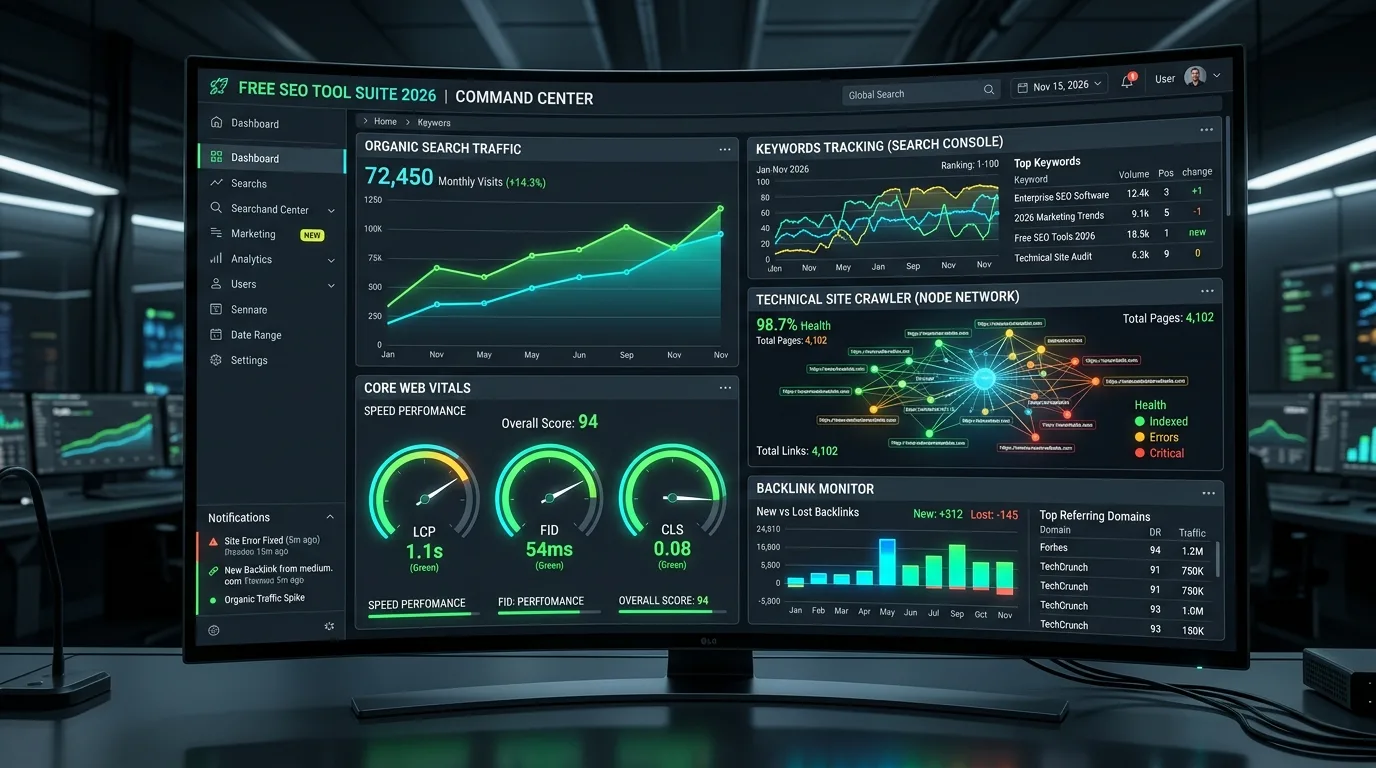
<figcaption class="cb-article-figure__caption">Figure 3: Centralized telemetry dashboard tracking live media alerts, verified unlinked mentions, contact discovery status, and pipeline response rates.</figcaption>
</figure>
<h2>4. Vetting and Prioritization: Separating Gold from Garbage</h2>
<p>Not every unlinked mention warrants outreach. Pitching low-quality scraper sites, foreign spam aggregators, or hostile critical reviews wastes valuable time and risks triggering spam filters. A disciplined qualification matrix ensures your team focuses 80% of its energy on high-impact editorial targets.</p>
<div class="cb-table-wrap">
<table class="cb-table pb-table">
<thead>
<tr>
<th>Qualification Metric</th>
<th>Minimum Enterprise Threshold</th>
<th>Priority Tier (Immediate Pitch)</th>
<th>Disqualification Criteria</th>
</tr>
</thead>
<tbody>
<tr>
<td><strong>Domain Rating (DR / DA)</strong></td>
<td>DR 35+</td>
<td>DR 65+ (Tier-1 news, major publications)</td>
<td>DR < 20 or algorithmic penalty history</td>
</tr>
<tr>
<td><strong>Estimated Organic Traffic</strong></td>
<td>1,000+ monthly visits</td>
<td>25,000+ monthly visits</td>
<td>Zero organic traffic or negative trend (-80%)</td>
</tr>
<tr>
<td><strong>Context Sentiment</strong></td>
<td>Neutral / Factual</td>
<td>Glowing praise, recommended resource</td>
<td>Negative PR, critical scandal, legal disputes</td>
</tr>
<tr>
<td><strong>Page Recency</strong></td>
<td>Published within last 12 months</td>
<td>Published within last 72 hours</td>
<td>Published > 3 years ago with retired author</td>
</tr>
<tr>
<td><strong>Link Placement Context</strong></td>
<td>Body paragraph</td>
<td>Tool roundup, data source citation</td>
<td>User comment section, forum reply, footer tag</td>
</tr>
<tr>
<td><strong>Outbound Link Policy</strong></td>
<td>Standard editorial dofollow links</td>
<td>Natural context with external reference links</td>
<td>Universal sitewide <code>rel="nofollow"</code> on all outlinks</td>
</tr>
</tbody>
</table>
</div>
<p>When prioritizing campaigns, time is of the essence. Sourcing and pitching a mention within <strong>24 to 48 hours of publication</strong> yields a 3x higher conversion rate than pitching an article that has been live for six months. Authors still have the CMS dashboard open, editors are actively monitoring engagement, and making a minor editorial tweak is frictionless.</p>
<p>For more strategies on pitching journalists and conducting data PR, consult our operational guide on <a href="/blog/data-driven-journalism-industry-surveys-backlinks">Data-Driven Journalism: How to Conduct Original Surveys That Journalists Beg to Cite</a>.</p>
<div class="cb-post-embed cb-post-embed--id-66" data-post-id="66"></div>
<h2>5. Sourcing the Right Decision Maker: Author vs Editor</h2>
<p>The single most common mistake in link reclamation is sending requests to generic inboxes (`info@`, `contact@`, `press@`). These addresses are black holes monitored by entry-level customer service representatives who routinely delete editorial requests. To win link updates, you must pitch the person who has both the incentive and the CMS credentials to modify the article.</p>
<div class="cb-alert cb-alert--warning">
<div class="cb-alert__icon">
</div>
<div class="cb-alert__content">
<div class="cb-alert__title">Who Owns the CMS Edit Button?</div>
<div class="cb-alert__desc">On independent blogs and niche media sites, the byline author is almost always the person who uploads and edits the post. On Tier-1 media publications (e.g., Forbes, TechCrunch, Business Insider), freelance contributors often lose edit access 48 hours after publication, meaning your pitch must target the Section Editor, Managing Editor, or Editorial Producer who manages live site updates.</div>
</div>
</div>
<p>Use tools like Hunter.io, Apollo.io, Clearbit, and LinkedIn Sales Navigator to map the editorial hierarchy:</p>
<ul>
<li><strong>Byline Freelance Journalist:</strong> Pitch them immediately if the article was published in the last 48 hours. Praise their analysis, share the article on your corporate social channels, and politely offer a specific deep link.</li>
<li><strong>Staff Writer / In-House Reporter:</strong> Staff writers maintain persistent CMS access across their entire article archive. They are the ideal outreach recipient.</li>
<li><strong>Managing Editor / Content Operations:</strong> If the article is older than 30 days or the original author has departed the company, reach out to the editor responsible for content updates and content refreshes.</li>
</ul>
<h2>6. The High-Converting Pitch Architecture: Psychology and Templates</h2>
<p>Your outreach email must never sound transactional, entitled, or demanding. Demanding a link because <em>"you mentioned us and we deserve credit"</em> triggers defensive editorial resistance. Instead, frame your request through the lens of <strong>reader utility and editorial enhancement</strong>.</p>
<figure class="cb-article-figure">
<img src="/uploads/content/unlinked-mention-reclamation-framework.webp" alt="Digital PR and Unlinked Mention Reclamation Editorial Framework" class="cb-article-figure__image" loading="lazy">
<figcaption class="cb-article-figure__caption">Figure 4: The 4-step psychological outreach framework: Genuine Appreciation, Contextual Relevance, Frictionless Solution, and Mutual Value Addition.</figcaption>
</figure>
<h3>The 4-Step Email Architecture</h3>
<ol>
<li><strong>Specific, Genuine Compliment:</strong> Prove that you read the article by highlighting a specific argument, unique data point, or compelling perspective the author shared.</li>
<li><strong>Reference the Specific Mention:</strong> Point out the exact paragraph and sentence where your brand or research was cited.</li>
<li><strong>Offer the Specific Destination URL:</strong> Explain why adding a link to this exact page provides immediate value to the reader (e.g., giving them access to the interactive calculator, full methodology, or product documentation). Provide the exact HTML link snippet to make their job effortless.</li>
<li><strong>Offer Reciprocal Value (The Social Amplifier):</strong> Commit to sharing their article across your company's social channels (X, LinkedIn, newsletter), driving traffic and engagement to their piece.</li>
</ol>
<div class="cb-code-block">
<div class="cb-code-block__header">
<span class="cb-code-block__lang">Email Template</span>
<span class="cb-code-block__title">High-Converting Unlinked Brand Mention Outreach Pitch</span>
</div>
<pre><code class="language-plaintext">Subject: Loved your piece on [Topic] (quick question regarding [BrandName] mention)
Hi [Author First Name],
Just finished reading your latest guide on [Article Title]—your breakdown of [Specific Concept / Chapter] was spot on, especially the point regarding [Specific Quote or Insight from Article].
I noticed that in the section discussing [Section Name], you were kind enough to mention [BrandName / Research Report Name]. Thank you so much for including our work in your analysis!
I wanted to ask: would you consider adding a hyperlink to [BrandName] so your readers can easily access the [Tool / Dataset / Framework] you referenced?
Here is the exact page for reference:
https://yourdomain.com/specific-deep-page
We've already queued up your article to share with our [15,000+] followers across LinkedIn and X this afternoon.
Either way, thank you again for the fantastic coverage and keep up the great writing!
Best regards,
[Your Name]
[Your Title], [BrandName]</code></pre>
</div>
<h3>The Data Citation Pitch (Higher Conversion Variant)</h3>
<p>When an author cites a specific statistic or benchmark from your original research report, your conversion rate jumps significantly because journalistic standards require attributing statistical claims to their primary origin:</p>
<div class="cb-code-block">
<div class="cb-code-block__header">
<span class="cb-code-block__lang">Email Template</span>
<span class="cb-code-block__title">Statistical Citation Reclamation Pitch Template</span>
</div>
<pre><code class="language-plaintext">Subject: Thanks for citing our [Research Report Name] data!
Hi [Author First Name],
I was excited to see our [Year] industry benchmark data featured in your recent article on [Publication Name]: "[Article Title]".
You mentioned that [Quote the exact statistic: e.g., "78% of enterprise engineering teams migrated to Next.js App Router in 2026"].
Since many of your readers will likely want to inspect the underlying sample size, methodology, and raw data charts, would you be open to hyperlinking that statistic directly to the primary research report?
Target URL: https://yourdomain.com/research/state-of-modern-web-development
Thanks again for featuring our study in your reporting!
Warmly,
[Your Name]
Director of Research, [BrandName]</code></pre>
</div>
<p>For breaking industry news and newsjacking link building tactics, read our specialized blueprint on <a href="/blog/newsjacking-playbook-breaking-news-tier-1-backlinks">The Newsjacking Playbook: How to Capitalize on Breaking News for Tier-1 Backlinks</a>.</p>
<div class="cb-post-embed cb-post-embed--id-78" data-post-id="78"></div>
<h2>7. Handling Common Objections and Editorial Pushback</h2>
<p>Even with a courteous, value-first pitch, professional journalists and corporate editorial teams may reply with standard corporate objections. Knowing how to gracefully navigate these responses often turns a tentative "no" into a confirmed "yes":</p>
<div class="cb-table-wrap">
<table class="cb-table pb-table">
<thead>
<tr>
<th>Editorial Objection</th>
<th>Root Underlying Concern</th>
<th>Recommended Tactical Response</th>
</tr>
</thead>
<tbody>
<tr>
<td><em>"Our corporate policy prohibits adding links to commercial vendors post-publication."</em></td>
<td>Fear of editorial reprimand, perceived commercial promotion or affiliate spam.</td>
<td><strong>Pivot to Educational Asset:</strong> Offer a link to a completely non-commercial educational resource, free open-source tool, or raw research whitepaper rather than a commercial sales page.</td>
</tr>
<tr>
<td><em>"We can add the link, but per editorial guidelines, it must be marked as <code>rel="nofollow"</code>."</em></td>
<td>Strict compliance with editorial risk management.</td>
<td><strong>Accept with Gratitude:</strong> In modern search algorithms, high-tier nofollow mentions still transfer entity confidence, crawl discoverability, and direct referral traffic. Never argue or decline a nofollow link from a Tier-1 media site.</td>
</tr>
<tr>
<td><em>"I'm a freelance contributor and no longer have access to edit the CMS."</em></td>
<td>Technical limitation in contributor dashboard permissions.</td>
<td><strong>Ask for Editor Introduction:</strong> Politely ask: <em>"Totally understand! Could you point me in the direction of the section editor who handles minor updates? I'd be happy to send them a quick note directly."</em></td>
</tr>
<tr>
<td><em>"We charge an administrative update fee of \$150 to modify published articles."</em></td>
<td>Monetized publication or sponsored content pay-to-play scheme.</td>
<td><strong>Evaluate or Politely Decline:</strong> If the site is a low-quality link farm selling paid placements, decline immediately to protect your link profile from algorithmic spam flags.</td>
</tr>
</tbody>
</table>
</div>
<h2>8. Advanced Reclamation Variations: Images, Podcasts, and Transcripts</h2>
<p>True link reclamation extends far beyond plain text brand queries. By broadening your monitoring net to encompass all proprietary corporate assets, you unlock untapped reservoirs of unlinked authority:</p>
<h3>Reverse Image Search Reclamation</h3>
<p>If your marketing team produces custom infographics, original technical architecture diagrams, proprietary charts, or professional product photography, competitor sites and bloggers will routinely embed your images on their pages without attribution. Use Google Lens, TinEye, or Reverse Image Search APIs to locate all domains hosting your image assets. Reach out with an appreciative note thanking them for sharing the diagram and requesting a standard image source link back to the original article.</p>
<h3>Podcast and Video Transcripts</h3>
<p>When company executives appear as guests on industry podcasts, webinars, or YouTube interviews, host channels frequently transcribe the audio into written show notes and blog summaries. While they may say your company name ten times during the conversation, show notes frequently omit your website URL. A quick follow-up to the podcast producer providing the exact timestamp and link destination secures a permanent, high-relevance backlink from the podcast episode page.</p>
<h3>Competitor Brand Mention Interception</h3>
<p>Monitor mentions of competitors that have recently gone out of business, discontinued a major product line, or suffered a severe technical outage. When industry publications mention the defunct product, reach out to inform the editor that the referenced solution is no longer operational, offering your active, updated platform as a seamless replacement resource for their readership.</p>
<h2>9. Measuring Success: Key Performance Indicators for Mention Reclamation</h2>
<p>To quantify the enterprise return on investment (ROI) of your brand reclamation program, establish clear telemetry across your CRM and SEO tracking stack:</p>
<ul>
<li><strong>Discovery-to-Outreach Ratio:</strong> Percentage of raw brand alerts that meet your qualification criteria (target: 25%–35%).</li>
<li><strong>Email Open Rate:</strong> Efficiency of your subject line personalization (target: > 55%).</li>
<li><strong>Positive Reply Rate:</strong> Percentage of contacted journalists who respond favorably (target: 20%–30%).</li>
<li><strong>Link Reclamation Conversion Rate:</strong> Total converted dofollow/nofollow links divided by total outreached prospects (target: > 25%).</li>
<li><strong>Average Domain Rating (DR) of Converted Links:</strong> Quality benchmark to ensure your team is acquiring high-impact links (target: DR 55+).</li>
<li><strong>Organic Visibility Delta:</strong> Tracking rankings and organic traffic growth on target destination URLs over a 60-day post-acquisition window.</li>
</ul>
<h2>10. Frequently Asked Questions (FAQ)</h2>
<div class="cb-faq">
<details class="cb-faq__item">
<summary>What is an unlinked brand mention and why is it valuable for SEO?</summary>
<div class="cb-faq__answer">
<p>An unlinked brand mention is an instance where an external website or news publication references your brand name, proprietary product, founder, or research in their text without including a clickable hyperlink. It represents the highest-converting link building opportunity because the author already knows and respects your brand, making them far more willing to add a link compared to cold outreach prospects.</p>
</div>
</details>
<details class="cb-faq__item">
<summary>Does Google count unlinked brand mentions as ranking signals?</summary>
<div class="cb-faq__answer">
<p>Yes, but primarily for entity authority rather than direct PageRank. Google uses unlinked mentions (implied links) to understand brand entities, measure topical consensus, and populate Knowledge Graph connections. However, explicit HTML hyperlinks are still strictly required to pass PageRank equity and drive direct referral traffic.</p>
</div>
</details>
<details class="cb-faq__item">
<summary>What is the average conversion rate for unlinked brand mention outreach?</summary>
<div class="cb-faq__answer">
<p>While generic cold link outreach yields a 1% to 3% success rate, well-targeted unlinked brand mention campaigns typically achieve conversion rates between 25% and 45%. Conversion rates climb even higher (often over 50%) when reaching out within 24 to 48 hours of an article being published.</p>
</div>
</details>
<details class="cb-faq__item">
<summary>Should I accept a nofollow link if the publication refuses to add a dofollow link?</summary>
<div class="cb-faq__answer">
<p>Absolutely. Modern search algorithms treat <code>rel="nofollow"</code> and <code>rel="ugc"</code> as hints rather than strict directives. Furthermore, links from high-authority media outlets deliver valuable brand credibility, qualified referral visitors, and crawl paths for search bots regardless of link attributes.</p>
</div>
</details>
<details class="cb-faq__item">
<summary>What tools are best for finding unlinked brand mentions?</summary>
<div class="cb-faq__answer">
<p>Leading tools for monitoring brand mentions include Ahrefs Content Explorer, Semrush Brand Monitoring, Google Alerts, Brand24, Mention, Talkwalker, and BuzzSumo. You can also run manual or scripted Google search operator queries using boolean parameters like <code>"BrandName" -site:yourdomain.com</code>.</p>
</div>
</details>
<details class="cb-faq__item">
<summary>How do I find the email address of the author or editor?</summary>
<div class="cb-faq__answer">
<p>Use email intelligence tools such as Hunter.io, Apollo.io, Clearbit, and Voila Norbert combined with LinkedIn and X profiles. Inspect the publication's author archive page or masthead to confirm current employment before sending outreach messages.</p>
</div>
</details>
<details class="cb-faq__item">
<summary>What destination URL should I ask the author to link to?</summary>
<div class="cb-faq__answer">
<p>Always suggest the most contextually relevant page. If they mentioned a specific statistic or study, link to the research report. If they mentioned a tool or software feature, link to that specific product landing page. Avoid defaulting to your homepage unless they specifically mentioned your overarching company brand in passing.</p>
</div>
</details>
<details class="cb-faq__item">
<summary>How should I handle publications that ask for payment to add a link?</summary>
<div class="cb-faq__answer">
<p>Unless it is a formal corporate directory with verified editorial standards, decline paid link requests. Paying for link additions on editorial articles violates Google's Webmaster Guidelines and can expose your domain to algorithmic spam penalties from Google SpamBrain.</p>
</div>
</details>
<details class="cb-faq__item">
<summary>Can I reclaim unlinked mentions of our images and infographics?</summary>
<div class="cb-faq__answer">
<p>Yes. Reverse image reclamation is one of the most effective subsets of link building. Use Google Lens or TinEye to find websites that have embedded your original graphics, and send a polite note requesting that they credit the image source with a link back to your original article.</p>
</div>
</details>
<details class="cb-faq__item">
<summary>How often should our SEO team run brand mention outreach?</summary>
<div class="cb-faq__answer">
<p>Brand mention monitoring should be an ongoing, daily operational process. Setting up real-time webhooks or daily digest alerts ensures your team can initiate outreach while the article is fresh and editors are most receptive to making quick updates.</p>
</div>
</details>
</div>


Ratings & reviews
No reviews yet. Be the first.