
Programmatic SEO is the architectural practice of systematically generating thousands of search-engine-optimized, high-intent landing pages using structured databases, dynamic template engines, and automated routing pipelines. Unlike traditional editorial workflows that produce articles linearly at high marginal costs, programmatic SEO leverages software engineering principles to satisfy fragmented long-tail search demand at enterprise scale. From SaaS integration directories like Zapier and Canva's millions of design templates to marketplace portals like TripAdvisor and Wise, programmatic SEO builds an insurmountable organic acquisition moat. This comprehensive technical guide details the end-to-end architecture, database schemas, template engines, information gain safeguards, and internal linking automation required to launch and scale enterprise programmatic SEO without triggering thin content or scaled abuse penalties.
The Programmatic SEO Paradigm:
Programmatic SEO is not about spamming search engines with thin template permutations. True programmatic excellence requires high information gain, proprietary localized or vertical datasets, and deterministic technical execution that answers hyper-specific user intent faster and more accurately than any hand-crafted blog post.
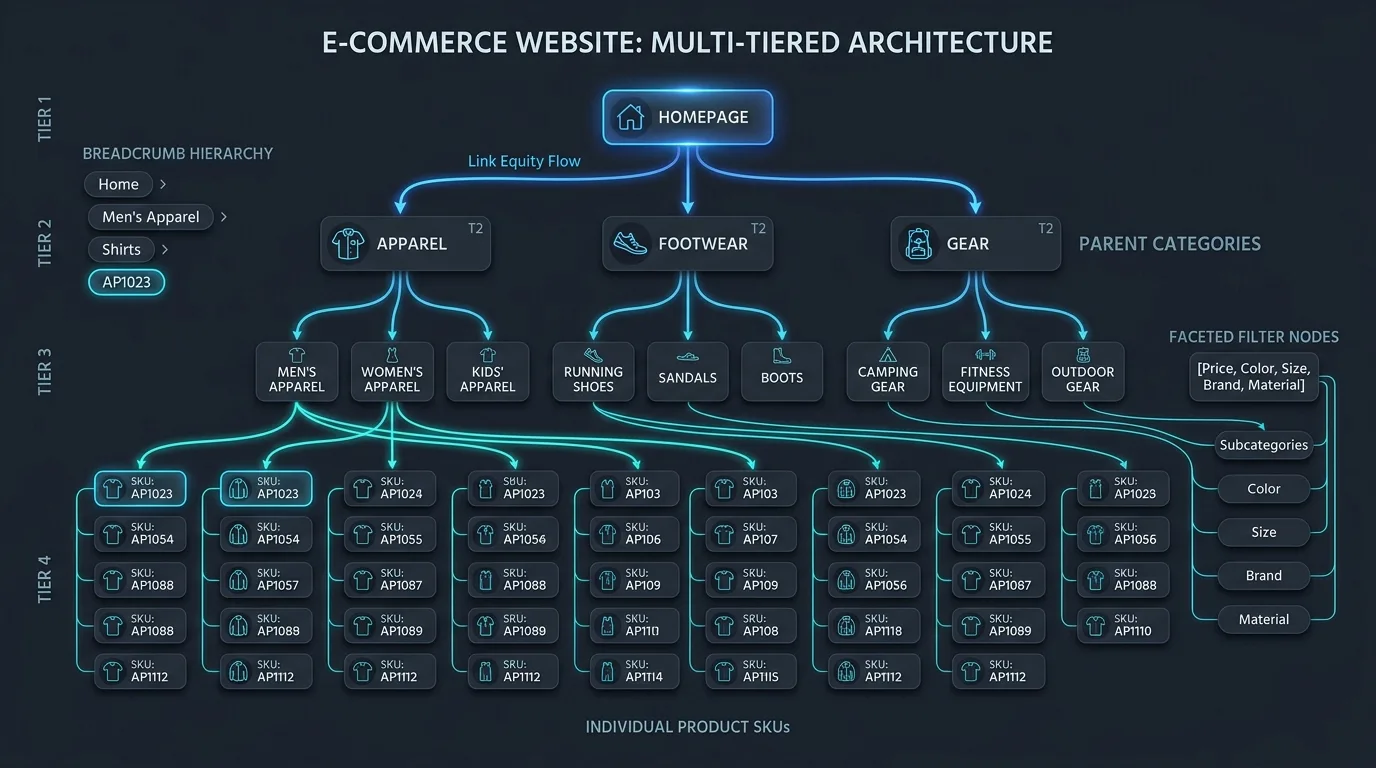
Figure 1: Relational Database Schema Architecture — Connecting Core Entities, Modifiers, and Dynamic Attributes for Automated Page Compilation.
Chapter 1: What Is Programmatic SEO and Why SaaS Companies Dominate With It
In modern B2B SaaS and consumer marketplaces, manual content creation scales linearly with headcount and editorial budget, whereas search demand expands exponentially across millions of long-tail modifier permutations. Search engines report that approximately 15% of all daily Google queries have never been seen before. Attempting to address this vast ocean of specific buyer intent through manual blogging is economically impossible. Programmatic SEO bridges this scalability gap by treating organic search as a software engineering discipline.
Consider the organic acquisition economics of Zapier. Rather than publishing a single generalized guide titled "How to Integrate Business Apps," Zapier engineered an automated programmatic system that dynamically creates dedicated landing pages for every possible pairwise app combination: "Connect Slack to Google Sheets," "Sync HubSpot with Notion," or "Automate Salesforce to Airtable." With thousands of connected applications in their ecosystem, this matrix yields millions of unique, high-intent landing pages. When an enterprise user searches for an exact workflow integration, Zapier occupies the top organic position with a page tailored specifically to that software pair.
The strategic power of this approach lies in customer acquisition unit economics. In enterprise software, high-volume head keywords such as "CRM software" or "project management tool" cost upwards of $50 to $150 per click on Google Ads and require years of link-building campaigns to achieve organic ranking. In contrast, long-tail programmatic queries like "CRM software for commercial HVAC contractors in Texas" face minimal bidding competition and zero authoritative editorial coverage. By capturing thousands of these niche intent queries simultaneously, SaaS brands build compounding organic traffic engines with customer acquisition costs (CAC) that trend toward zero over time.
The Core Economic Advantages of Programmatic Architecture
- Near-Zero Marginal Cost of Production: While architecting the database schema, building the rendering pipeline, and curating proprietary data requires significant upfront capital investment, generating the 10,000th landing page costs virtually the same as generating the 100th page.
- Superior Conversion Rates on Hyper-Specific Intent: Users searching for long-tail, modifier-rich queries (such as "[Product] pricing for [Industry] in [City]") exhibit significantly higher commercial purchase intent than users browsing broad top-of-funnel keywords. Programmatic pages match this exact intent precisely, driving conversion rates 3x to 5x higher than generic homepage or blog traffic.
- Instant Global Updates via Centralized Database: When pricing tiers change, new features launch, or API endpoints update, engineering teams do not edit thousands of individual CMS posts. Modifying a single database record instantly propagates accurate updates across the entire programmatic URL cluster.
- Durable Competitive Moat: Replicating a 50,000-page programmatic ecosystem backed by proprietary data and automated internal linking requires competitors to build equivalent software infrastructure rather than merely hiring freelance writers.

Chapter 2: The Programmatic SEO Tech Stack: Databases, Headless CMS, and SSG
Building an enterprise-grade programmatic SEO engine requires a resilient, decoupled three-tier technology stack comprising a high-performance database repository, an orchestration/content management layer, and a static frontend compilation engine.
| Stack Layer | Recommended Technologies | Key Architectural Responsibility | Performance & Scale Consideration |
|---|---|---|---|
| Database Layer | PostgreSQL, Supabase, BigQuery | Normalized entity storage, relational modifier joins, materialized query views. | Sub-millisecond query execution via indexed foreign keys and JSONB fields. |
| Orchestration & CMS | Sanity, Strapi, Custom Node.js Admin | Narrative template definitions, SEO metadata overrides, editorial review boundaries. | Webhook-driven build triggers and schema synchronization pipelines. |
| Frontend Rendering | Next.js (SSG/ISR), Astro, Nuxt | Build-time HTML generation, edge CDN caching, responsive UI component hydration. | Sub-50ms TTFB across edge CDNs (Cloudflare, Vercel, AWS CloudFront). |
| Asset & Media Pipeline | Cloudinary, Imgix, Sharp/libvips | Dynamic OpenGraph card generation, automated chart rendering, responsive WebP delivery. | On-demand image synthesis with persistent edge caching. |
Static Site Generation (SSG) combined with Incremental Static Regeneration (ISR) is the gold standard for programmatic rendering. Serving pre-compiled static HTML files from edge CDN points of presence guarantees near-zero Time to First Byte (TTFB), flawless Core Web Vitals, and maximum resilience against traffic spikes. Search engine crawlers receive complete, fully hydrated DOM snapshots without the latency or compute overhead of runtime database queries.
When operating at a scale exceeding 100,000 URLs, a pure SSG build can take hours to compile, exhausting CI/CD build minutes and slowing down time-to-market. The industry solution is hybrid rendering: top-tier money pages (the top 10,000 most frequently visited URLs) are compiled statically during deployment, while long-tail leaf pages are compiled on demand via ISR on first request and then permanently cached at the CDN edge. This guarantees both rapid build execution and instant subsequent page loads for search engine bots.
Chapter 3: Database Schema Architecture for Modifier-Based Page Generation
The database schema is the intellectual foundation of any programmatic project. It dictates how primary entities connect to secondary modifiers, how taxonomies establish parent-child hierarchies, and how automated routing algorithms construct search-engine-friendly URLs.
Consider a national B2B service directory. The primary entity is the Service (e.g., "Industrial Solar Installation"), which connects across a many-to-many join table to the Location entity (e.g., "Austin, TX"). Each joined record stores localized attributes, market statistics, average commercial rates, verified vendor counts, and client reviews. This relational structure enables the template engine to compile dedicated, data-rich URLs such as /services/commercial-solar/austin-tx/ with zero manual editorial effort.
Schema Normalization vs. Build Performance:
While relational normalization prevents data duplication, querying complex multi-table joins for 50,000 pages during build time will severely throttle static site compilers. Enterprise implementations utilize Materialized Views in PostgreSQL to pre-aggregate all required page data into flat JSON objects, reducing compilation times from hours to minutes.
Database integrity constraints must also prevent invalid entity permutations from entering the compilation pipeline. If an integration between two software platforms is technically impossible (e.g., an iOS-only utility connecting with an outdated Windows CE tool), the database schema must flag this pair as is_valid: false or status: draft. Feeding nonsensical combinations into your template engine generates ghost pages that baffle users and damage overall site quality scores in Google's evaluation algorithms.
Chapter 4: Template Engine Design: Building High-Quality Dynamic Pages
The template engine transforms raw database records into fluid, engaging, and structurally flawless web documents. The critical failure mode of beginner programmatic SEO is using rigid, repetitive templates that merely swap out a city name or keyword in an H1 tag. Search engine algorithms easily detect these uniform text footprints as low-effort automation.
Figure 2: Dynamic Template Compilation Engine — Conditional Component Branching Based on Dataset Richness.
Sophisticated template engines utilize conditional component rendering. If a specific data record contains extensive proprietary metrics (e.g., pricing benchmarks, historical satisfaction scores, downloadable sample files), the template renders rich comparison widgets, interactive calculators, and analytical charts. If the record contains fewer data points, the engine gracefully branches into a concise summary layout or falls back to aggregating nearby sibling entities.
// app/integrations/[appA]-to-[appB]/page.tsx - Programmatic Next.js Engine
import type { Metadata } from 'next';
import { notFound } from 'next/navigation';
import { fetchIntegrationPair, getAllIntegrationSlugs } from '@/lib/db';

interface Props {
  params: Promise;
}

export async function generateStaticParams() {
  const slugs = await getAllIntegrationSlugs();
  return slugs.map(({ appA, appB }) => ({ appA, appB }));
}

export async function generateMetadata({ params }: Props): Promise {
  const { appA, appB } = await params;
  const data = await fetchIntegrationPair(appA, appB);
  if (!data) return { title: 'Integration Not Found' };

  return {
    title: `Connect ${data.appA.name} with ${data.appB.name}: Automated Workflow Guide`,
    description: `Learn how to automatically sync data between ${data.appA.name} and ${data.appB.name}. Step-by-step triggers, pre-built templates, and enterprise webhooks.`,
    alternates: {
      canonical: `https://seobeen.com/integrations/${appA}-to-${appB}`,
    },
  };
}
Chapter 5: Ensuring Information Gain: Preventing Thin Content and Scaled Abuse Penalties
The single greatest operational threat to programmatic SEO is Google's algorithmic crackdown on thin content and scaled content abuse. Under the March 2024 Core Update and the Helpful Content System guidelines, search algorithms aggressively de-index websites that produce high volumes of programmatic pages lacking unique incremental value over existing SERP results.
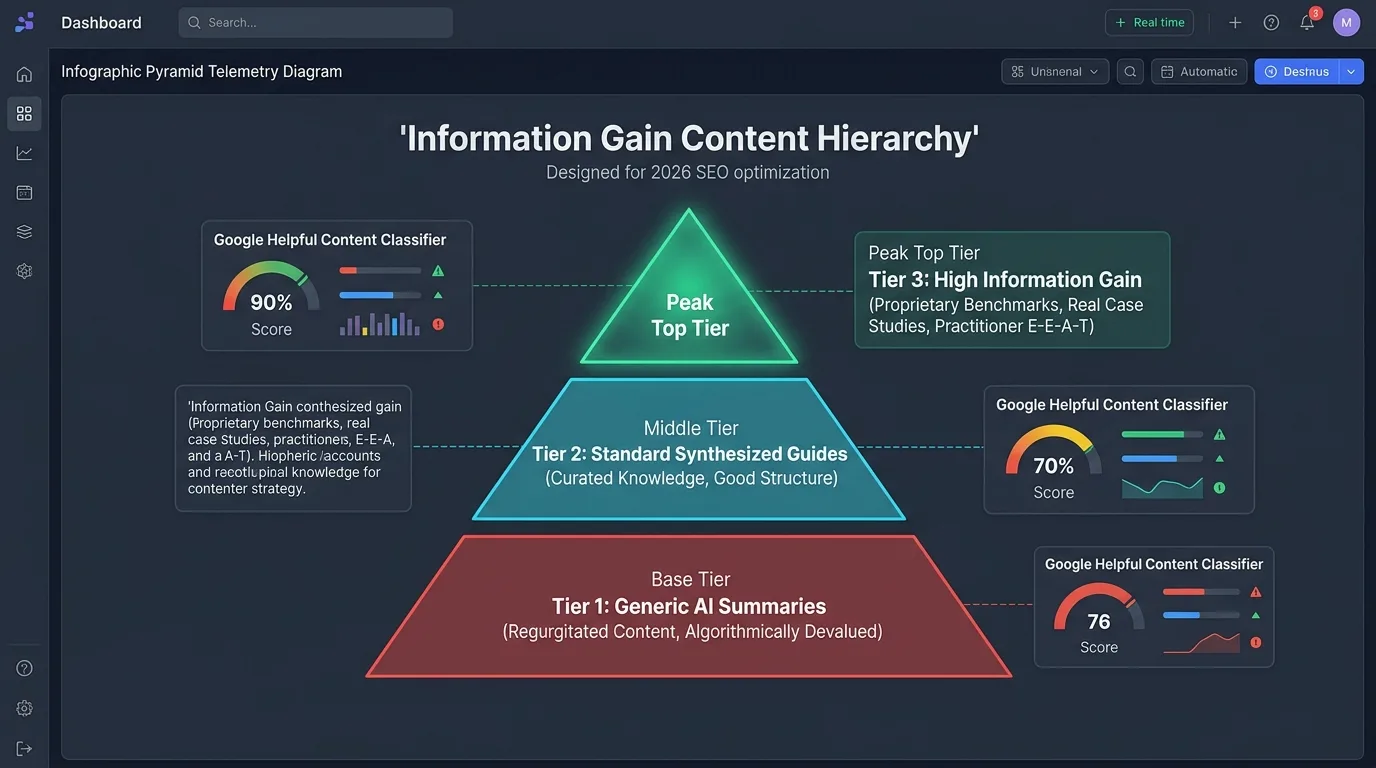
Figure 3: The Information Gain Pyramid — Transforming Raw Commodity Data into High-Value Analytical Assets.
Information Gain is the mathematical measure of net-new utility a web document provides to a user who has already inspected top-ranking search results. In programmatic SEO, information gain cannot be achieved by scraping public Wikipedia pages or spinning generic AI paragraphs. It must be generated through proprietary data synthesis:
- Proprietary Calculations and Benchmark Scores: Calculate domain-specific indexes, such as cost-per-transaction ratios, delivery speed percentiles, or software reliability benchmarks that do not exist elsewhere on the web.
- User-Generated Interaction and Social Proof: Integrate verified customer ratings, real-time community questions, and authentic usage metrics tied specifically to each programmatic entity.
- Algorithmic Data Visualization: Automatically generate dynamic charts, SVG maps, and comparison matrices that visually summarize complex multi-dimensional datasets.
- Strict Minimum Viability Thresholds: Programmatically apply a
noindexrobots directive or redirect to a category hub if a specific modifier combination lacks sufficient data to satisfy search intent.
A practical method for enforcing this standard is establishing a programmatic Information Gain Score (IGS) in your data pipeline. Each data permutation is evaluated against four criteria: depth of unique numerical metrics, presence of visual charts or downloadable assets, customer review density, and entity completeness. Only pages scoring above 80/100 are rendered as indexable HTML. Pages falling below the threshold are consolidated into regional hubs or placed behind a noindex directive until richer data is acquired.
Chapter 6: Keyword Modifier Research: Location, Integration, Comparison, and Use-Case Patterns
Traditional SEO conducts keyword research term by term. Programmatic SEO conducts keyword research by identifying scalable modifier formulas that map to systemic user search patterns across entire industries.
| Modifier Architecture | URL Routing Pattern | Search Intent Stage | Enterprise Example |
|---|---|---|---|
| Head-to-Head Comparison | /compare/[brandA]-vs-[brandB] |
Bottom-of-Funnel Evaluation | G2, Capterra, SoftwareAdvice |
| Software Integration | /integrations/[appA]-with-[appB] |
Transactional / Solution Seeking | Zapier, Make, Segment |
| Industry / Vertical Use-Case | /templates/[use-case]-for-[industry] |
Commercial Investigation | Canva, Notion, ClickUp |
| Financial Currency Conversion | /convert/[currA]-to-[currB] |
Immediate Transactional Need | Wise, XE, Revolut |
When conducting modifier research, look for matrices where both axes represent high-affinity entities. In SaaS, app-to-app integrations create an N × N matrix that scales quadratically: connecting 1,000 apps yields nearly 500,000 unique integration pairs. In real estate or local directories, crossing 50 service categories with 1,000 municipalities produces 50,000 highly targeted localized landing pages. The key is validating that each permutation corresponds to genuine user search intent before writing the template.
Chapter 7: Internal Linking Automation for Massive Programmatic Networks
Generating 20,000 programmatic pages without an automated internal linking graph is an exercise in futility. Search engines will treat unlinked or deeply buried URLs as orphaned nodes, allocating zero crawl budget and refusing to pass PageRank link equity to target landing pages.
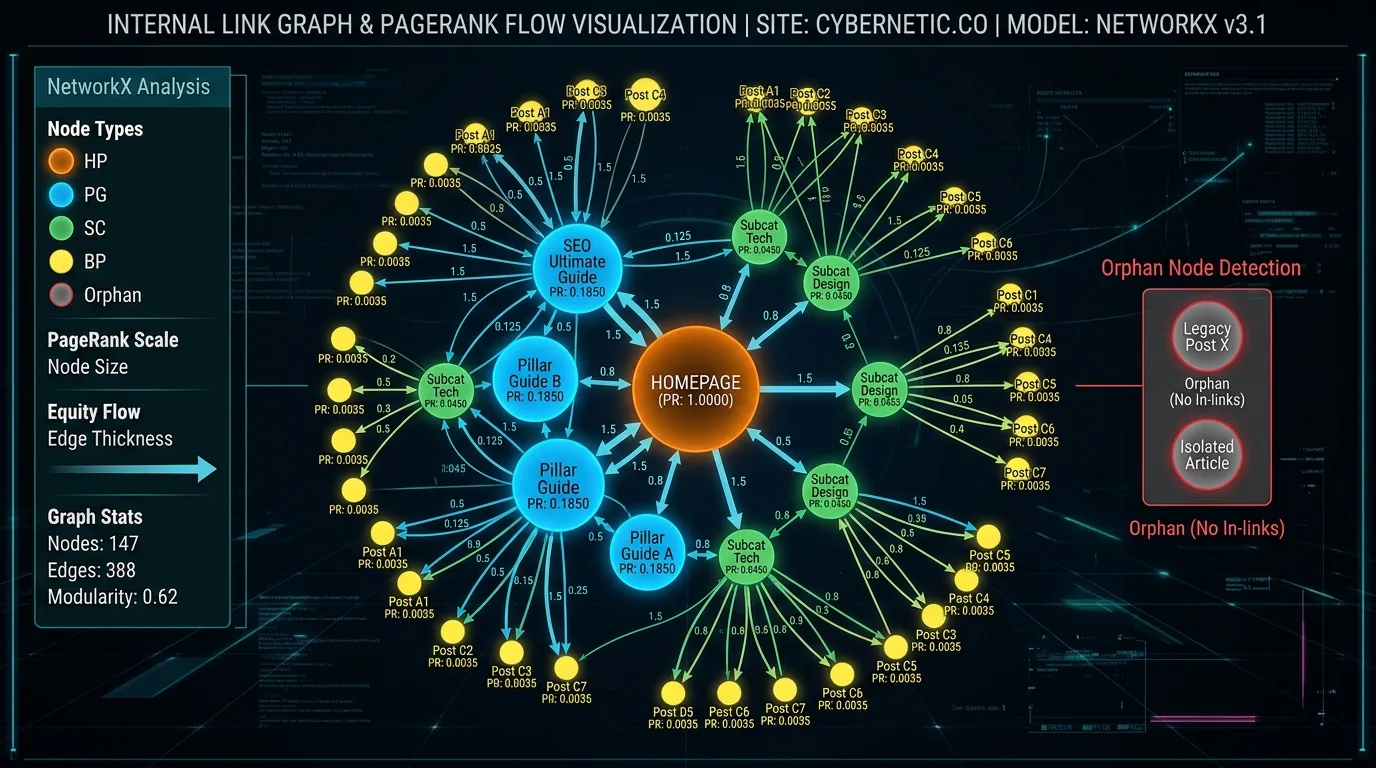
Figure 4: Automated Internal Linking Graph — Channelling Domain PageRank from High-Authority Hubs to Long-Tail Leaf Pages.
Enterprise programmatic architectures deploy a multi-tiered internal linking graph:
- Hierarchical Breadcrumbs: Every leaf page renders structured breadcrumb links back to parent category hubs (e.g.,
Home > Integrations > CRM Apps > Salesforce to Notion), reinforced by valid BreadcrumbList JSON-LD schema. - Lateral Peer-to-Peer Recommendations: Every programmatic page dynamically calculates and displays 5 to 10 contextually related sibling pages within the same category or modifier group (e.g., "Other Popular Salesforce Integrations").
- Topical Hub Silos: Category hub pages dynamically aggregate and link to their corresponding leaf pages with descriptive, keyword-rich anchor text.
- Automated HTML Sitemap Directories: Paginated, crawler-friendly HTML directories ensure that Googlebot discovers newly generated URLs within 2 to 3 hops from the domain root.
Algorithmic PageRank Preservation:
Never link indiscriminately from every programmatic page to every other page in a cluster. This practice creates link dilution and confuses crawler intent. Maintain strict vertical silos: pages within the "Marketing Automation" category should link primarily to other marketing automation endpoints, preserving tight semantic topical clustering.
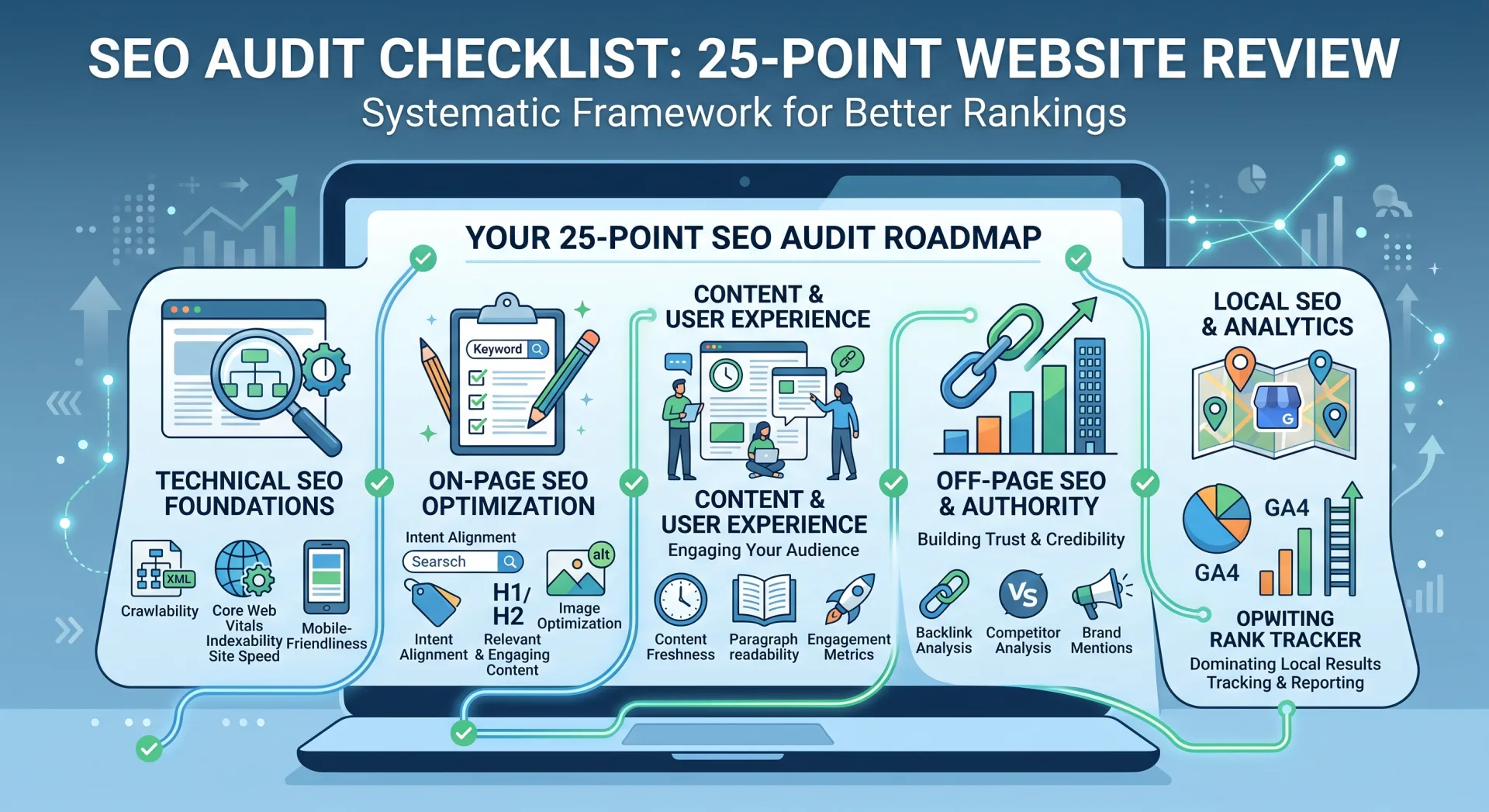
Chapter 8: Measuring and Monitoring Programmatic SEO at Scale
Auditing a 50,000-page programmatic deployment using standard manual SEO tools is impossible. Monitoring must be automated, aggregate, and code-driven:
1. Google Search Console API & BigQuery Warehousing
The standard GSC web interface caps exportable data at 1,000 rows. By establishing an automated daily BigQuery export from the Google Search Console API, data teams query millions of impression and click records across custom regex patterns, isolating the organic performance of individual template variants and modifier clusters.
2. Server Access Log Analysis
Log file monitoring reveals the unvarnished reality of search engine crawling behavior. By parsing Nginx or Cloudflare access logs, engineering teams track Googlebot crawl frequency per directory, detect 5xx server errors, identify crawl budget traps on parameter URLs, and verify that priority programmatic clusters receive regular re-indexing attention.
3. Automated Indexation Ratio Telemetry
Set up automated monitoring alerts that compute the Indexation Ratio (Total Indexed Pages / Total Generated Pages). If this metric drops below 70%, your system is generating low-quality or duplicative pages that fail search engine helpfulness thresholds.
4. Automated Programmatic Regression Testing in CI/CD
Because programmatic SEO relies on automated code to generate tens of thousands of URLs, a minor regression in a template component or an unhandled null exception in a database field can instantly corrupt thousands of live pages. Modern engineering teams integrate automated end-to-end regression tests into their GitHub Actions or GitLab pipelines. Before any pull request merges into production, headless browsers crawl a randomized 500-page sample across each template cluster, verifying canonical URL consistency, HTTP 200 response headers, valid JSON-LD schema payloads, balanced HTML elements, and core web vitals compliance. Catching template bugs prior to edge CDN deployment protects your domain from catastrophic algorithmic de-indexing events.
Chapter 9: Real-World Case Studies: Zapier, Canva, TripAdvisor, and Wise
Analyzing the world's most successful programmatic implementations reveals recurring strategic blueprints that can be adapted across any industry:
1. Zapier (The Software Integration Matrix): By converting their internal API integration catalog into public-facing web pages, Zapier captured bottom-of-funnel intent for every business application in existence, creating a multi-million-visitor organic engine that competitors cannot match without replicating their entire app ecosystem.
2. Canva (The Template Use-Case Engine): Canva mapped graphic design keywords to specific creator workflows ("Wedding Invitation Templates," "Twitch Banner Maker"). By pairing high-quality visual previews with instant in-browser editing tools, they convert organic searchers directly into active product users on the first click.
3. Wise (The Real-Time Financial Utility): Wise transformed financial currency exchange data into thousands of programmatic landing pages providing live exchange rates, fee comparisons against legacy banks, and dynamic calculation widgets. This transparency built immense search trust, dominating transactional financial queries globally.



Ratings & reviews
No reviews yet. Be the first.