
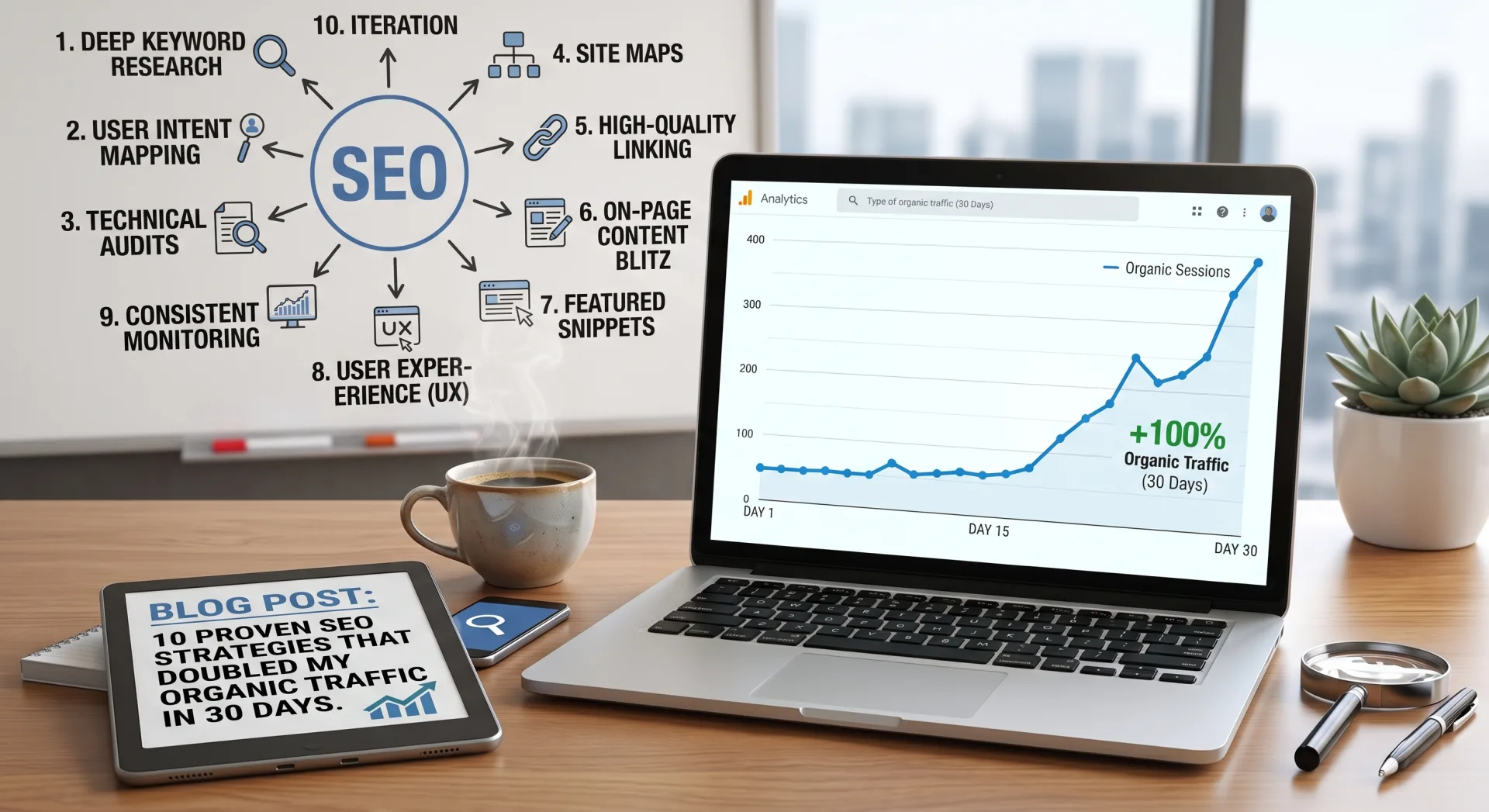
In the ever-evolving landscape of digital marketing, achieving significant organic traffic growth in a short period might seem like a daunting task. However, with a focused and strategic approach, it's entirely possible to see remarkable improvements. This article distills 10 proven SEO strategies that I personally implemented, leading to a doubling of organic traffic within just 30 days. We'll delve into each tactic, providing actionable insights and practical examples that you can apply to your own website, whether you're a digital marketer looking to refine your skills or a small business owner aiming to boost your online presence.
The journey to increased organic visibility is not about chasing fleeting trends, but rather about consistently applying fundamental SEO principles with precision and an understanding of user intent. From meticulous keyword research and on-page optimization to technical enhancements and content promotion, each strategy plays a crucial role in building a robust SEO foundation. By following this case study-based guide, you'll gain a clear roadmap to replicate similar successes and drive sustainable growth for your digital assets.
Deep-Dive Keyword Research with Long-Tail Focus
The cornerstone of any successful SEO campaign is comprehensive keyword research. My initial approach involved moving beyond generic, high-volume keywords and instead focusing on identifying a wealth of long-tail keywords. These are typically phrases of three or more words that users type into search engines when they are looking for something very specific. While they might have lower individual search volumes, their collective traffic potential is immense, and conversion rates are often significantly higher due to clearer user intent.
I utilized a combination of tools to uncover these gems, including Google Keyword Planner, SEMrush, and AnswerThePublic. The goal was not just to find keywords, but to understand the questions and problems users were trying to solve. For instance, instead of targeting "best coffee," I looked for "best single-origin pour-over coffee beans for home brewing" or "how to fix a weak espresso shot." This shift allowed me to create highly targeted content that directly addressed specific user needs, leading to better rankings and more qualified traffic.
Understanding User Intent
Beyond search volume and competition, understanding user intent is paramount. Is the user looking to buy something (commercial intent), learn something (informational intent), or navigate to a specific website (navigational intent)? Aligning your content with the user's intent drastically improves your chances of ranking and converting. For example, a search for "buy organic dog food online" clearly indicates commercial intent, and a product page would be the most appropriate content type. Conversely, "how to train a puppy" suggests informational intent, requiring a blog post or guide.
By categorizing keywords by intent, I was able to map them effectively to different content types on my site. This strategic alignment ensures that when a user searches for a particular phrase, they land on a page that directly fulfills their need, reducing bounce rates and improving engagement metrics, which search engines interpret as positive signals.
On-Page Content Optimization Blitz
Once the target keywords were identified, the next critical step was a thorough on-page optimization blitz for existing and new content. This involved meticulously integrating keywords into various elements of a webpage without resorting to keyword stuffing, which can harm rankings. The focus was on natural language and readability, ensuring that the content remained valuable and engaging for human readers first and foremost.
Key areas of optimization included title tags, meta descriptions, header tags (H1, H2, H3), image alt text, and the body content itself. For example, every page's title tag was crafted to be compelling, include the primary keyword, and stay within character limits. Meta descriptions were written to entice clicks, providing a concise summary of the page's content and incorporating relevant keywords.
Structuring Content for Readability and SEO
Content structure plays a vital role in both user experience and SEO. I ensured that all articles and pages were well-organized with clear headings and subheadings, making them easy to scan and digest. Bullet points, numbered lists, and short paragraphs were extensively used to break up text and improve readability. This not only keeps visitors on the page longer but also helps search engines understand the hierarchy and main topics of the content.
Internal linking was another crucial aspect. By strategically linking relevant pages within the website, I helped distribute "link equity" and guided search engine crawlers through the site's structure. This also improved user navigation, allowing visitors to discover more related content and spend more time on the site.
Technical SEO Audit and Quick Fixes
Often overlooked, technical SEO provides the foundational health for your website's visibility. A site with technical issues can prevent even the most optimized content from ranking. My 30-day push included a rapid technical SEO audit to identify and rectify common problems that could be hindering performance. This involved checking for crawlability, indexability, site speed, mobile-friendliness, and secure connections (HTTPS).
I used Google Search Console and various site audit tools to pinpoint issues like broken links, duplicate content, missing meta descriptions, and slow-loading pages. Prioritizing fixes based on their potential impact was key. For instance, addressing core web vitals issues, such as slow loading times, immediately became a top priority due to their direct impact on user experience and ranking signals.
Neglecting technical SEO can severely limit the effectiveness of your content and keyword strategies. Even perfectly optimized content won't rank if search engines can't properly crawl or index your pages.
Improving Site Speed and Mobile Responsiveness
Site speed is no longer just a luxury; it's a critical ranking factor. I optimized images, leveraged browser caching, minified CSS and JavaScript files, and considered using a Content Delivery Network (CDN). The goal was to get pages loading as quickly as possible, ideally under 2-3 seconds.
Mobile-friendliness was equally important. With a significant portion of traffic coming from mobile devices, ensuring a seamless experience across all screen sizes was non-negotiable. I used Google's Mobile-Friendly Test to identify and resolve any responsiveness issues, making sure content was easily viewable and interactive on smartphones and tablets.
Building High-Quality Backlinks (Strategic Outreach)
While content is king, backlinks are the votes of confidence from other websites that tell search engines your content is valuable and authoritative. My strategy for building high-quality backlinks during this period focused on strategic outreach rather than spammy tactics. I identified relevant, authoritative websites in my niche and looked for opportunities to earn links naturally.
This involved creating truly exceptional content that others would want to link to (linkable assets), guest posting on reputable blogs, and utilizing the "skyscraper technique" – finding popular content in my niche, improving upon it, and then reaching out to sites that linked to the original. I also monitored competitor backlinks to identify potential linking opportunities I might have missed.
Crafting Linkable Assets
Linkable assets are pieces of content so valuable, informative, or entertaining that other websites naturally want to reference them. Examples include comprehensive guides, original research, infographics, interactive tools, or in-depth case studies. My focus was on producing content that solved a common problem or provided unique insights, making it a prime candidate for earning editorial links.
For instance, I created an ultimate guide on a niche topic, filled with actionable steps and downloadable resources. I then promoted this guide to relevant industry influencers and webmasters, explaining its value and how it could benefit their audience. This often resulted in natural backlinks from high-authority domains.
Content Refresh and Expansion
One of the quickest ways to see an SEO boost is by updating and expanding existing content. Many websites have a wealth of older content that, with a little love, can regain its ranking power. I conducted a content audit to identify underperforming but potentially valuable articles. The goal was to refresh outdated information, add new insights, improve readability, and integrate new long-tail keywords.
This "content refresh" strategy involved updating statistics, adding new sections, embedding relevant videos or infographics, and improving the overall depth and comprehensiveness of the articles. By doing so, I signaled to search engines that the content was fresh and highly relevant, often leading to immediate ranking improvements.
<!-- Example of a well-structured H2 with a primary keyword -->
<h2>Comprehensive Guide to Effective <strong>SEO Strategies</strong></h2>

<!-- Example of optimizing an image with alt text -->
<img src="seo-traffic-growth.jpg" alt="Graph showing exponential <strong>organic traffic</strong> growth">

<!-- Example of a meta description including a primary keyword -->
<meta name="description" content="Discover 10 proven <strong>SEO strategies</strong> that doubled my <strong>organic traffic</strong> in 30 days. Learn actionable tips for your <strong>search engine optimization</strong>.">
Adding Value to Existing Content
Beyond simply updating, I focused on adding significant value. This meant looking at what competitors were doing for similar topics and striving to create something demonstrably better. Could I add an expert quote, a new case study, or a more detailed step-by-step process? The aim was to make the refreshed content the definitive resource on its topic, providing unparalleled value to the reader.
This approach often involved combining several smaller, related articles into one comprehensive "pillar page." This not only consolidates link equity but also provides a more authoritative resource for users and search engines, reinforcing the site's expertise in that particular domain.
Optimizing for Featured Snippets
Featured snippets, also known as "position zero," are highly coveted because they appear above the traditional organic search results. My strategy involved identifying opportunities to rank for these snippets by structuring content to directly answer common questions in a concise format. This often meant using question-and-answer formats, bulleted lists, or tables within my content.
I used tools to see what questions users were asking related to my target keywords and then crafted specific sections within my articles to directly address those questions. For example, if a common question was "What is the best way to improve site speed?", I would create an H2 or H3 heading with that exact question and follow it with a clear, direct answer in a paragraph or list format.
Local SEO Enhancements (if applicable)
For businesses with a physical presence or those serving a specific geographical area, local SEO is non-negotiable. Even if your business is primarily online, local search can still drive significant, highly qualified traffic. My strategy included optimizing my Google Business Profile (formerly Google My Business) with accurate and complete information, high-quality photos, and consistent updates.
I also focused on building local citations (mentions of my business name, address, and phone number across the web) and encouraging customer reviews. Ensuring that my website had location-specific landing pages and optimized content for local keywords (e.g., "SEO services in [City Name]") further boosted local visibility.
Schema Markup Implementation
Schema markup is structured data vocabulary that helps search engines better understand the information on your website. By adding specific code to my HTML, I could tell search engines exactly what kind of content each page contained – whether it was an article, a product, a recipe, an event, or a local business. This enhanced understanding can lead to richer search results (rich snippets), which stand out and often lead to higher click-through rates.
I implemented schema markup for articles, products, and local business information. For example, article schema includes details like the author, publication date, and review ratings. Product schema provides price, availability, and customer reviews. While schema doesn't directly impact rankings, the improved visibility and click-through rates from rich snippets indirectly contribute to better organic performance.
User Experience (UX) Improvements
Google increasingly emphasizes user experience as a ranking factor. A website that is easy to navigate, loads quickly, and provides a pleasant experience keeps users engaged, which sends positive signals to search engines. My 30-day plan included a review of the overall user experience, looking for friction points that could lead to high bounce rates or short session durations.
This involved simplifying navigation menus, ensuring clear calls to action, and testing the site on various devices and browsers. I focused on intuitive design and ensuring that users could easily find the information they were looking for. A positive UX directly correlates with better engagement metrics, which in turn supports higher rankings.
User experience (UX) is becoming a paramount factor in SEO. A site that offers a seamless, fast, and intuitive experience will naturally perform better in search rankings as it aligns with Google's goal of delivering the best possible results to its users.
Consistent Monitoring and Iteration
SEO is not a "set it and forget it" endeavor. The digital landscape is constantly changing, and what works today might need adjustments tomorrow. My final, and ongoing, strategy involved consistent monitoring of my SEO performance using tools like Google Analytics and Google Search Console. I tracked keyword rankings, organic traffic trends, bounce rates, conversion rates, and core web vitals.
This continuous monitoring allowed me to identify which strategies were working, which needed refinement, and which new opportunities were emerging. Based on the data, I iterated on my content, technical SEO, and link-building efforts. This agile approach ensures that SEO efforts remain effective and adaptable to algorithm updates and market changes.
Conclusion
Doubling organic traffic in just 30 days is an ambitious goal, but as this case study demonstrates, it's entirely achievable with a strategic, data-driven, and consistent approach to SEO. By meticulously focusing on deep-dive keyword research, comprehensive on-page optimization, addressing technical SEO issues, building quality backlinks, and continuously refining content, significant gains can be made rapidly.
The key takeaway is to view SEO as an interconnected ecosystem where each component supports the others. Prioritize user experience, provide genuine value through your content, and stay vigilant in monitoring your performance. By implementing these 10 proven strategies, you too can unlock substantial organic traffic growth and establish a stronger, more visible online presence for your business or personal brand.
How quickly can I expect to see results from these SEO strategies?
While the case study achieved results in 30 days, the timeline for SEO success can vary. Factors like your website's age, current authority, competition, and the intensity of your implementation all play a role. Generally, you can start seeing initial improvements in rankings and traffic within 1-3 months, with more significant results materializing over 6-12 months.
Do I need expensive tools to implement these strategies?
No, not necessarily. While professional SEO tools offer advanced features, many foundational strategies can be implemented with free tools like Google Keyword Planner, Google Search Console, and Google Analytics. For backlink analysis and competitor research, free trials of tools like SEMrush or Ahrefs can provide valuable insights to get started.
Is it safe to build backlinks quickly?
The emphasis should always be on building high-quality, relevant backlinks, not just quantity or speed. Rapidly acquiring low-quality or irrelevant links can harm your SEO. Focus on earning links through valuable content, genuine outreach, and guest posting on reputable sites. Quality over quantity is crucial for sustainable SEO.
How often should I refresh my content?
The frequency depends on your niche and the evergreen nature of your content. For rapidly changing topics, refreshing content every 3-6 months might be beneficial. For evergreen content, an annual review might suffice. Prioritize content that is underperforming but has high potential, or content that contains outdated information.
What's the most important strategy for beginners?
For beginners, starting with comprehensive keyword research and meticulous on-page optimization is paramount. Understanding what your audience is searching for and then creating high-quality, well-optimized content to meet those needs forms a strong foundation for all other SEO efforts.
Can I really double my traffic in 30 days, or is that an exception?
Doubling traffic in 30 days is an aggressive goal and often depends on your starting point. If your site has some existing authority but has been under-optimized, rapid improvements are more likely. For newer sites or those with significant technical debt, it might take longer. However, consistent application of these strategies will undoubtedly lead to significant growth over time.



Ratings & reviews
No reviews yet. Be the first.