
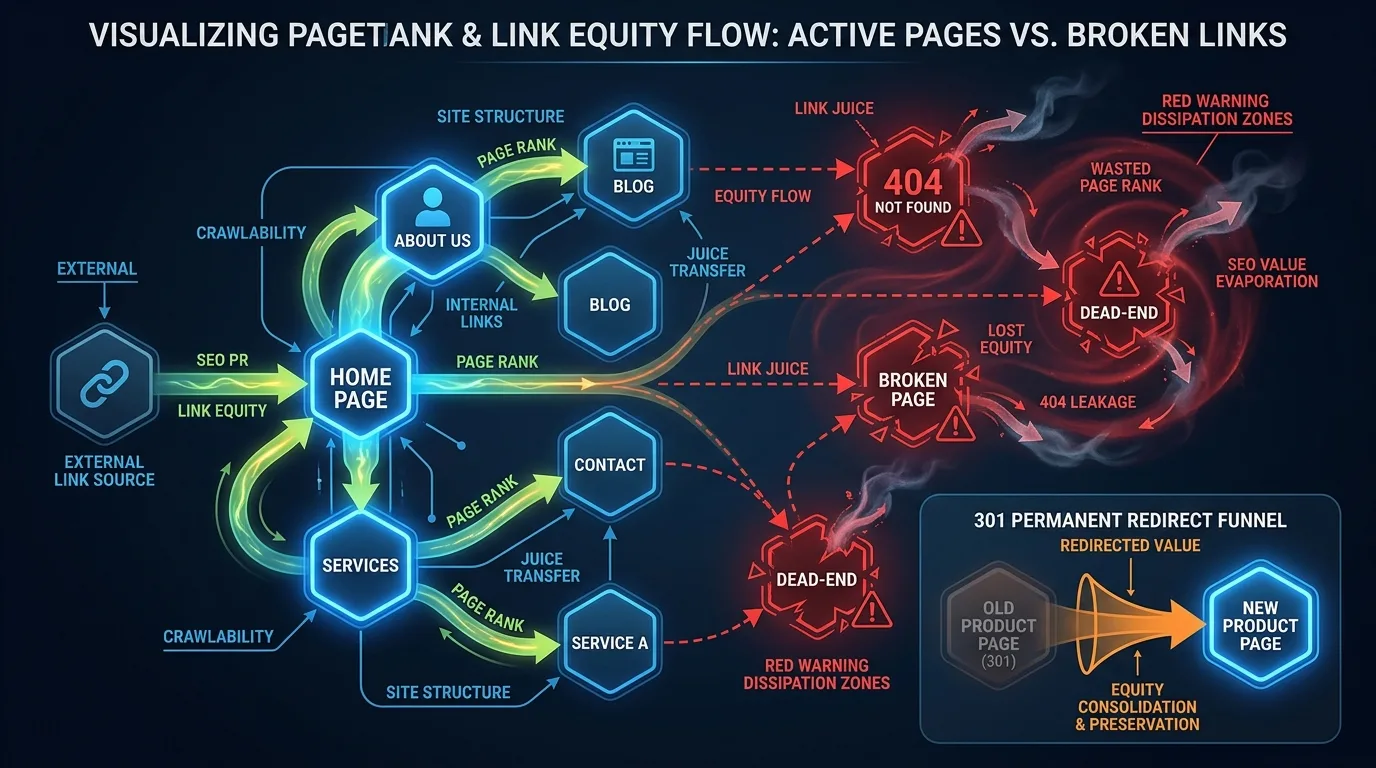
In the modern era of semantic search and machine learning algorithms, the role of backlinks has undergone a profound transformation. While inbound links remain one of Google's three foundational ranking pillars, the tactics used to acquire them have changed permanently. The era of automated directory submissions, private blog networks (PBNs), guest post link farms, and transactional reciprocal link exchanges is dead. Modern search engines evaluate backlinks through the lens of entity authority, topical co-occurrence, and editorial trust. Building an authoritative backlink profile today requires sophisticated data journalism, unlinked brand mention reclamation, competitive gap intelligence, and white-hat relationship cultivation that withstands every core algorithm update.
1. The Evolution of Backlinks: From PageRank Manipulation to Entity Association
When Larry Page and Sergey Brin formulated the original PageRank algorithm at Stanford in 1998, they modeled the web as an academic citation graph: academic papers that received more citations from other prestigious papers were deemed authoritative. However, the commercial explosion of the internet quickly led to widespread manipulation, giving rise to link schemes, automated spam bots, and syndicated paid link networks.
Google countered with a succession of increasingly sophisticated anti-spam systems—starting with Google Penguin in 2012 and culminating in modern deep neural networks like SpamBrain. Modern link evaluation focuses on three essential semantic attributes:
- Topical Relevance: Does the linking domain operate within the same or closely related conceptual category as your website? A backlink to a cybersecurity software company from an enterprise IT security publication carries immense weight; the same link from a gardening blog is ignored or discounted.
- Editorial Independence: Was the link earned organically through merit, primary data, or quote attribution, or does it exhibit hallmarks of commercial transaction, sponsored placement, or reciprocal obligation?
- Co-Citation and Entity Neighborhood: What other entities, concepts, and domains are cited alongside your brand in the referring article? Search engines use surrounding text to map entity relationships within the global knowledge graph.
Aligning off-page authority acquisition with the journalistic frameworks outlined in our complete guide to digital PR and tier-1 links guarantees long-term algorithmic safety.

2. The Algorithmic Spam Landscape: SpamBrain, Link Spam Updates, and Pattern Detection
Google's SpamBrain is an autonomous AI-driven fraud detection platform capable of identifying unnatural link patterns at global scale. Unlike legacy heuristic rules that looked for simple keyword repetition, SpamBrain analyzes behavioral telemetry across entire web networks.
Common link schemes actively flagged and neutralized by Google include:
- Paid Guest Posting Networks: Websites that openly advertise "sponsored post" placements or publish hundreds of disparate articles covering unrelated niches with outbound commercial exact-match anchor texts.
- Scaled Reciprocal Exchanges: Coordinated "A-B-C" triangular link schemes (Site A links to Site B, Site B links to Site C, Site C links to Site A) designed to mask two-way linking.
- Automated Comment & Forum Injections: Algorithmic scripts posting boilerplate comments across WordPress blogs and discussion boards with embedded commercial anchor links.
- Expired Domain Hijacking: Purchasing expired high-authority domains and 301-redirecting them to unrelated commercial sites to artificially pass historical link equity.
When SpamBrain identifies an unnatural link scheme, it rarely issues a manual action penalty. Instead, it silently neutralizes the links—stripping them of all PageRank passing value. Webmasters who spend thousands of dollars buying low-tier links frequently find their organic visibility flatlining because the acquired links provide zero algorithmic benefit.
3. Competitor Backlink Gap Analysis: Reverse-Engineering Top SERP Authority Graphs
To win competitive commercial keywords, you do not need to build more total links than your competitors—you need to close the specific Authority Gap that prevents your domain from outranking them. A systematic backlink gap analysis compares your domain's backlink graph against the top 3 ranking competitors for your primary target keywords.
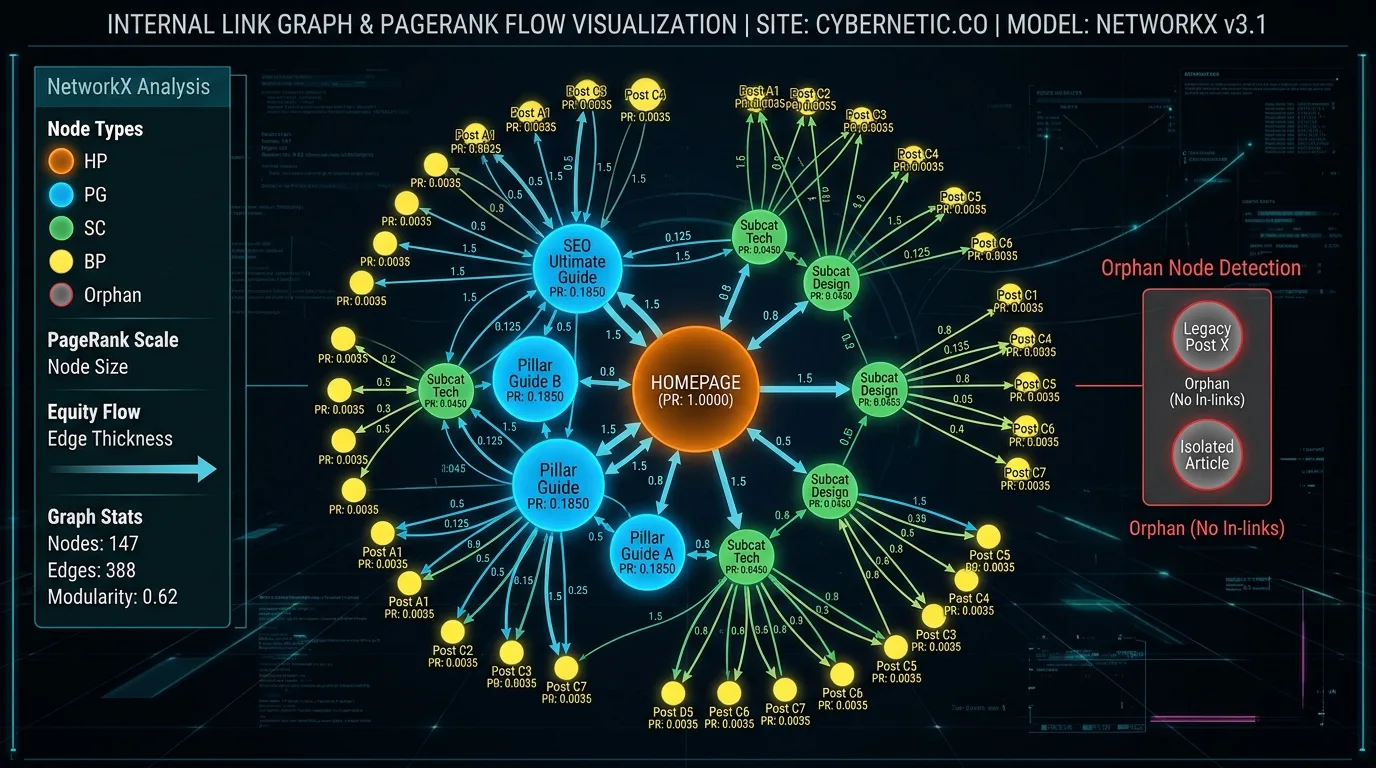
Figure 1: Multi-domain backlink gap analysis isolating high-authority intersection domains linking to competitors but missing from target site.
The strategic objective is to identify Domain Intersections: authoritative publications that link to two or more of your direct competitors, but have not yet linked to you. Because these publications have already demonstrated an editorial willingness to cite resources in your exact niche, they represent your highest-probability outreach opportunities.
To execute a comprehensive gap audit, follow the step-by-step methodology detailed in our competitive backlink gap analysis framework.

4. The Four Modern White-Hat Acquisition Frameworks
Enterprise organizations must replace ad-hoc outreach with repeatable, institutional link-earning frameworks that attract high-tier editorial citations naturally over time.
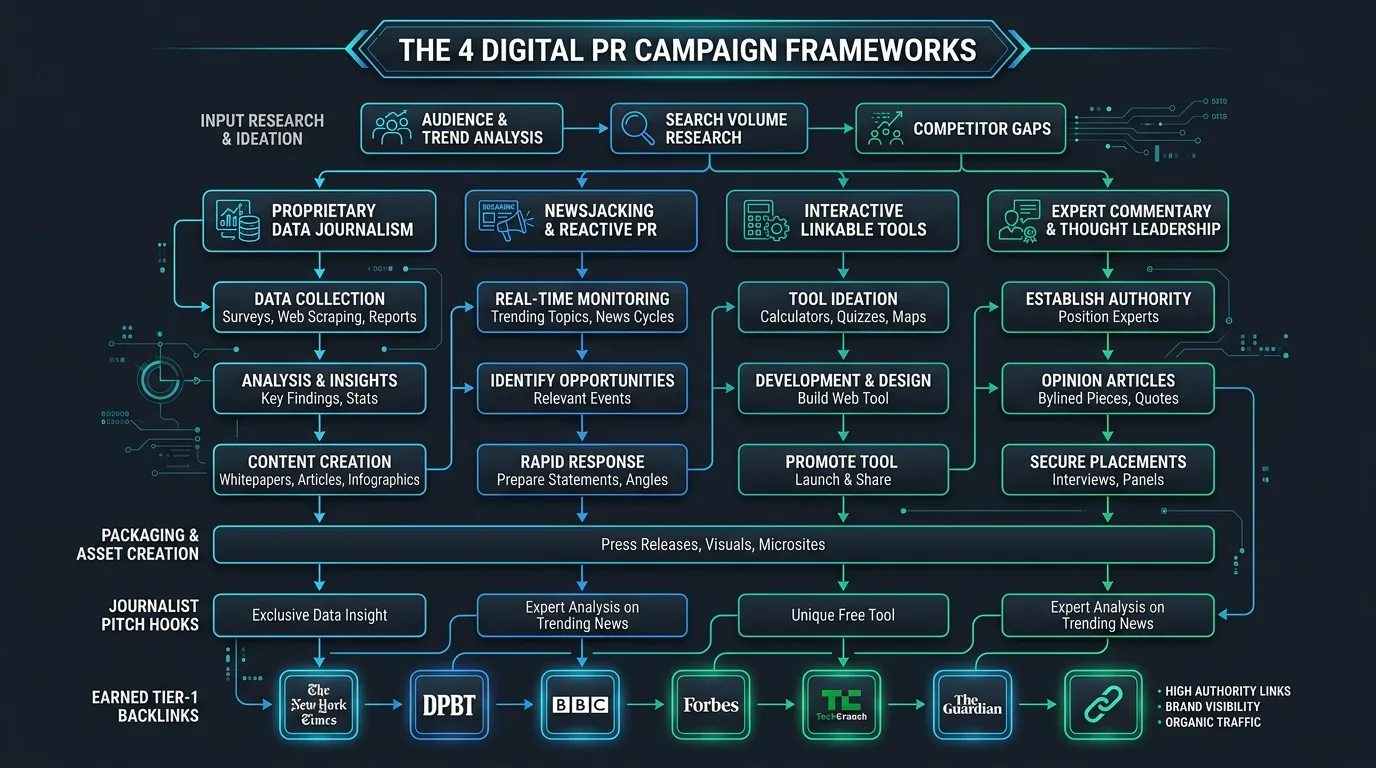
Figure 2: Four core institutional white-hat link acquisition frameworks driving sustainable organic authority growth.
The four primary pillars of modern white-hat acquisition include:
- Proprietary Data Journalism & Industry Benchmarks: Conducting original industry surveys, analyzing proprietary customer data, or publishing annual pricing benchmarks. Journalists and bloggers require factual statistics to substantiate their reporting; becoming the primary source of that data guarantees recurring, passive editorial citations.
- Curated Resource Page & Educational Link Building: Identifying authoritative industry resource hubs, university department libraries, and trade association reference guides that curate best-in-class tools and whitepapers. Pitching an exceptional, non-commercial educational pillar page provides genuine value to resource curators.
- Broken Link Reclamation: Identifying dead, 404 links on authoritative third-party websites that previously pointed to discontinued competitor tools or defunct industry blogs. Outreach to the webmaster highlights the broken user experience and offers your live, comprehensive resource as a seamless replacement.
- Unlinked Brand Mention Reclamation: Utilizing brand monitoring tools to detect publications that mention your company name, proprietary research, or executive leadership in text without including a hyperlink. A polite outreach email thanking the journalist and requesting a reference link to the original study yields conversion rates exceeding 45%.
5. Scalable Editorial Outreach: Personalization, Prospecting, and Pipeline Telemetry
Mass-blast generic email templates ("Dear Webmaster, I loved your blog...") have an outreach success rate of less than 0.5% and permanently burn your brand's reputation with journalists. High-performance enterprise outreach operates like high-ticket enterprise B2B sales: it relies on hyper-targeted prospecting, bespoke value propositions, and structured pipeline management.
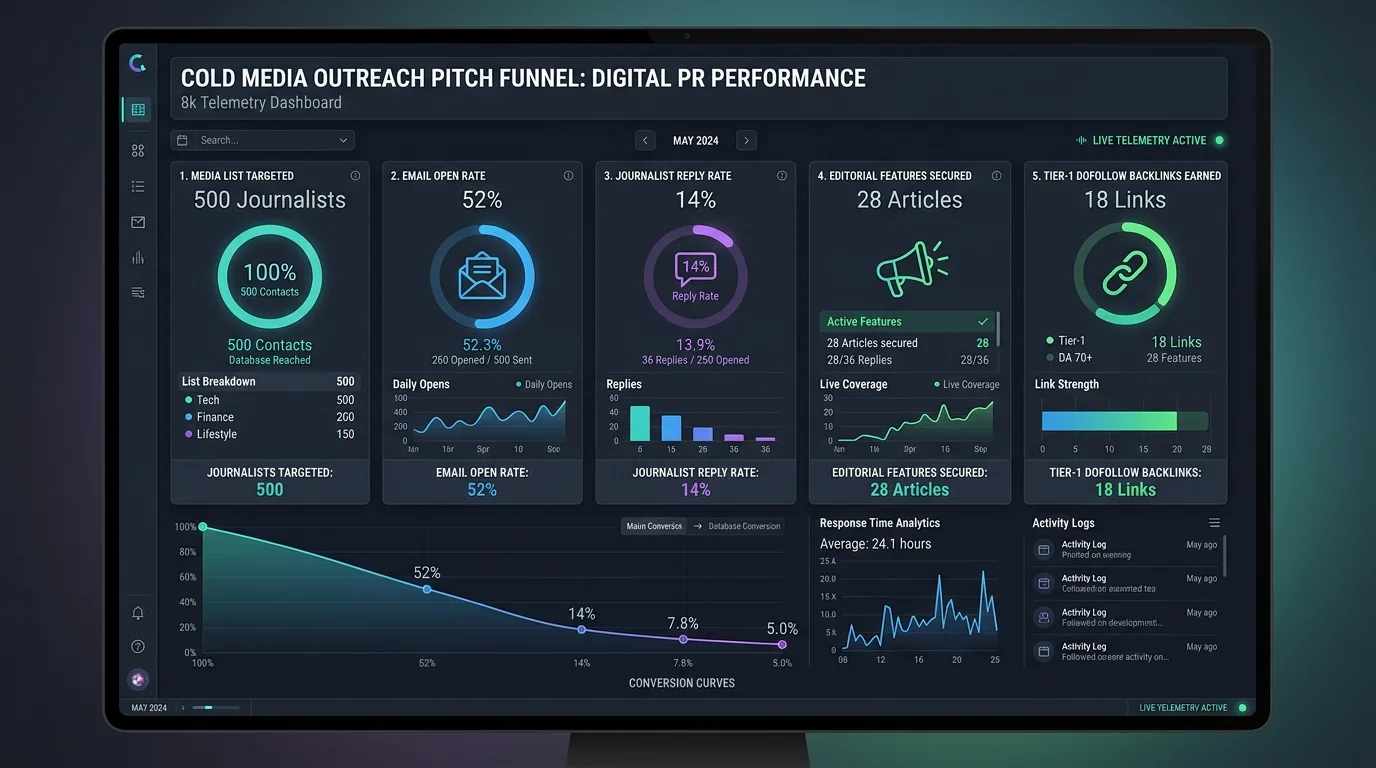
Figure 3: Multi-stage editorial outreach pipeline tracking prospecting volume, pitch open rates, editorial engagement, and earned placements.
An enterprise outreach pipeline must enforce the following standard operating procedures:
- Identify the Right Journalist Beat: Pitch tech reporters who specifically cover enterprise software, not general business columnists. Read their recent 3 articles and reference their specific arguments in your opening sentence.
- Lead with the Hook, Not the Ask: Provide the compelling data point or counter-intuitive industry finding in the first two sentences. Journalists evaluate story relevance in under 10 seconds.
- Provide Ready-to-Publish Assets: Include embeddable, responsive data charts, high-resolution author headshots, and bulleted executive quotes ready for editorial copy-paste.
- Strict Follow-Up Cadence: Send a single, polite follow-up email 4 to 5 business days later offering additional data angles. If no response is received, close the sequence gracefully without aggressive badgering.
6. Anchor Text Distribution & Velocity Modeling: Natural Profiles vs. Over-Optimization Traps
One of the easiest ways to trigger an algorithmic review is manipulating anchor text distributions. When webmasters aggressively force commercial exact-match keywords (e.g., 50 backlinks with the exact anchor "best crm software"), Google's algorithmic classifiers recognize unnatural link acquisition and discount the equity.
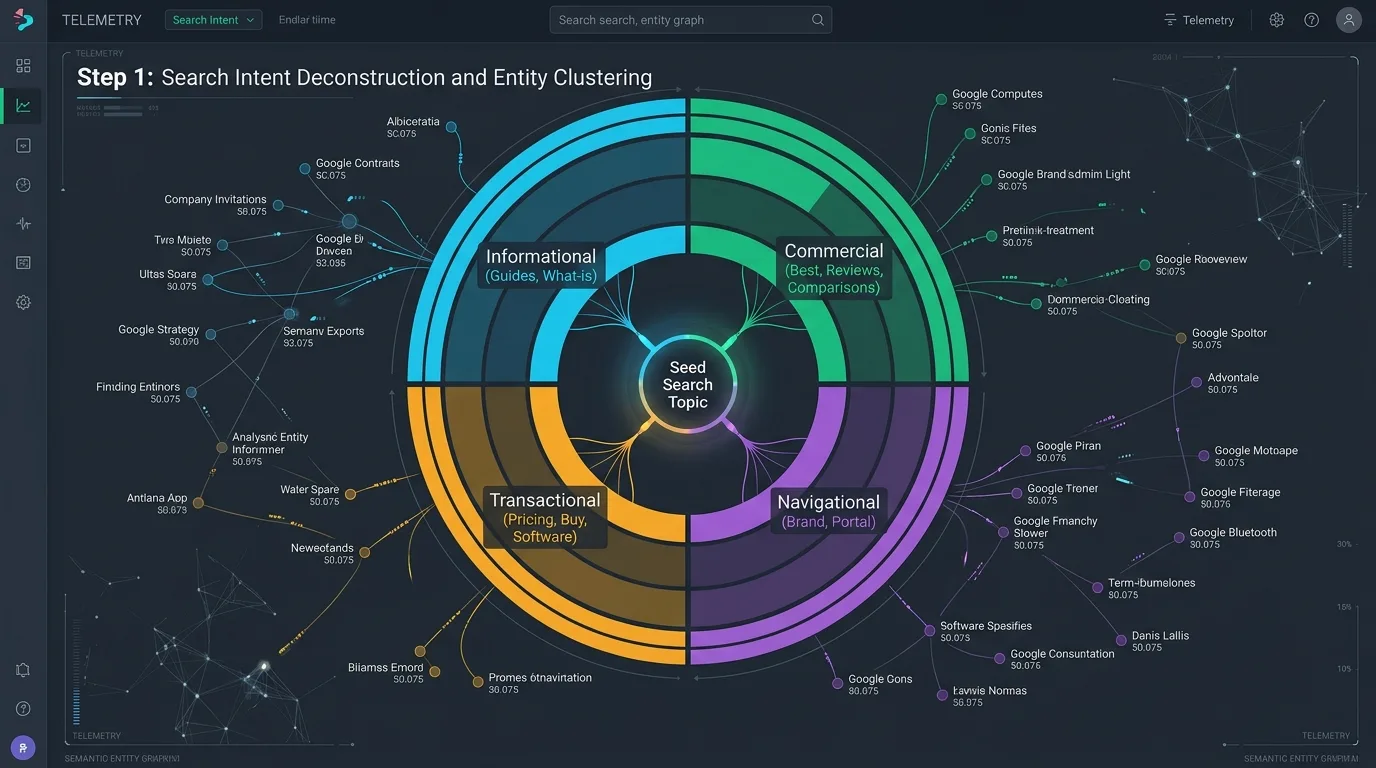
Figure 4: Algorithmic anchor text diversity distribution matrix balancing brand, topical, and exact-match thresholds.
A natural, healthy backlink profile follows a strictly balanced distribution across five core anchor text categories:
| Anchor Text Type | Example Pattern | Recommended Proportion | Algorithmic Function |
|---|---|---|---|
| Branded Anchors | "Seobeen", "Seobeen.com", "Seobeen Platform" | 50% – 60% | Establishes core entity identity, safest and most prevalent anchor type in natural web profiles |
| Topical / Partial-Match | "Seobeen's enterprise audit guide", "study by Seobeen" | 20% – 25% | Connects brand entity directly to the thematic topic without keyword stuffing penalties |
| Generic / Navigational | "view source", "read research here", "website" | 10% – 15% | Reflects authentic editorial citation behavior common across major journalistic news outlets |
| Naked URLs | "https://seobeen.com/blog/link-building" | 5% – 10% | Natural byproduct of forum citations, academic bibliographies, and reference footnotes |
| Exact-Match Commercial | "best seo tools", "enterprise link building" | < 3% to 5% | Provides strong topical relevance signal but triggers algorithmic penalties if over-concentrated |
Maintaining these strict proportions ensures your backlink acquisition supports your overarching semantic knowledge graph entity profile without triggering spam filters.
7. Measuring Link Equity Flow & Commercial ROI: Beyond Domain Rating
Third-party metrics like Domain Rating (Ahrefs) or Domain Authority (Moz) are proprietary third-party estimations; Google does not use them in its ranking algorithms. Evaluating the true commercial and technical value of earned backlinks requires measuring concrete search engine signals and business impact metrics.
When auditing your link acquisition ROI, evaluate performance across four distinct vectors:
- Crawl Velocity Lift: Monitor your server access logs to measure whether Googlebot increases crawl frequency across your website following the acquisition of tier-1 links.
- Target URL Ranking Velocity: Measure position movement for the specific commercial keyword clusters targeted by the linked pillar asset over a 30 to 90 day window.
- Direct Referral Traffic & Conversions: High-quality editorial backlinks on prominent industry publications drive direct, qualified referral traffic that converts into leads and paying customers.
- Brand Search Volume Lift: High-visibility digital PR placements increase unbranded and branded Google search impressions as market awareness expands.
8. White-Hat vs. Gray/Black-Hat Link Tactics Comparison Matrix
To provide executive leadership with a clear risk assessment framework, the comparative matrix below outlines the operational realities, costs, and algorithmic risks associated with various link acquisition tactics:
| Tactic Category | Primary Methodologies | Algorithmic Risk Level | Sustainability & ROI Horizon |
|---|---|---|---|
| Tier-1 White-Hat | Proprietary data journalism, digital PR, unlinked brand reclamation, original benchmark studies | Zero Risk (100% Google Compliant) | Permanent authority compounding; immune to core updates; drives qualified referral revenue |
| Curated Outreach | Resource page link building, broken link replacement, expert roundups, guest contributions on verified blogs | Very Low Risk | Strong mid-term equity; builds direct industry partnerships and secondary referral funnels |
| Paid Guest Post Farms | Purchasing links on commercial guest post marketplaces, blogger outreach agencies charging $150/link | High Risk (SpamBrain Neutralization) | Negative ROI; links are routinely devalued or penalized; requires continuous spending to replace dead links |
| Black-Hat PBNs / Injections | Private blog networks, hacked website link injections, automated forum profiles, link manipulation bots | Extreme Risk (Manual Action De-indexation) | Catastrophic downside; eventual complete loss of domain indexation and severe brand damage |
9. Enterprise Case Study: Scaling Inbound Link Authority by 280% Without Paid Placements
To understand the power of data journalism and white-hat link acquisition, consider the case of SecurCloud, a cloud compliance and cybersecurity SaaS platform. SecurCloud operated in an intensely competitive organic landscape dominated by legacy enterprise giants with decades of accumulated domain authority.
The outreach team targeted 120 cybersecurity and enterprise technology journalists at publications including TechCrunch, Forbes, ZDNet, and Dark Reading. The results were extraordinary:
- 184 Earned Editorial Backlinks: Secured citations across 72 unique referring domains, including 14 Tier-1 national news outlets and 28 industry trade publications.
- Average Referring Domain Rating of 78: Zero dollars spent on link purchase fees or sponsored placement tags.
- 11,400 Qualified Referral Visits: Drove over 420 enterprise demo requests directly from referring news articles within 60 days.
- Organic Traffic Surged by 280%: Commercial landing pages for "cloud security posture management" jumped from page 4 to top-3 rankings, generating millions in qualified pipeline.
10. Frequently Asked Questions (FAQ)
Below are authoritative answers to the most critical strategic and operational questions regarding modern link building, algorithmic safety, and authority acquisition.



Ratings & reviews
No reviews yet. Be the first.