
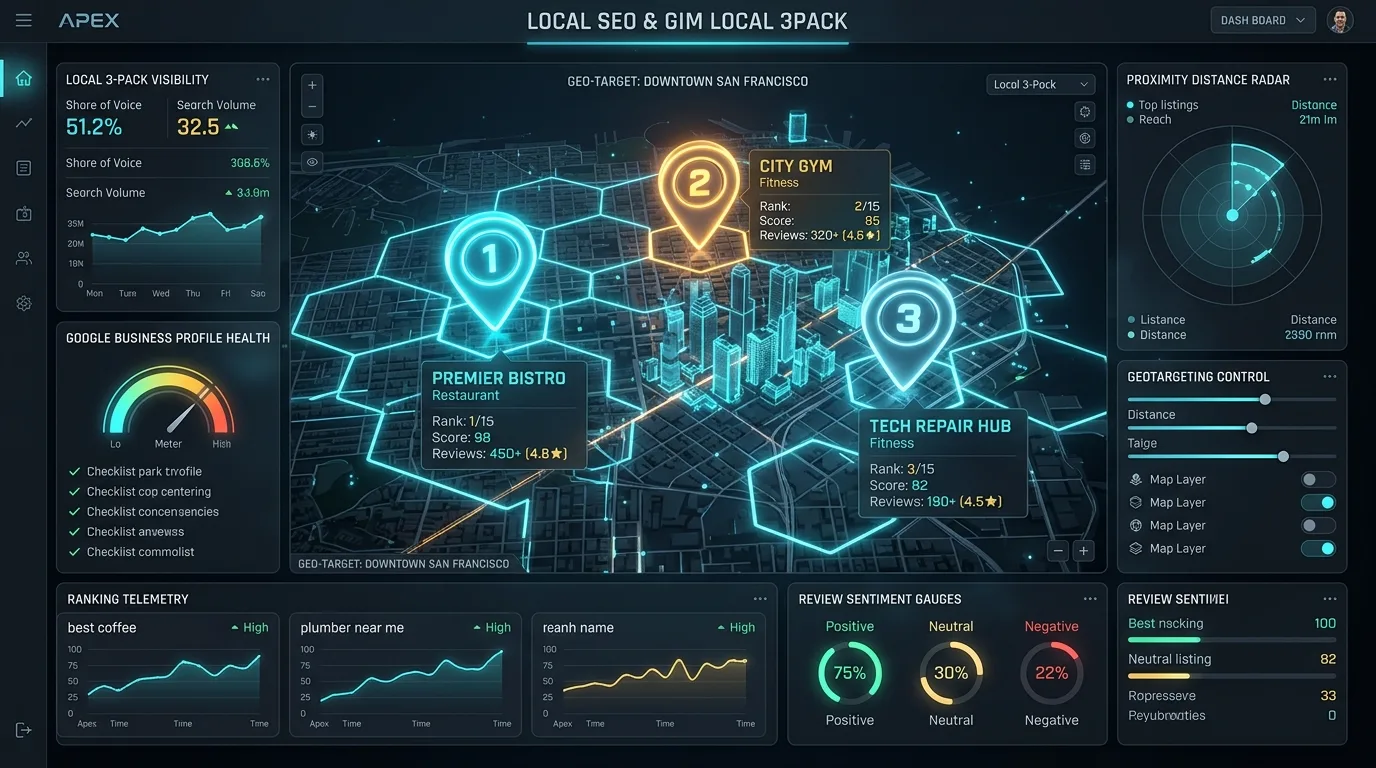
For multi-location retail chains, franchise systems, and healthcare networks, managing local search visibility across hundreds or thousands of physical storefronts is an engineering problem of immense complexity. When your brand operates in fifty metropolitan markets with varying demographic densities and distinct local competitive landscapes, single-location SEO tactics collapse. Dominating the Google Maps Local 3-Pack and geo-modified organic search results at enterprise scale requires unified data syndication, dynamic store locator architectures, bulk Google Business Profile governance, and hyper-localized on-page entity optimization.
1. The Multi-Location Local SEO Challenge: Enterprise Scale vs. Local Relevance
In single-location local SEO, a business owner can manually optimize a single Google Business Profile (GBP), cultivate community reviews, and curate twenty local directory citations. However, when an enterprise scales to 250, 500, or 2,500 storefronts, manual operations are impossible. Data decay, unauthorized edits from third-party Google Maps users, inconsistent business hours across holidays, and duplicate listings create catastrophic visibility leakages.
Google's local ranking engine evaluates three primary algorithmic pillars for every geographical query:
- Relevance: How well a local business profile matches what the searcher is looking for, dictated by category selection, service menus, on-page content, and structured schema markup.
- Distance (Proximity): How far each potential business location is from the geographical location term used in the query or the user's GPS/IP physical coordinates.
- Prominence: How well-known a business is in the physical and digital world, calculated from backlink equity, review volume, star ratings, local citation syndication, and historical entity recognition.
The following architectural infographic illustrates the foundational ranking factors evaluated by Google's Local 3-Pack algorithms across multi-location networks.
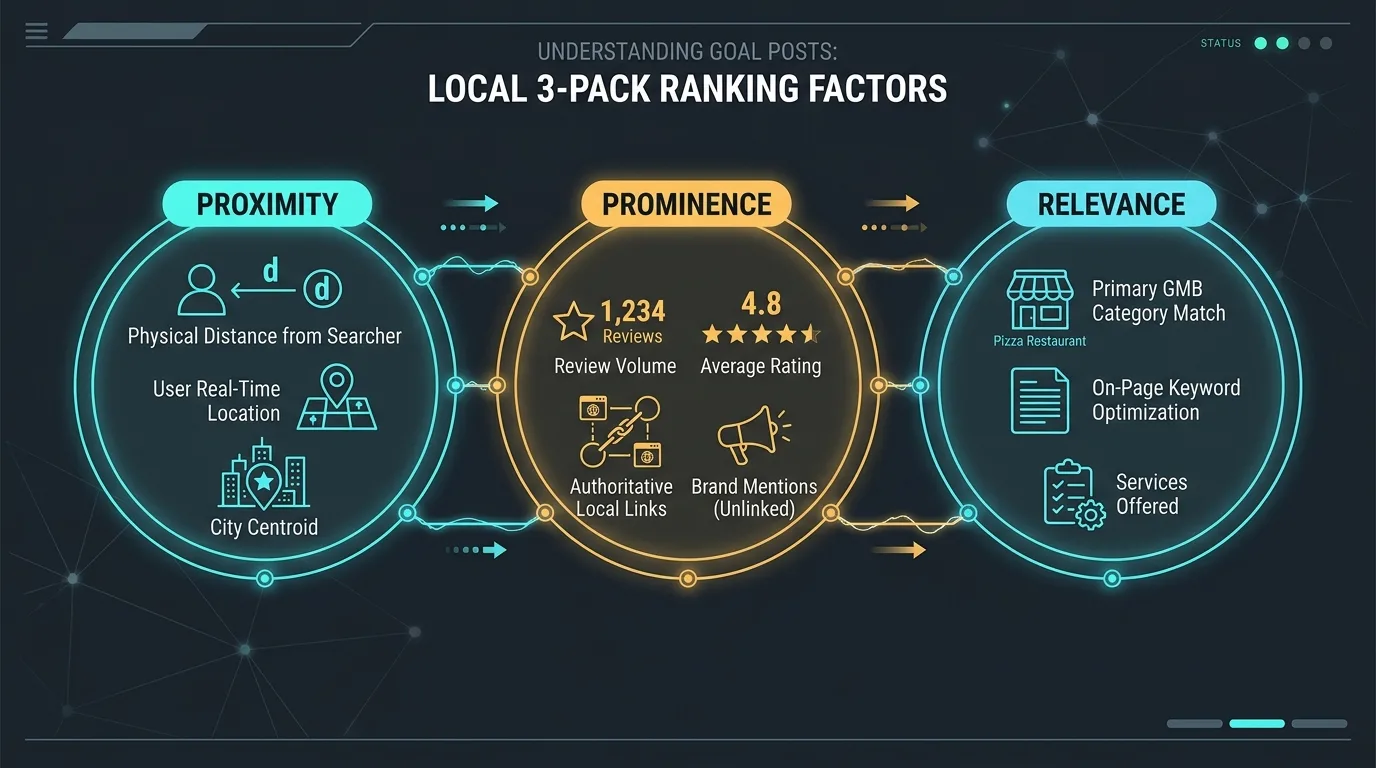
Figure 1: Core algorithmic components governing Google Maps Local 3-Pack visibility and prominence.
To overcome proximity bias and maximize prominence across sprawling markets, brands must coordinate their central digital presence with the tactical frameworks detailed in our definitive guide to local SEO and Google Maps.
2. Centralized Google Business Profile Governance & Bulk Verification
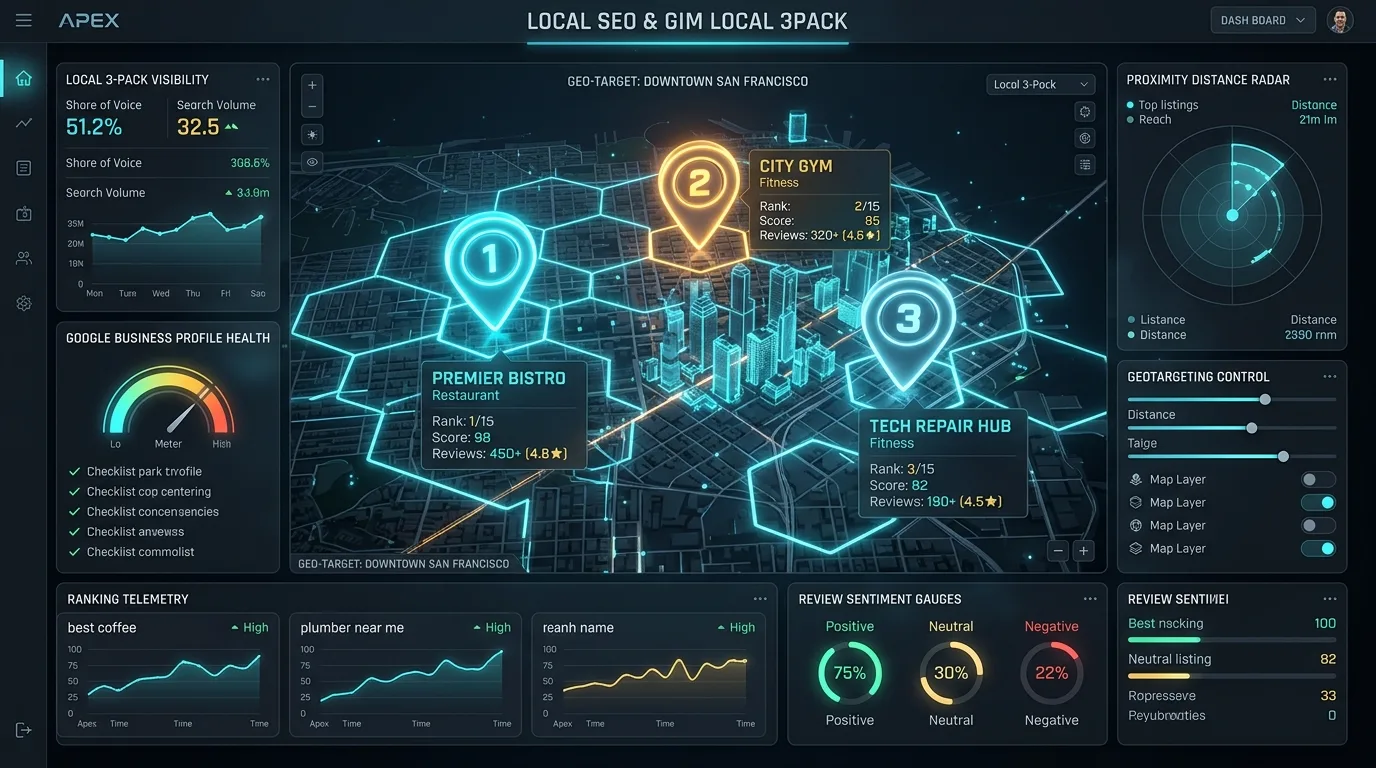
When operating more than 10 physical locations, managing GBP accounts individually via consumer web dashboards is inefficient and error-prone. Enterprises must transition to Google Business Profile Organization Accounts equipped with Bulk Location Verification.
Bulk verification grants an enterprise domain the authority to manage, publish, and verify hundreds of physical locations simultaneously without requiring individual physical postcards or video audits for each branch. To achieve and maintain bulk verification status, an organization must adhere to strict operational requirements:
- Single Corporate Domain Ownership: The master GBP account must be authenticated using an enterprise domain email (e.g.,
seo@brand.com) matching the official website URL. - Minimum 10 Eligible Locations: All locations must belong to the same brand, share the same parent legal entity, and operate as physical customer-facing storefronts (service-area-only businesses without customer-facing facilities are ineligible for bulk verification).
- Standardized Store Spreadsheet Schemas: Location data must be ingested using standardized Google spreadsheet templates or programmatically synchronized via the Google Business Profile API. Critical fields include
Store Code(a persistent internal database identifier),Business Name,Address,Latitude/Longitude,Primary Category, andLanding Page URL. - Centralized Lock-Down of User Roles: Prevent local branch managers from altering core category classifications or modifying canonical website URLs by establishing strict role-based access control (RBAC) across your agency and regional management hierarchy.
3. Store Locator Architecture: Geocoded Hubs, Subdirectories, and Dynamic Search
Your website's store locator is the authoritative digital anchor connecting Google's crawlers to your physical stores. A poorly engineered store locator—such as one built entirely inside a client-side JavaScript canvas or behind an uncrawlable form search—prevents Googlebot from discovering and indexing individual store pages.
An enterprise-grade store locator must be architected as a hierarchical, crawlable HTML directory tree:
/locations/                      (Root Directory / Country Hub)
  /locations/california/         (State / Region Hub)
    /locations/california/los-angeles/  (City / Metro Hub)
      /locations/california/los-angeles/downtown-7th-st/  (Canonical Storefront URL)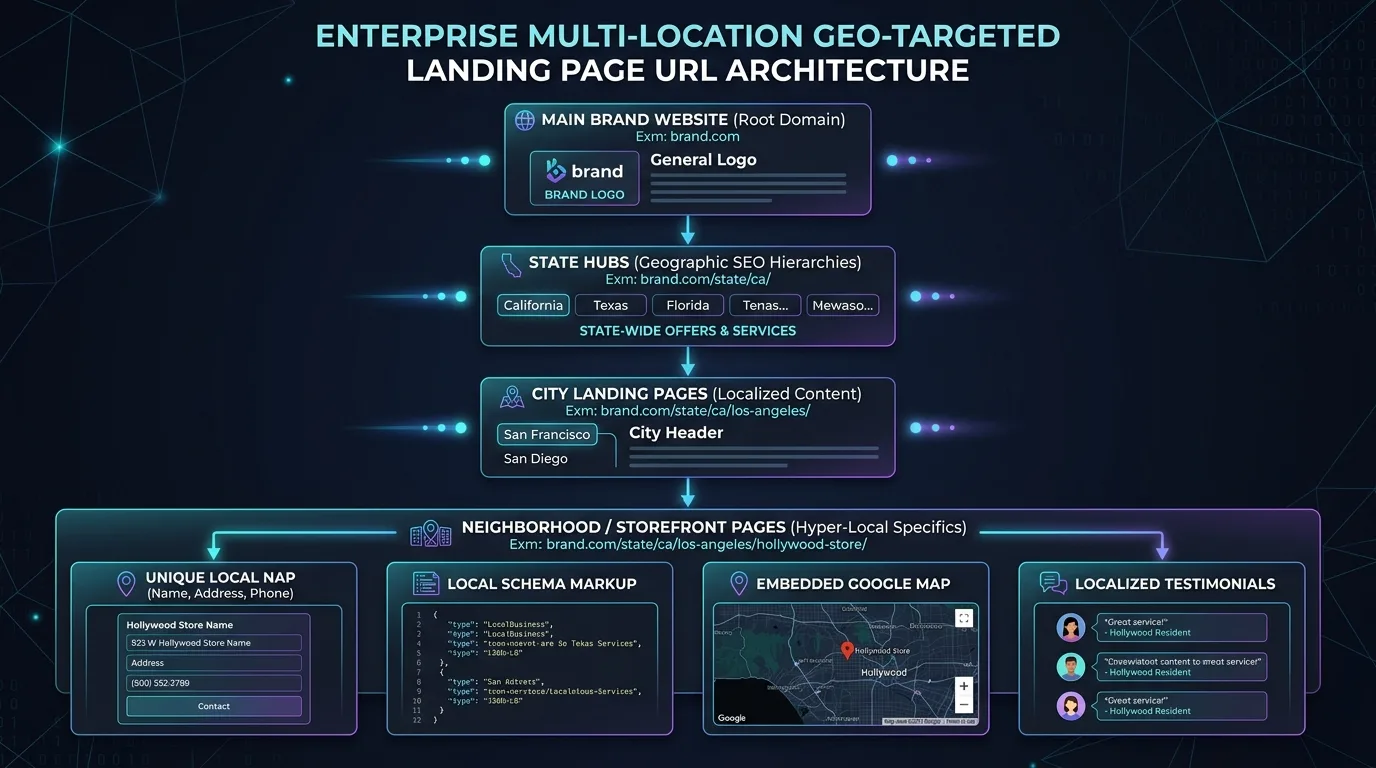
Figure 2: Hierarchical directory tree and geocoded internal linking taxonomy for enterprise multi-location brands.
Every single location page must exist as a static, pre-rendered HTML URL accessible via standard anchor links from its parent metro and state directories. This ensures search engine bots can traverse the entire retail footprint without executing complex JavaScript search interactions.
4. On-Page Optimization for Storefront Landing Pages: Avoiding Doorway Penalties
One of the most dangerous traps in enterprise local SEO is the creation of "doorway pages"—hundreds of cookie-cutter city pages that feature identical marketing copy with only the city name swapped out. Google's algorithms aggressively identify and de-index doorway pages, viewing them as scaled search manipulation.
To avoid doorway penalties, every individual store landing page must provide genuine, differentiated, locally unique content:
- Unique Store Attributes: Physical square footage, drive-thru availability, EV charging stations, wheelchair accessibility, and specific department amenities.
- Local Management & Team Profiles: Store manager name, photo, and professional background.
- Hyper-Local Directions: Detailed driving and public transit instructions mentioning prominent local landmarks, interstate exits, and adjacent commercial districts.
- Localized Customer Testimonials: Display reviews and ratings specifically submitted for that individual store location.
- Real-Time Local Inventory: Integration with inventory management systems showing which products are currently in-stock on the shelves at that exact address.
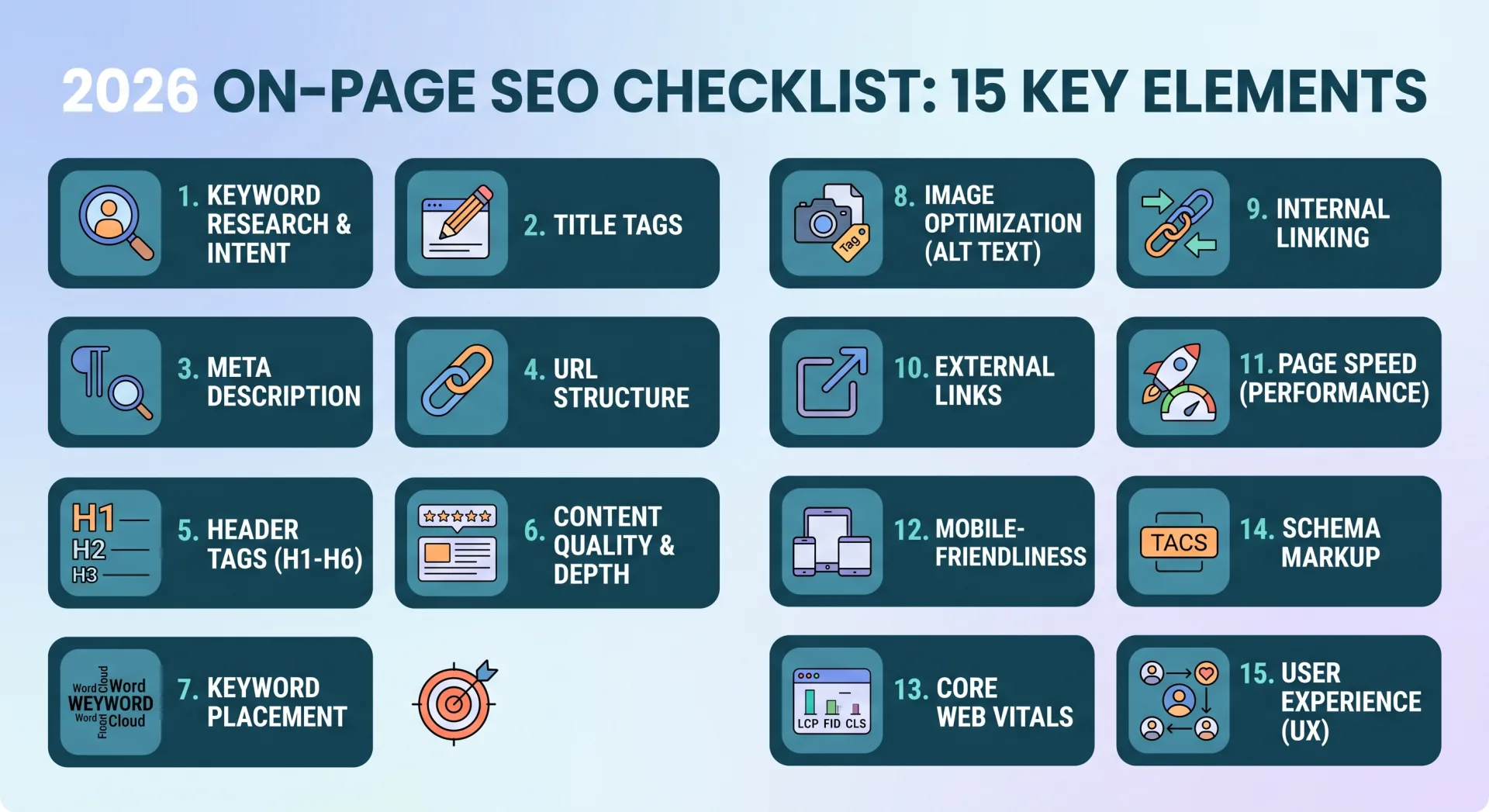
Pairing unique local copy with strict on-page SEO checklist elements guarantees maximum crawl value and user conversion rates.
5. LocalBusiness Schema Architecture: Linking GeoCoordinates, OpeningHours, and Parent Organization
Search engines require unambiguous structured data to reconcile your website's location pages with Google Business Profiles and third-party data aggregators. Every individual storefront URL must embed a dedicated LocalBusiness (or specific subtype such as Restaurant, MedicalClinic, or AutoRepair) JSON-LD schema markup.
To establish the parent-child relationship between your corporate headquarters and regional stores, the local schema must reference the master corporate entity using the parentOrganization and branchOf properties:
{
  "@context": "https://schema.org",
  "@type": "MedicalClinic",
  "@id": "https://seobeen.com/locations/ca/los-angeles/downtown#clinic",
  "name": "Seobeen Health - Downtown Los Angeles",
  "url": "https://seobeen.com/locations/ca/los-angeles/downtown",
  "telephone": "+1-213-555-0199",
  "branchOf": {
    "@type": "Organization",
    "@id": "https://seobeen.com/#organization",
    "name": "Seobeen Health Network"
  },
  "address": {
    "@type": "PostalAddress",
    "streetAddress": "700 S Flower St, Suite 1400",
    "addressLocality": "Los Angeles",
    "addressRegion": "CA",
    "postalCode": "90017",
    "addressCountry": "US"
  },
  "geo": {
    "@type": "GeoCoordinates",
    "latitude": 34.0489,
    "longitude": -118.2588
  },
  "openingHoursSpecification": [
    {
      "@type": "OpeningHoursSpecification",
      "dayOfWeek": ["Monday", "Tuesday", "Wednesday", "Thursday", "Friday"],
      "opens": "08:00",
      "closes": "18:00"
    },
    {
      "@type": "OpeningHoursSpecification",
      "dayOfWeek": ["Saturday"],
      "opens": "09:00",
      "closes": "14:00"
    }
  ]
}
This structured implementation connects seamlessly into your overarching connected enterprise schema markup knowledge graph, enabling search engines to map operating hours and exact geocoordinates into rich SERP snippets.
6. Data Aggregator Syndication: Managing NAP Consistency Across the Ecosystem
Search engines do not rely exclusively on your website or Google Business Profile to verify location legitimacy. Google continuously queries a network of core data aggregators and business registry platforms to cross-validate Name, Address, and Phone Number (NAP) consistency.
Discrepancies in suite numbers, outdated phone numbers, or inconsistent legal names across secondary directories degrade Google's algorithmic confidence, depressing local 3-pack visibility.
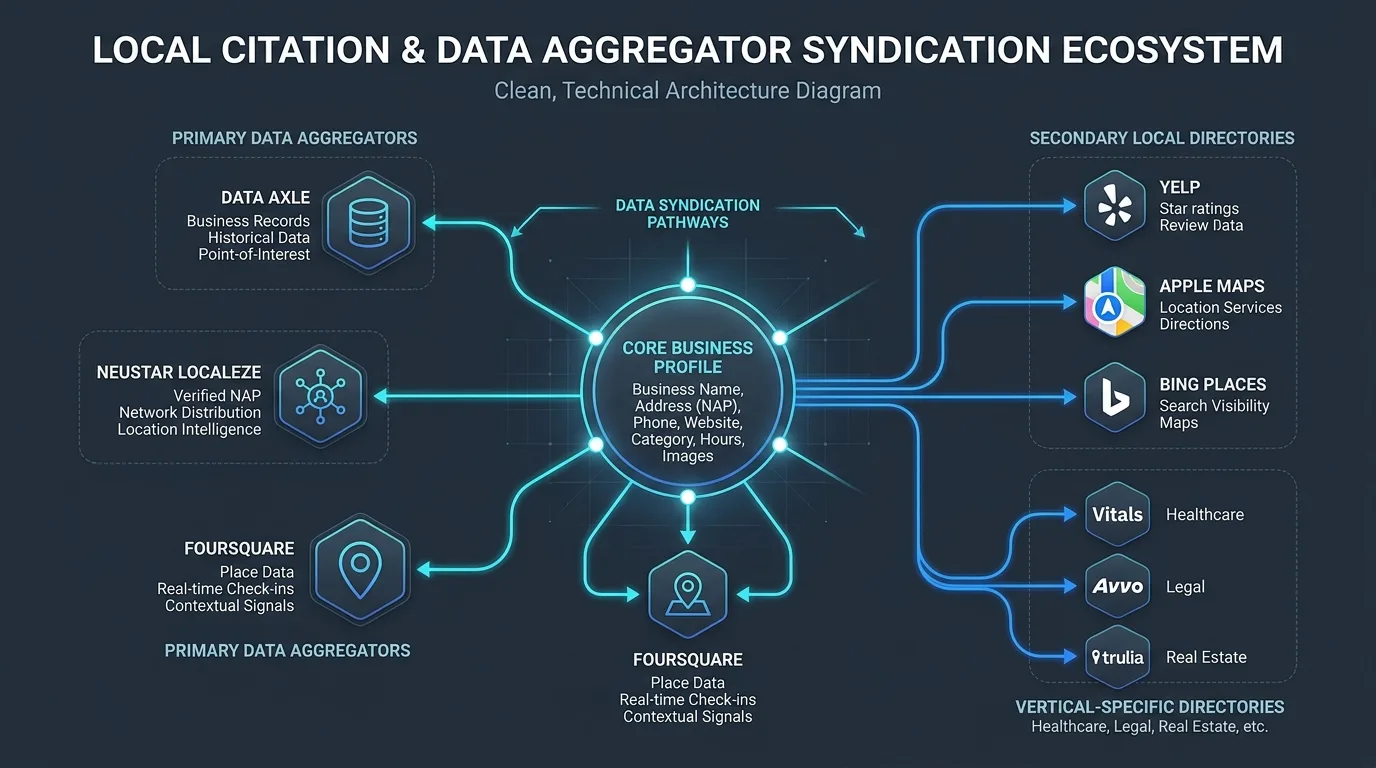
Figure 3: Tier-1 data aggregator syndication pipeline pushing synchronized NAP records to tier-2 directories and GPS networks.
For multi-location enterprises, direct manual directory submissions are impossible. Brands must partner with enterprise syndication platforms (e.g., Yext, BrightLocal, or Uberall) to push verified API feeds directly to the primary data aggregators (Data Axle, Neustar Localeze, and Foursquare) as well as primary Tier-1 networks (Apple Business Connect, Bing Places, and Yelp).
7. Review Velocity, Sentiment Analysis, and Automated Reputation Management
Customer reviews are both a direct local ranking signal and the most potent conversion driver in local search. For multi-location enterprises, managing review acquisition across 500 storefronts requires automated workflows that drive high review velocity while monitoring sentiment trends.
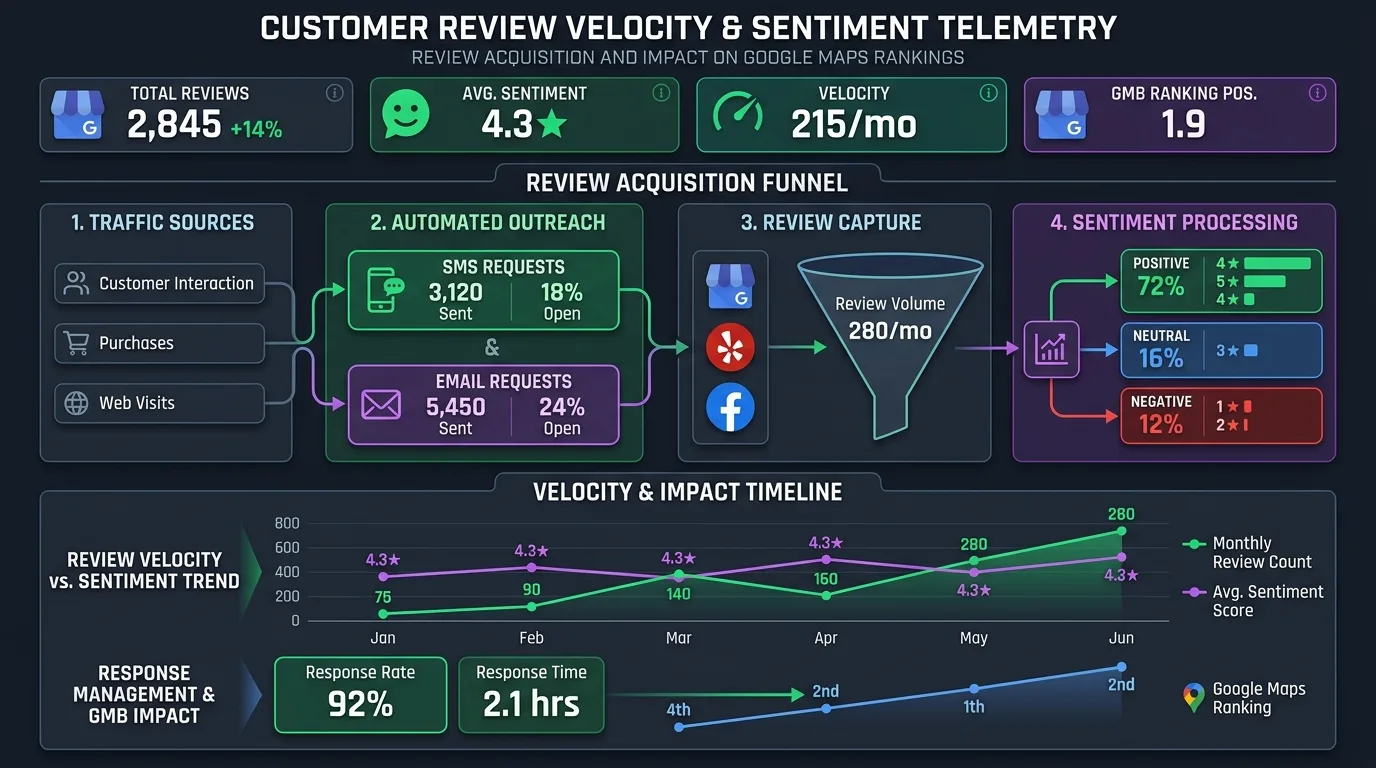
Figure 4: Automated review velocity tracking, sentiment extraction, and operational response telemetry.
An enterprise reputation management framework must operationalize three critical processes:
- Automated Post-Transaction Review Requests: Connect your Point of Sale (POS) or CRM system to trigger automated SMS or email review prompts within 2 to 4 hours of transaction completion, routing customers directly to that specific store's verified GBP review URL.
- NLP Sentiment Clustering: Ingest all incoming reviews into a central natural language processing pipeline to detect recurring operational issues (e.g., "long wait times," "rude cashier," "dirty restrooms") segmented by store location and regional district.
- SLA-Driven Response Governance: Establish standard operating procedures requiring 100% of negative reviews (1-2 stars) to receive professional, empathetic corporate responses within 24 business hours. Include keywords and localized terms naturally in responses without robotic keyword stuffing.
8. Enterprise Multi-Location vs. Single-Location Operations Comparison
The operational divide between managing an individual brick-and-mortar storefront and executing an enterprise multi-location campaign across hundreds of jurisdictions is profound. National enterprises face unique organizational bottlenecks, including conflicting corporate branding mandates, distributed franchise owner expectations, and varied regional search volumes. Managing local authority at this scale requires programmatic governance systems that automate routine metadata updates while retaining granular control over localized content variations.
The comparative framework below details the specific operational contrasts between single-store local SEO execution and an enterprise multi-location architecture:
| Operational Dimension | Single-Location Local SEO | Enterprise Multi-Location SEO (100+ Locations) |
|---|---|---|
| GBP Management | Manual web dashboard edits and single postcard verification | API synchronization, bulk verification, and centralized RBAC permissions |
| Landing Page Architecture | Single contact page with embedded map | Hierarchical State > City > Storefront directory with dynamic geocoding |
| Citation Building | Manual creation on top 20-30 local business directories | Automated API syndication to major data aggregators and tier-1 GPS engines |
| Schema Markup | Static LocalBusiness JSON-LD placed in header | Dynamic templated schema with branchOf linking to master Organization graph |
| Review Generation | In-person verbal requests and counter QR codes | Automated CRM/POS post-purchase SMS triggers and centralized NLP sentiment monitoring |
| Rank Tracking | Tracking 10-20 keywords from a single geographic centroid | Geo-grid rank tracking evaluating 50+ grid nodes per store across hundreds of locations |
In addition to technical factors, enterprise brands must manage internal cross-functional communication between digital marketing teams, real estate development teams, and regional store operators. When a new retail storefront opens or an underperforming branch relocates, the digital launch sequence must be coordinated months in advance—initiating Google Business Profile creation, directory syndication, and landing page indexing before the physical ribbon-cutting ceremony occurs.
9. Enterprise Case Study: Scaling Organic Foot Traffic by 142% Across 320 Retail Stores
To demonstrate the quantifiable impact of an enterprise local SEO restructuring, consider the case of Apex Outdoor Gear, a national retail chain operating 320 sporting goods stores across the United States. Prior to the project, Apex suffered from severe local search fragmentation: store pages were hosted on a third-party subdomain with unindexable AJAX maps, their Google Business Profiles were managed ad-hoc by regional store managers, and over 40% of their local listings contained inaccurate phone numbers.
/locations/state/city/store), deployed server-rendered HTML pages with custom local amenities and localized photography, and implemented multi-tiered LocalBusiness schema. Concurrently, they secured bulk GBP verification and deployed automated review prompts linked to their digital receipt system.Within nine months of deployment, the enterprise achieved extraordinary performance improvements across their entire geographic footprint:
- 142% Increase in Google Maps Actions: Driving directions, phone calls, and website visits originating directly from Local 3-Pack listings more than doubled.
- Top-3 Local Pack Share Surged to 68%: Apex locations ranked in the top-3 positions for their primary product categories across 68% of targeted geo-grid coordinates within a 5-mile radius.
- Review Velocity Multiplied by 4.5x: Average store star rating improved from 3.8 to 4.6 stars across over 45,000 new verified customer reviews.
- Estimated $18.4M Organic Revenue Impact: Direct offline store sales attributed to local search discovery increased substantially, delivering an unprecedented return on their digital infrastructure investment.
10. Frequently Asked Questions (FAQ)
Below are authoritative answers to the most common questions encountered when designing and executing enterprise multi-location local search strategies.
How does Google Business Profile bulk verification work?
Should store locator pages live on a subdomain or a subfolder?
brand.com/locations/). Subfolders inherit the established domain authority and PageRank of the primary corporate domain. Hosting locators on third-party subdomains (such as stores.brand.com) isolates location pages and severely weakens their organic ranking potential.How do we prevent city landing pages from being penalized as doorway pages?
What is a Geo-Grid rank tracker and why is it essential for multi-location SEO?
How should the website URL field in Google Business Profile be configured?
brand.com/locations/dallas-north), NOT to the national homepage. Pointing to the localized page reinforces geographic relevance, passes local schema signals, and provides a more relevant landing experience for users.How do data aggregators affect multi-location rankings?
Can local branch managers be allowed to edit their Google Business Profiles?
What schema markup should be deployed on multi-location store pages?
Store, FinancialService, MedicalClinic) containing complete address, telephone, geo-coordinates, and opening hours. Crucially, connect the local entity to your parent brand using the branchOf or parentOrganization property.


Ratings & reviews
No reviews yet. Be the first.