
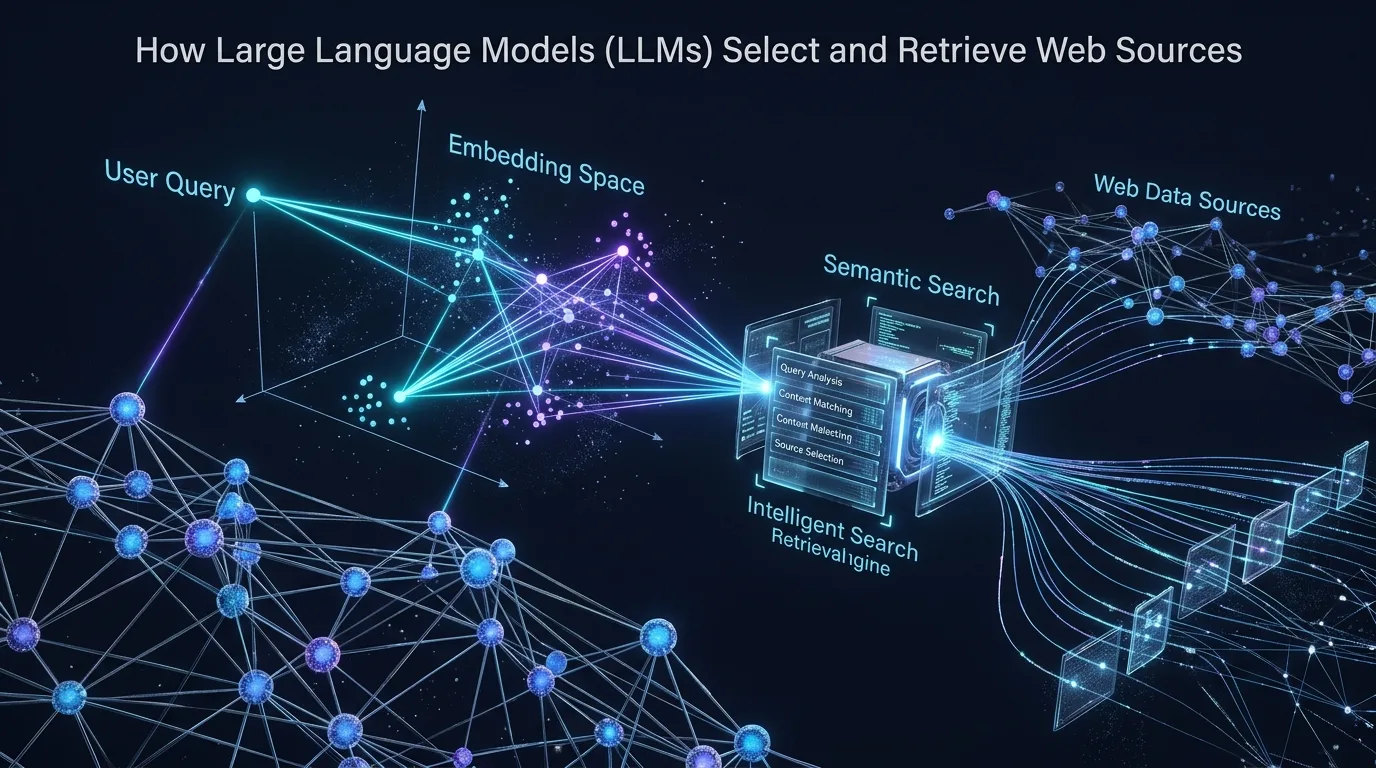
For three decades, the fundamental architecture of the World Wide Web was engineered around a simple premise: a human sitting before a graphical interface, typing a search query into a browser, scanning a list of blue hyperlinks, and manually clicking to read a web page. Today, that foundation is undergoing its most radical transformation since the invention of HTTP. We are transitioning rapidly from the human-navigated web to the Agentic Web—an ecosystem where autonomous, tool-calling AI agents execute end-to-end research, procurement, synthesis, and decision-making on behalf of human users.
By 2030, the majority of web requests will not originate from human eyes clicking on desktop or mobile screens. They will originate from headless, autonomous AI agents operating multi-step reasoning loops (ReAct, Tree-of-Thoughts) that consume structured APIs, parse headless DOM trees, and cross-examine factual assertions across dozens of domains simultaneously. Websites that optimize exclusively for human visual browsing will become invisible to the autonomous digital proxies driving tomorrow's commerce.
1. The Dawn of the Agentic Web: From Human Browsers to Autonomous Digital Proxies
In traditional search engine optimization, digital marketers optimized web pages for two primary consumers: human visitors (who demand engaging visuals, persuasive copywriting, and intuitive UX) and search engine crawlers like Googlebot (which parse HTML to populate an inverted index). Once an index was formed, searchers navigated directly to publisher websites to read articles, compare products, and complete transactions.
The rise of Large Language Models (LLMs) fundamentally altered the first phase of this journey through Answer Engines such as Google AI Overviews, Perplexity, and SearchGPT. But answer engines represent merely the intermediary evolutionary stage. The ultimate destination is the Autonomous Search Agent.
An autonomous agent is not merely a conversational chatbot that summarizes a paragraph; it is an active software entity endowed with perception, reasoning, memory, and agency. When a user instructs an AI agent: "Find the three most secure enterprise cloud backup providers that comply with SOC2 and HIPAA, negotiate annual enterprise contract discounts based on our 500-seat team, and book vendor demo appointments with their technical architects," the agent does not present a list of search links. It opens headless browser instances, executes searches, crawls deep documentation, parses pricing calculators, verifies security certifications, and programmatically submits contact forms.
This operational shift introduces profound disruptions to website traffic dynamics. For webmasters and CMOs accustomed to measuring success through sessions, pageviews, and bounce rates, the agentic paradigm requires a total overhaul of digital infrastructure.
| Operational Dimension | Traditional Human Web (1995–2024) | The Autonomous Agentic Web (2025–2030+) |
|---|---|---|
| Primary Consumer | Human beings scanning visual interfaces | Autonomous AI agents parsing data payloads & DOM nodes |
| Session Objective | Browse, read, compare, evaluate visual brand aesthetic | Extract verified facts, compare structured attributes, trigger actions |
| Traffic Volume Metric | High session volume, long dwell times, visual ad impressions | Zero-click agent resolution; high-value programmatic API hits |
| Discovery Bottleneck | Page 1 SERP rank, click-through rate (CTR), meta title hooks | Vector proximity, entity salience, machine-readable verification |
| Conversion Mechanism | Human checkout funnel, form fills, CTA button clicks | Machine-to-machine authentication, agentic checkout protocols |
| Core Vulnerability | High bounce rate, visual clutter, slow page load speeds | Bot blocking (WAF false positives), unverified claims, JSON hallucination |
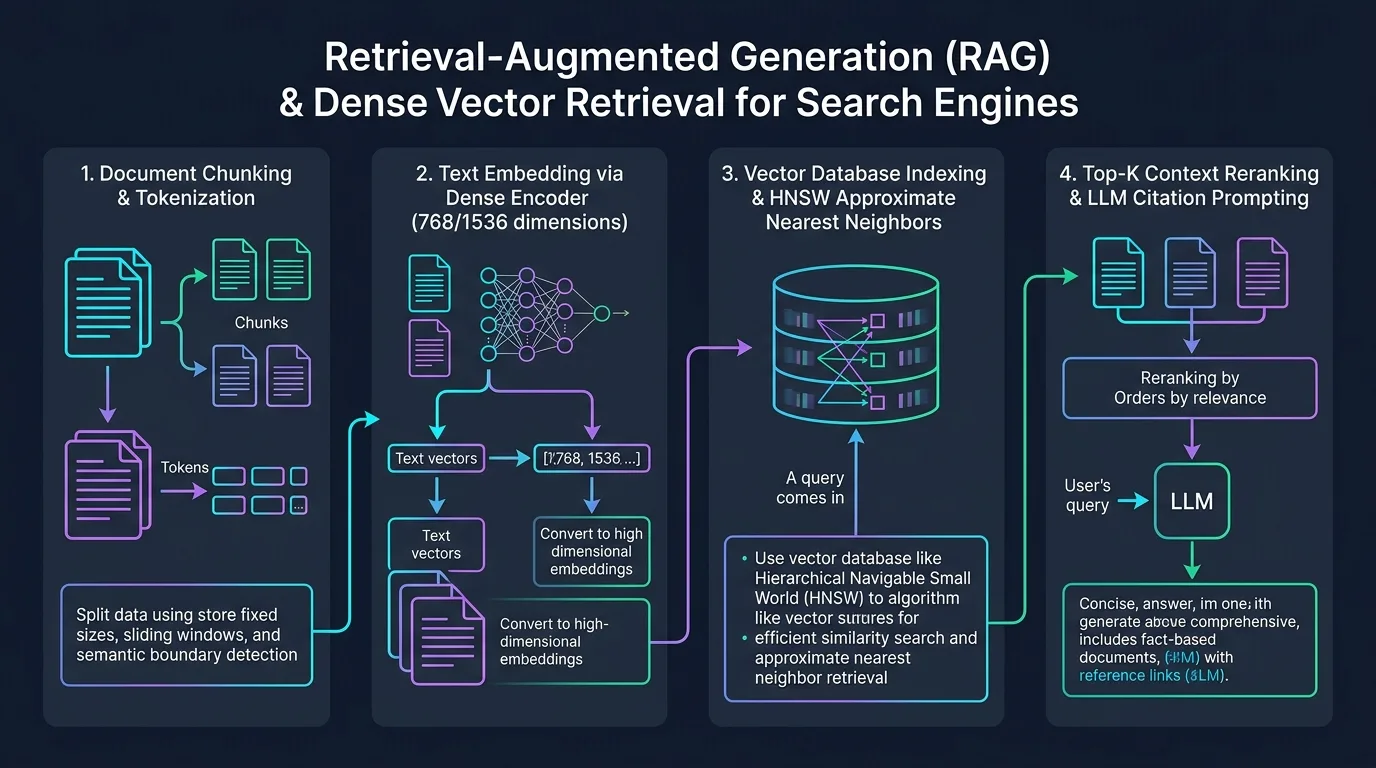
To understand the technological mechanics underpinning these autonomous systems, review our analysis on reverse engineering Google's generative AI search architecture, which outlines how vector embeddings govern autonomous retrieval.
2. How Autonomous Search Agents Navigate the Web: Headless Execution & Tool-Calling Architectures
Unlike standard web crawlers that ingest static HTML and extract raw text, autonomous browsing agents utilize Tool-Augmented Language Models (TALMs) paired with headless browser automation (Playwright, Puppeteer, or Chromium CDP). When an agent traverses a website, it executes a continuous feedback cycle known as the ReAct (Reason + Act) Loop:
- Observation: The agent captures the current state of the DOM tree, accessibility tree (a11y), and rendered viewport screenshot.
- Reasoning (Thought): The underlying LLM analyzes the user's overarching goal against the current page state, determining whether necessary information is present or if interactive elements must be triggered.
- Action (Tool Call): The agent dispatches a structured JSON function call—such as
click(selector="#pricing-tab-enterprise"),fill(selector="input[name='seats']", value="500"), orscroll(direction="down", amount=800). - Evaluation: The agent observes the updated DOM state and repeats the cycle until the factual criteria are fulfilled.
For websites built with heavy client-side JavaScript hydration delays, poorly labeled DOM selectors, or convoluted multi-step modal overlays, autonomous agents quickly deplete their execution step budget. If an agent cannot extract verified specifications or pricing data within 5 to 8 interaction steps, it abandons the session and selects a competitor whose digital architecture facilitates frictionless machine extraction.
3. Machine-to-Machine Protocols: robots.txt, llms.txt, and Agentic Permissions
As autonomous browsing agents multiply, the standard web governance protocols established in the 1990s are straining under the weight of machine-to-machine traffic. The traditional robots.txt standard was designed to manage search indexing crawlers, not autonomous purchasing bots or LLM training scrapers.
In response, forward-thinking webmasters are implementing the emerging llms.txt standard—a structured markdown manifest placed in the root directory (https://example.com/llms.txt) specifically designed to provide autonomous AI agents with a high-density, low-latency roadmap of the website's core knowledge base.
# Seobeen Enterprise Knowledge Manifest
> Authoritative documentation, technical research benchmarks, and API reference hubs.

## Core Technical Reference Guides
- [Next.js App Router SEO](/blog/nextjs-app-router-seo-server-components-metadata): Complete technical implementation guide for Server Components and Dynamic Sitemaps.
- [Entity-Based SEO & Knowledge Graph](/blog/entity-based-seo-google-disambiguation-knowledge-graph): Disambiguation pipelines, Wikidata integration, and Schema.org sameAs reconciliation.
- [Data-Driven Journalism Benchmark](/blog/data-driven-journalism-industry-surveys-backlinks): Quantitative research methodology and original industry survey data.

## Machine-Readable Data Endpoints
- [Enterprise Pricing API](/api/v1/pricing.json): Real-time seat tiers, volume discounts, and compliance certifications.
- [Security & Compliance Matrix](/legal/compliance-matrix.json): SOC2 Type II, ISO 27001, GDPR, and HIPAA verification hashes.
By providing an explicit llms.txt file, you allow autonomous search bots to bypass computationally expensive HTML rendering entirely. The agent ingests your structured markdown in milliseconds, ensuring your brand's authoritative specifications are incorporated into its reasoning context with perfect fidelity.
4. Information Gain and Machine Verification: How Agents Validate Claims Across Multiple Sources
Human readers often fall prey to slick marketing copy, emotional storytelling, or persuasive landing page design. Autonomous AI agents, however, are algorithmic skeptics. Modern agentic architectures incorporate Multi-Source Corroboration and Fact Verification Modules.
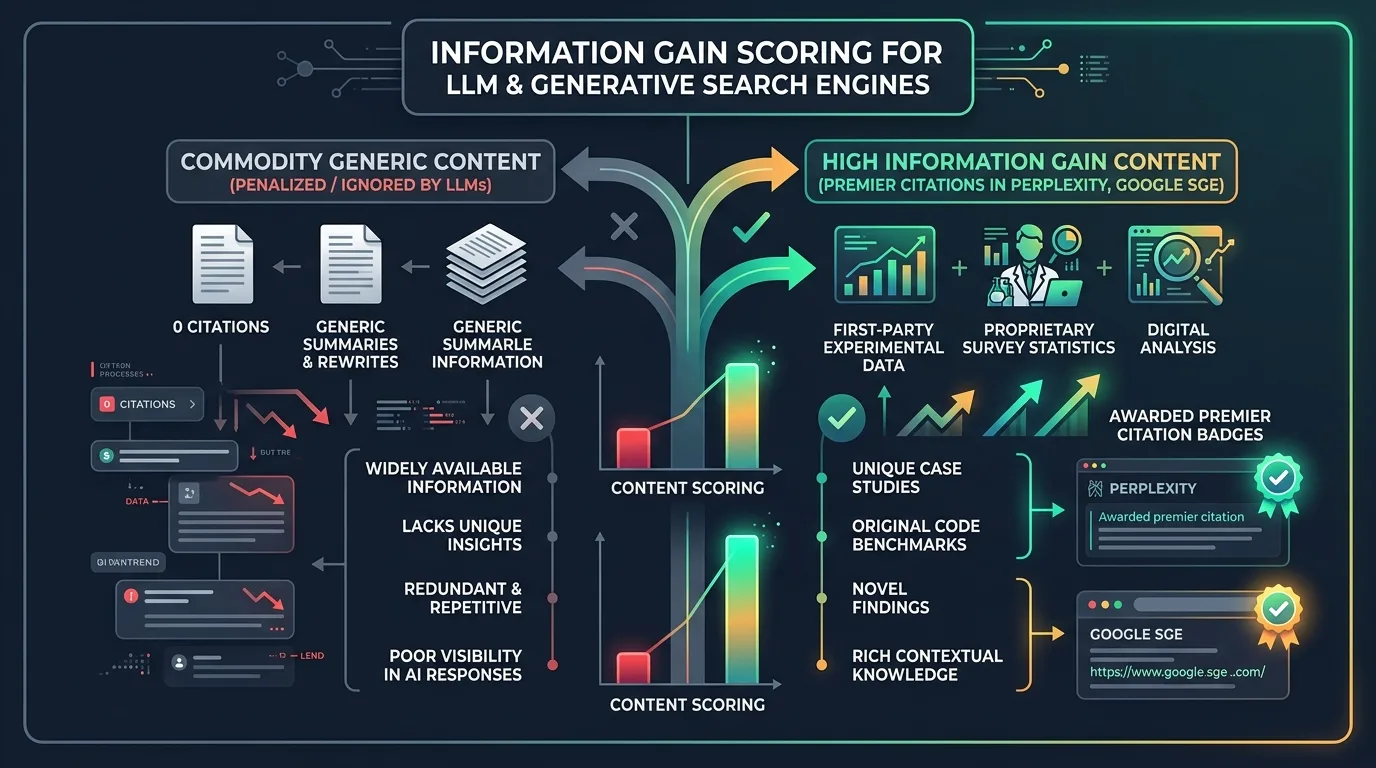
When an agent identifies an assertion on your website—such as "Our platform achieves 99.999% uptime with sub-10ms global latency"—it does not treat your statement as fact. Instead, it triggers secondary verification sub-queries across independent data sources:
- It queries public status pages, incident logs, and third-party monitoring telemetry.
- It scans GitHub repositories, npm download trends, and developer issue trackers for unresolved complaints.
- It cross-references customer sentiment across verified review platforms (G2, Gartner Peer Insights, TrustRadius).
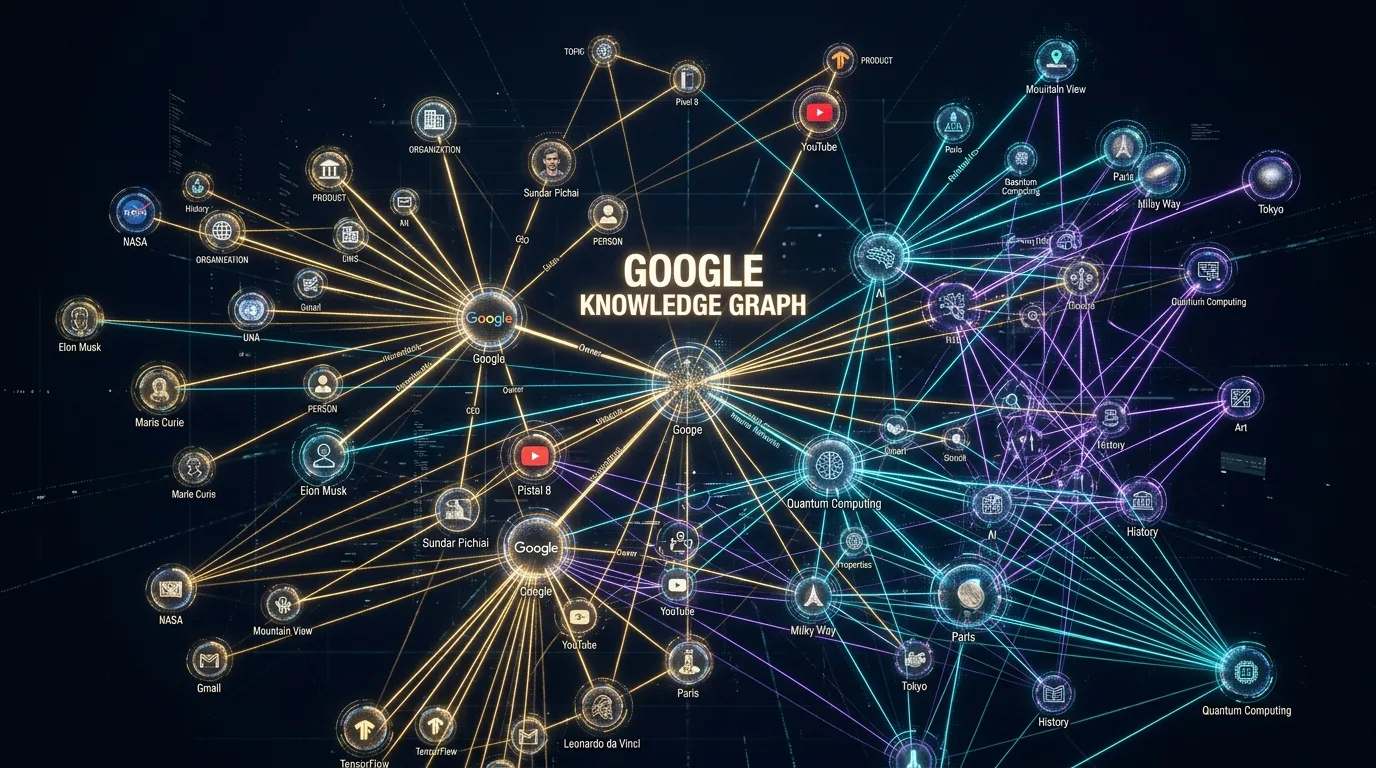
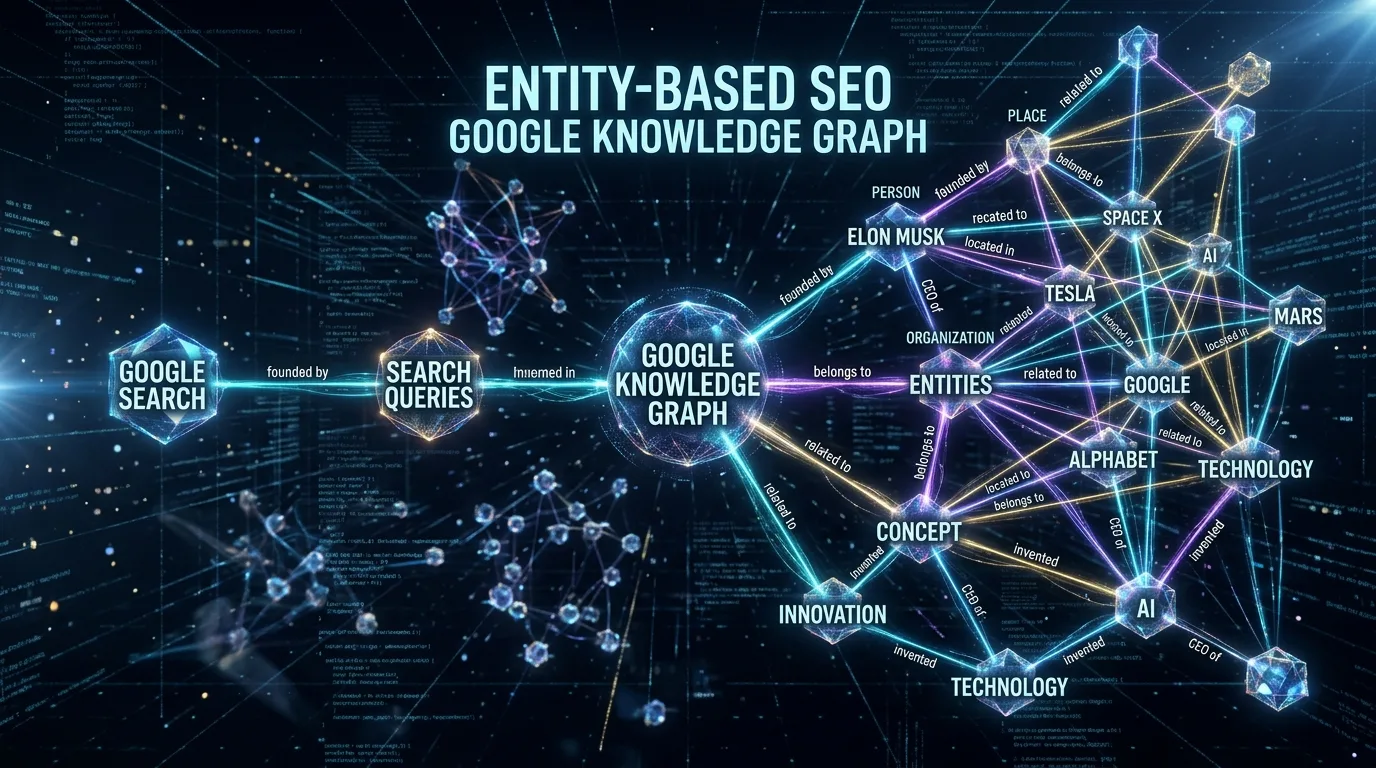
If your website makes uncorroborated claims that conflict with multi-source external consensus, the agent's confidence score collapses. The agent flags your product as high-risk and recommends alternative vendors whose claims are mathematically corroborated across the global knowledge graph. To master this entity corroboration, explore our comprehensive guide on entity-based SEO and Knowledge Graph disambiguation.
5. The Collapse of Human Session Metrics: Rethinking Impressions, Clicks, and Bounce Rates
The proliferation of autonomous search agents marks the terminal decline of traditional web analytics. For decades, digital publishing and e-commerce models were optimized around human session metrics: impressions, unique visitors, time-on-page, scroll depth, and bounce rate.
In an agent-dominated web, these metrics become distorted or meaningless:
- Zero-Click Resolution: An agent may ingest 4,000 words of technical analysis from your site, extract the exact data point needed by its human principal, and terminate the session without the human user ever seeing your logo or visual ads.
- Sub-Second Headless Hits: An agent using headless HTTP pipelining can crawl, parse, and exit your page in 120 milliseconds. Traditional analytics scripts like Google Analytics 4 (GA4) that rely on client-side JavaScript execution often fail to log the visit entirely or categorize it as a bounce.
- Conversion Decoupling: Transactions no longer occur through traditional marketing funnels. Instead of nurturing a user through 5 blog posts, a webinar, and an email newsletter, the entire buyer journey is collapsed into an automated agent procurement evaluation.
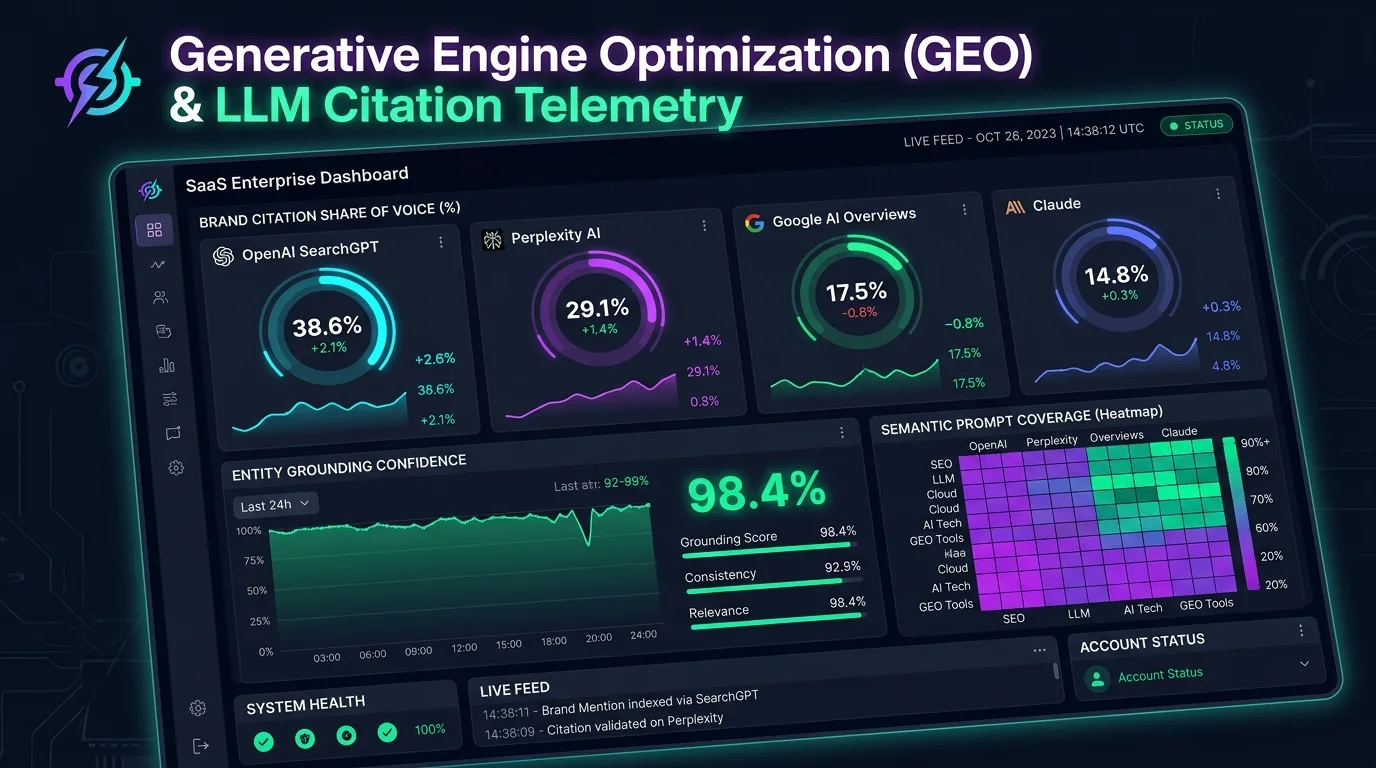
Organizations that evaluate content marketing ROI strictly through GA4 session volume will mistakenly believe their content is failing as human clicks decline. Meanwhile, forward-thinking enterprises are tracking Agent Citation Frequency (ACF) and Model Attribution Telemetry—monitoring server logs to quantify how often their domains are accessed by Anthropic, OpenAI, Perplexity, and Google autonomous agents.
6. Optimizing for Autonomous Procurement and Action-Oriented Agents
To win in the agentic economy, enterprise websites must evolve from passive digital brochures into active, machine-queryable environments. Optimizing for action-oriented agents requires four architectural enhancements:
1. Machine-Readable Semantic Schemas
Every product, service, pricing tier, and technical capability must be fully declared via Schema.org JSON-LD microdata. Beyond standard Product and Organization schemas, utilize advanced properties such as hasOfferCatalog, priceSpecification, isAccessoryOrSparePartFor, and termsOfService.
2. Deterministic URL Structures and Clean HTML Selectors
Avoid single-page application (SPA) state architectures where critical content is hidden behind un-linkable JavaScript triggers. Every distinct feature, pricing comparison, and technical specification must reside on a unique, crawlable canonical URL. Use semantic HTML5 elements (<main>, <article>, <table>, <dl>) and intuitive CSS selectors that agentic parsers can query via standard DOM queries without hallucination.
3. Real-Time Availability & Pricing Feeds
Autonomous procurement agents cannot tolerate ambiguous pricing models ("Contact Us for Pricing"). When transparent pricing is impossible due to custom enterprise tiers, provide structured baseline pricing matrices (e.g., "Plans start at $1,200/mo for up to 50,000 monthly active users") alongside machine-readable API documentation.
7. Vector Indexing and Semantic Graph Traversal in Agent Workflows
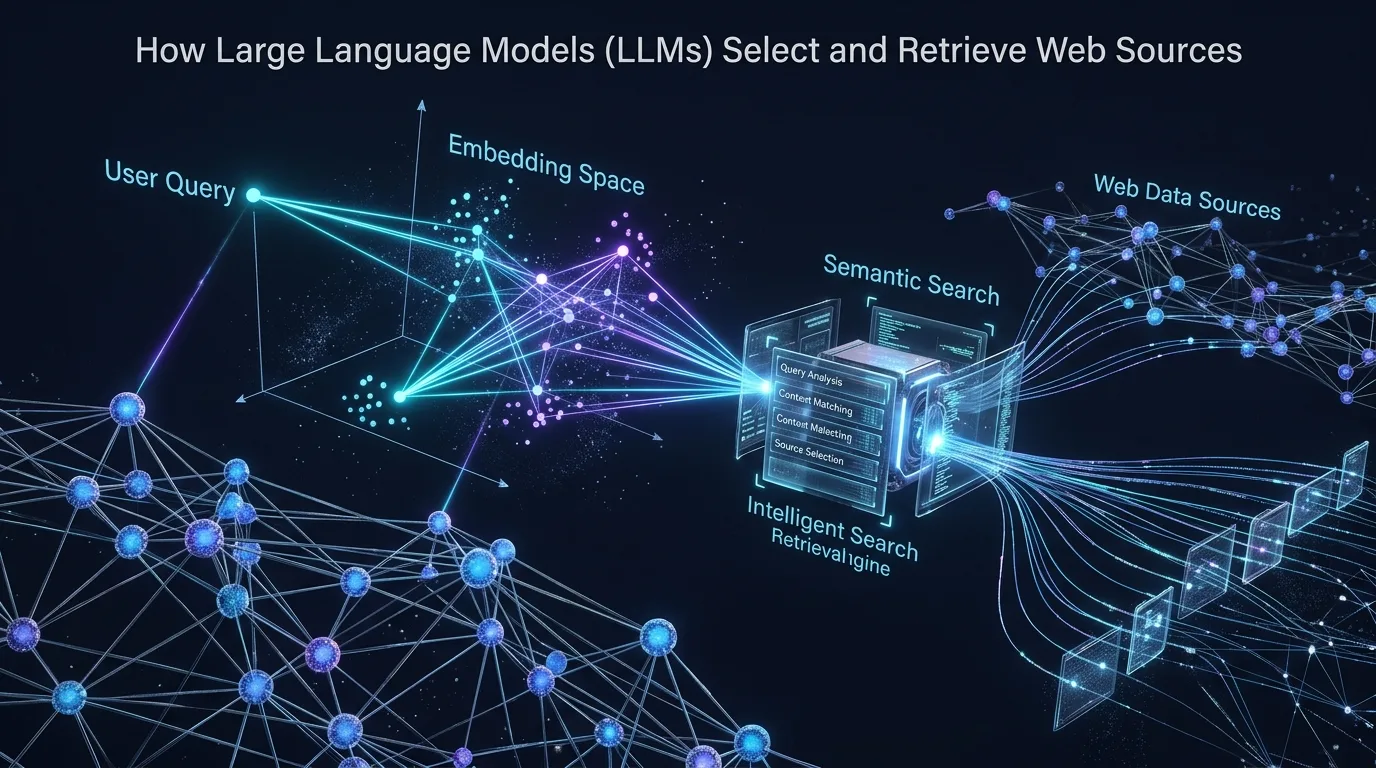
How do autonomous search agents select which websites to crawl when tasked with complex research? They rely on Dense Vector Retrieval and Semantic Knowledge Graph Traversal.
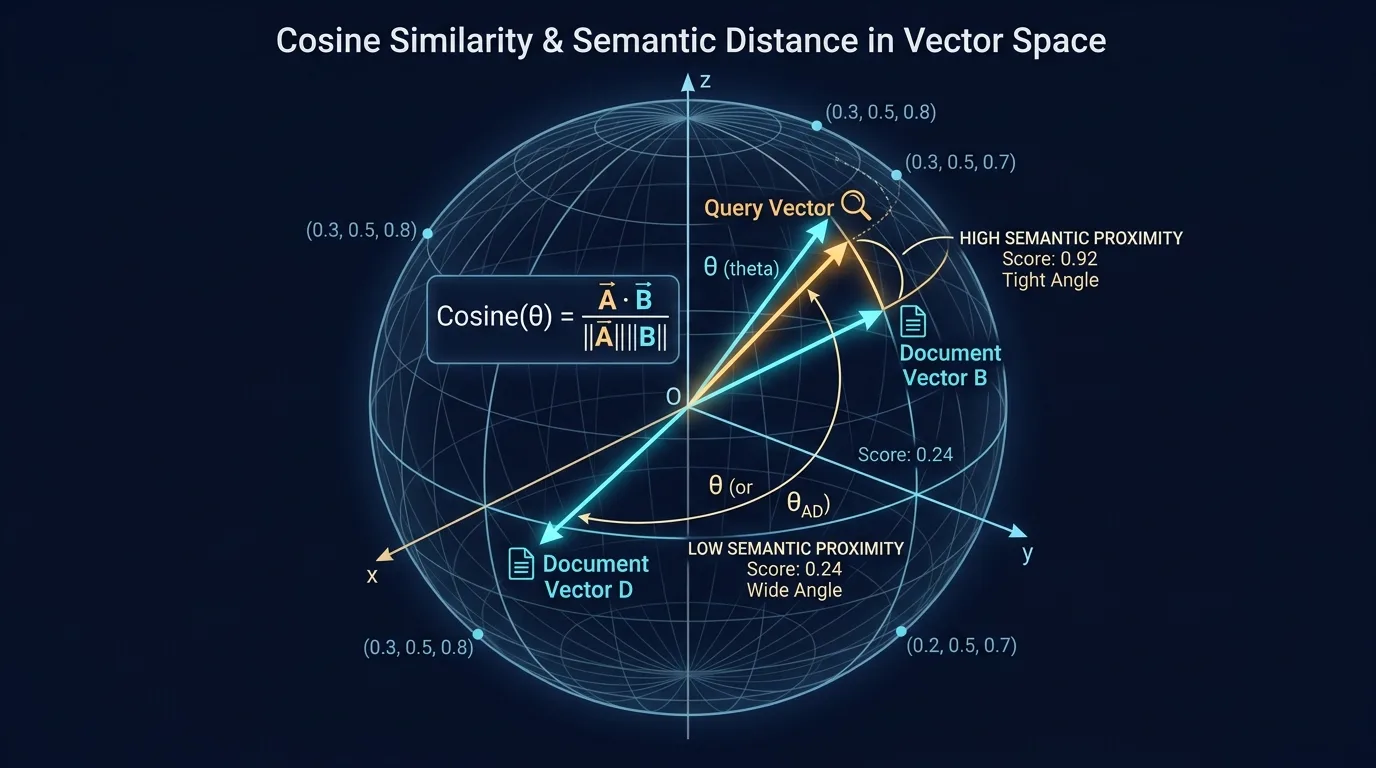
When an agent initializes a search task, it decomposes the prompt into semantic sub-vectors. It performs approximate nearest neighbor (ANN) searches against vector indices. Websites whose content exhibits high topical coherence, dense entity relationships, and minimal fluff achieve superior cosine similarity scores. For an in-depth mathematical exploration of vector embeddings, consult our authoritative guide on semantic search and vector embeddings in modern SEO.
8. Bot Mitigation vs Agent Enablement: Designing WAF Policies for the Agentic Era
One of the most dangerous operational hazards currently threatening enterprise websites is over-aggressive Web Application Firewall (WAF) filtering. For years, cybersecurity teams configured Cloudflare, AWS WAF, and Akamai to indiscriminately challenge or block any HTTP request that lacked standard browser user-agent signatures or appeared to be automated headless browsers.
Today, blocking headless browsers means blocking the very AI agents that your customers are dispatching to purchase your products. If an OpenAI Operator or Google Project Astra agent attempts to inspect your pricing page and gets hit with a Cloudflare Turnstile CAPTCHA or a 403 Forbidden error, the agent does not solve the CAPTCHA—it immediately drops your website and recommends your unblocked competitor.
| Autonomous Agent / Crawler | Operating Entity | Primary Function | Default User-Agent Token | Recommended WAF Policy |
|---|---|---|---|---|
| GPTBot | OpenAI | Model training & corpus ingestion | GPTBot/1.2 |
Allow with rate-limiting or manage via robots.txt |
| OAI-SearchBot | OpenAI | Real-time SearchGPT & Operator search | OAI-SearchBot/1.0 |
Mandatory Allow (Critical for search visibility) |
| ClaudeBot | Anthropic | Claude training & tool browsing | ClaudeBot |
Allow with crawl budget monitoring |
| PerplexityBot | Perplexity AI | Real-time answer engine search & synthesis | PerplexityBot/1.0 |
Mandatory Allow (Direct citation traffic driver) |
| Google-Extended | Google DeepMind | Gemini training & autonomous agent models | Google-Extended |
Configure based on publisher IP licensing preference |
Enterprise engineering teams must establish granular WAF rules that differentiate between malicious vulnerability scanners, aggressive credential stuffers, and legitimate verified AI search bots. For advanced server health and crawler management strategies, review our technical guide on crawl budget optimization at scale.
9. Future Scenarios 2026–2030: Economic Repercussions and the New Publisher Value Exchange
As autonomous browsing agents mature between 2026 and 2030, the macroeconomic foundations of the digital economy will reorganize around three dominant architectural models:
Scenario A: The API-First Web & Machine Micro-Payments
Web publishers and SaaS platforms will replace banner ads with machine-to-machine micropayment protocols. Using decentralized settlement layers or standardized HTTP payment headers (e.g., HTTP 402 Payment Required), websites will charge AI agents fractions of a cent per factual query or structured data payload, creating a direct monetization model decoupled from human eyeballs.
Scenario B: Agentic E-Commerce Marketplaces
Online shopping will increasingly take place via autonomous shopping agents operating under strict user-defined budget and preference constraints. E-commerce platforms will compete not on emotional branding or checkout upsells, but on machine-verifiable product durability, delivery reliability, supply chain ethics, and real-time inventory API accuracy.
Scenario C: The Premium Human Authenticity Citadel
In response to billions of synthetic, AI-generated pages published to feed automated bots, a parallel premium web will emerge. Publications offering verifiable human journalism, primary laboratory research, and lived human experiences (enforced via cryptographically signed cryptographic watermarks and Content Authenticity Initiative standards) will command immense valuation premiums from both humans and the AI models desperate for ground-truth training data.
10. Frequently Asked Questions
Explore authoritative answers to essential strategic questions regarding autonomous AI search agents, bot crawling, and the future of web discovery.
What exactly is the difference between an AI crawler and an autonomous browsing agent?
An AI crawler (such as GPTBot or Common Crawl) operates in bulk asynchronously, downloading static HTML documents across millions of websites to train offline language models. An autonomous browsing agent operates in real-time on behalf of a specific human user, actively interacting with web interfaces, clicking buttons, filling out forms, reasoning across multiple tabs, and executing multi-step goals dynamically.
Will autonomous AI agents kill traditional website SEO?
Traditional SEO focused on keyword stuffing and superficial SERP rankings will become obsolete. However, technical SEO and information architecture will become vastly more critical. Instead of optimizing for human clicks, practitioners will optimize for entity salience, machine readability, vector proximity, and multi-source verification to ensure their brand is selected by autonomous agents during decision loops.
Should enterprise websites block all AI bots in robots.txt?
No. Blocking search-oriented bots like OAI-SearchBot or PerplexityBot is the modern equivalent of blocking Googlebot in 2005—it renders your business completely invisible in next-generation search channels. While publishers may choose to restrict training crawlers like GPTBot to protect proprietary IP, search and retrieval bots should remain fully accessible.
What is llms.txt and is it officially recognized by major search engines?
The llms.txt standard is an open community-driven proposal designed to provide LLMs and autonomous agents with clean, markdown-formatted roadmaps of key website documentation. While not yet an official W3C or IETF standard, dozens of major developer tools, open-source libraries, and AI engineering platforms have implemented it to streamline autonomous agent consumption.
How do autonomous agents deal with websites requiring login or authentication?
Modern agent frameworks utilize delegated authentication protocols, OAuth tokens, or secure local browser profile sharing. When authorized by their user, agents can interact with authenticated dashboards, retrieve gated reports, and execute enterprise software operations within pre-authorized security boundaries.
How will website monetization work if human pageviews decline by 50% or more?
Monetization will diversify into three primary streams: direct syndication licensing agreements with AI foundation model companies, machine-readable API subscription endpoints that charge per query, and high-value conversion events where autonomous agents complete purchases on behalf of verified buyers.
Can CAPTCHA systems prevent autonomous agents from purchasing products?
While traditional CAPTCHAs can momentarily block agents, they also destroy legitimate customer conversion rates. Forward-thinking e-commerce platforms are deploying specialized Agentic Verification Protocols (such as cryptographic token exchanges and verified digital wallets) that allow authenticated AI agents to execute purchases safely without human friction.
What is the ReAct loop in autonomous AI navigation?
ReAct stands for "Reasoning + Acting." It is an architectural framework where an LLM alternates between generating natural language thoughts to analyze its progress and issuing discrete tool commands (such as clicking an HTML element or querying an API) to interact with an external environment dynamically.
How can I test whether my website is readable by autonomous AI agents?
Audit your website using headless browser tools like Playwright or Puppeteer with JavaScript rendering disabled or inspected via raw accessibility trees. If your core product details, pricing, and documentation cannot be extracted via semantic DOM tree queries without human visual guesswork, your site requires architectural refactoring.
What role will Schema.org structured data play in the agentic era?
Schema.org JSON-LD is the lingua franca of the agentic web. When an AI agent parses an HTML document, structured schema markup provides immediate, unambiguous semantic ground truth regarding pricing, availability, authors, organizations, and product specifications, bypassing the risk of model misinterpretation.


Ratings & reviews
No reviews yet. Be the first.