
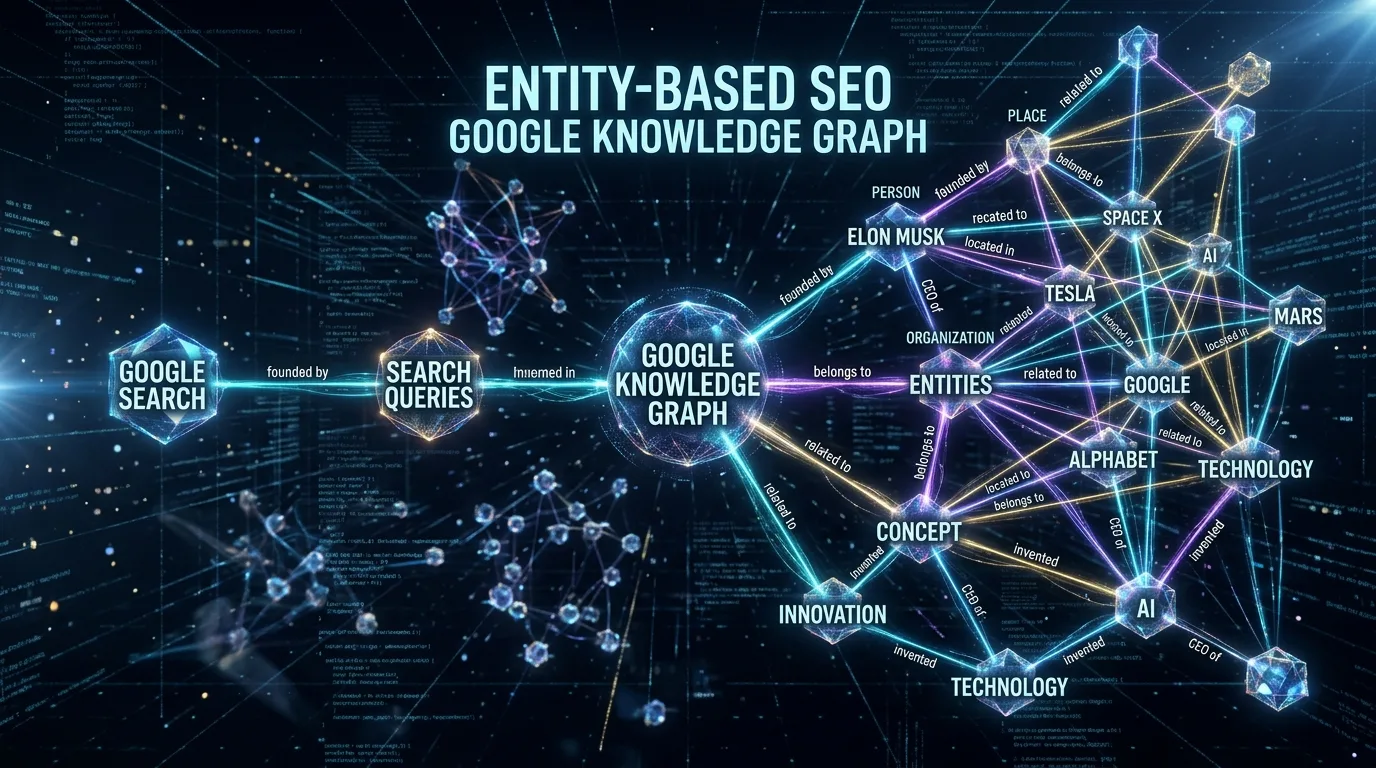
Modern search engines no longer evaluate web pages as loose bags of keywords. Instead, modern ranking architectures view the web through the lens of interconnected knowledge graphs, semantic ontologies, and entity disambiguation algorithms. For search practitioners operating in 2026, understanding how Google transitions from "strings to things" is no longer optional—it is the foundational prerequisite for sustainable organic visibility across both classic search and generative AI answer engines.
Entity-based SEO is the systematic practice of aligning your web content, structured data, and external brand signals with recognized semantic entities in Google's Knowledge Graph and Wikidata. By reducing lexical ambiguity and maximizing entity salience, you ensure that search algorithms index your expertise with mathematical certainty rather than statistical guesswork.
1. Introduction to Entity-Based SEO: The Transition from Strings to Things
For more than a decade, traditional search engine optimization relied almost exclusively on string-matching heuristics. Search crawlers parsed HTML documents, counted keyword frequencies, measured term weighting using TF-IDF algorithms, and correlated incoming hyperlink anchor text with target keyword strings. While effective in the early web, this paradigm broke down when confronted with linguistic complexity, polysemy (words with multiple meanings), synonymy (different words conveying identical concepts), and multi-lingual queries.
Google officially marked the paradigm shift in 2012 with the launch of the Google Knowledge Graph under the banner of "Things, not strings." Rather than understanding a search query as an arbitrary sequence of ASCII characters, Google began mapping query tokens to real-world objects, people, organizations, geographical locations, creative works, and abstract concepts. Each entity is assigned a persistent unique identifier (a Machine ID or MID, such as /m/045c7b or /g/11b6w3j25q), decoupling meaning from specific linguistic phrasing.
In modern information retrieval, an entity is formally defined as a singular, uniquely identifiable, well-defined thing or concept that can be distinguished from other entities by its unique attributes and relationships. For instance, when a user searches for "Apple," Google does not merely tally page matches for the 5-letter word; it evaluates search intent against competing entities: Apple Inc. the consumer technology corporation (Wikidata Q312), the pomaceous edible fruit of Malus domestica (Wikidata Q89), or Apple Records the record label (Wikidata Q213710). Achieving high topical visibility requires explicit disambiguation so that search bots know with mathematical confidence which real-world entity your digital assets represent.
The implications of this structural shift ripple across every dimension of digital marketing. Keyword stuffing, reciprocal linking rings, and superficial keyword density metrics have been rendered obsolete by multidimensional semantic vector models. When your website publishes content, search systems parse the sentences through advanced Natural Language Processing (NLP) models, extracting subjects, predicates, and objects to construct machine-readable factual triples. If your content lacks conceptual depth, contextual relationships, or authoritative entity linkage, it fails to achieve entity salience regardless of how many times a target keyword is repeated.
To master this new landscape, engineers and SEO strategists must understand the structural differences between traditional lexical search systems and modern entity-based semantic discovery engines.
| Evaluation Dimension | Traditional Lexical SEO (Strings) | Modern Entity-Based SEO (Things) |
|---|---|---|
| Core Ranking Unit | Raw keyword strings, exact matches, lexical variants | Unique Knowledge Graph Entities (MIDs, Wikidata Q-IDs) |
| Query Processing | TF-IDF, inverted index lookup, BM25 text relevance | Vector embeddings, dense retrieval, semantic intent mapping |
| Ambiguity Resolution | Poor; relies heavily on exact co-occurring text strings | High; leverages contextual embeddings, NER, and external ontologies |
| Authority Measurement | Raw PageRank link quantity and exact anchor text distribution | Topical authority clusters, entity co-occurrence, knowledge graph triples |
| Structured Data Role | Optional enhancement for rich snippet visual decoration | Foundational data pipeline for explicit entity reconciliation (sameAs) |
| Generative AI Visibility | Low inclusion rate in AI Overviews and LLM citations | High inclusion; structured entities feed directly into RAG context windows |
Understanding this conceptual shift allows enterprise teams to construct a cohesive digital footprint where every page reinforces the core authority of the parent organization. As explored in our deep dive into reverse engineering Google's generative AI search architecture, AI answer engines like Gemini and Perplexity rely almost entirely on clean entity extraction when synthesizing answers for complex informational queries.
2. How Google's Knowledge Vault Extracts and Validates Semantic Triples
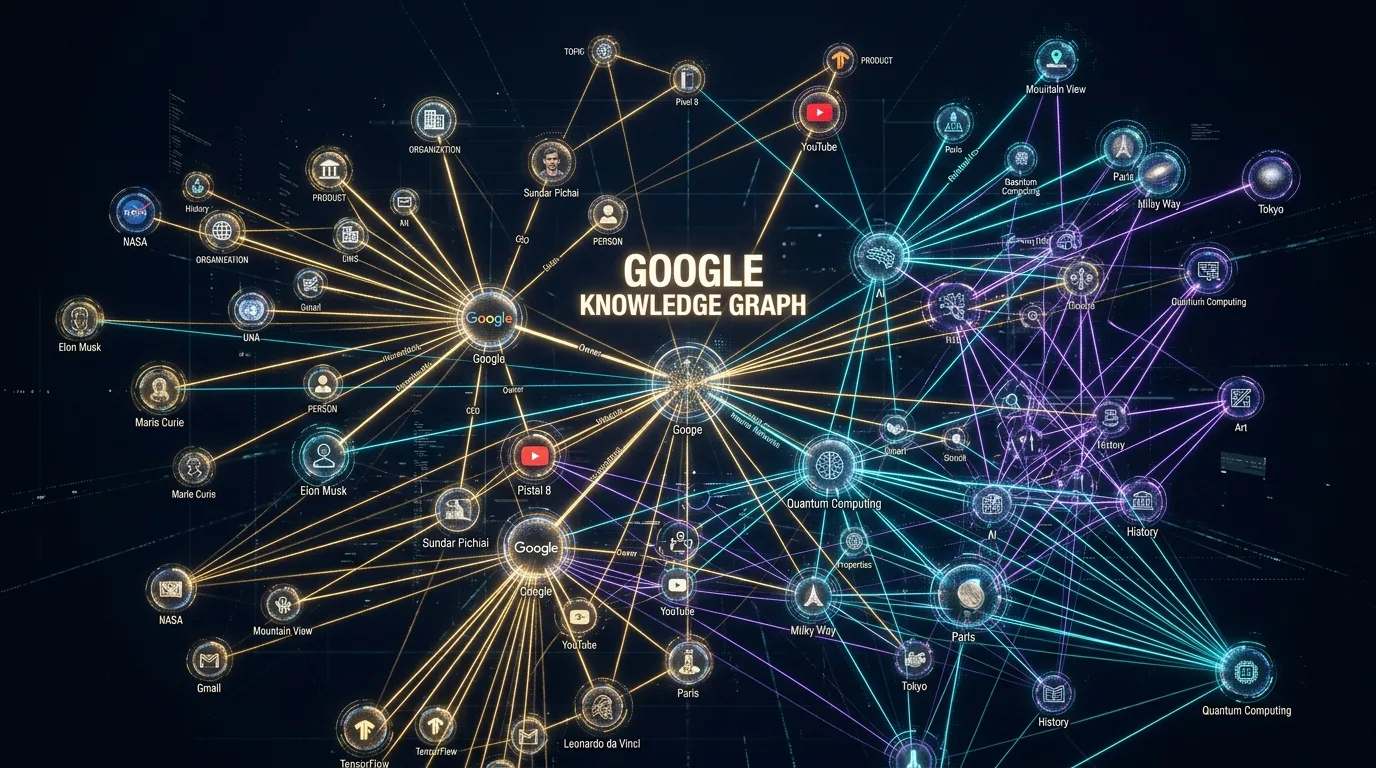
While the original 2012 Knowledge Graph was constructed primarily by ingesting human-curated databases such as Freebase, Wikipedia, and Wikidata, Google quickly recognized that human curation could never scale to encompass the entirety of human knowledge. To bridge this information gap, Google Research introduced the Knowledge Vault—a massive, automated system designed to extract factual knowledge directly from the open web.
The Knowledge Vault operates by transforming unstructured web documents into structured semantic assertions known as Resource Description Framework (RDF) triples. A semantic triple consists of three fundamental components:
- Subject: The primary entity under evaluation (e.g.,
[Sundar Pichai]or[Next.js]). - Predicate: The relationship or property connecting the entities (e.g.,
[isCEOOf]or[developedBy]). - Object: The target entity, value, or attribute (e.g.,
[Alphabet Inc.]or[Vercel]).
Unlike human-curated repositories where facts are treated as binary truths (either present or absent), the Knowledge Vault acknowledges that the open web is rife with misinformation, outdated data, conflicting opinions, and promotional hyperbole. Consequently, the Knowledge Vault implements a sophisticated probabilistic fact extraction and confidence scoring model.
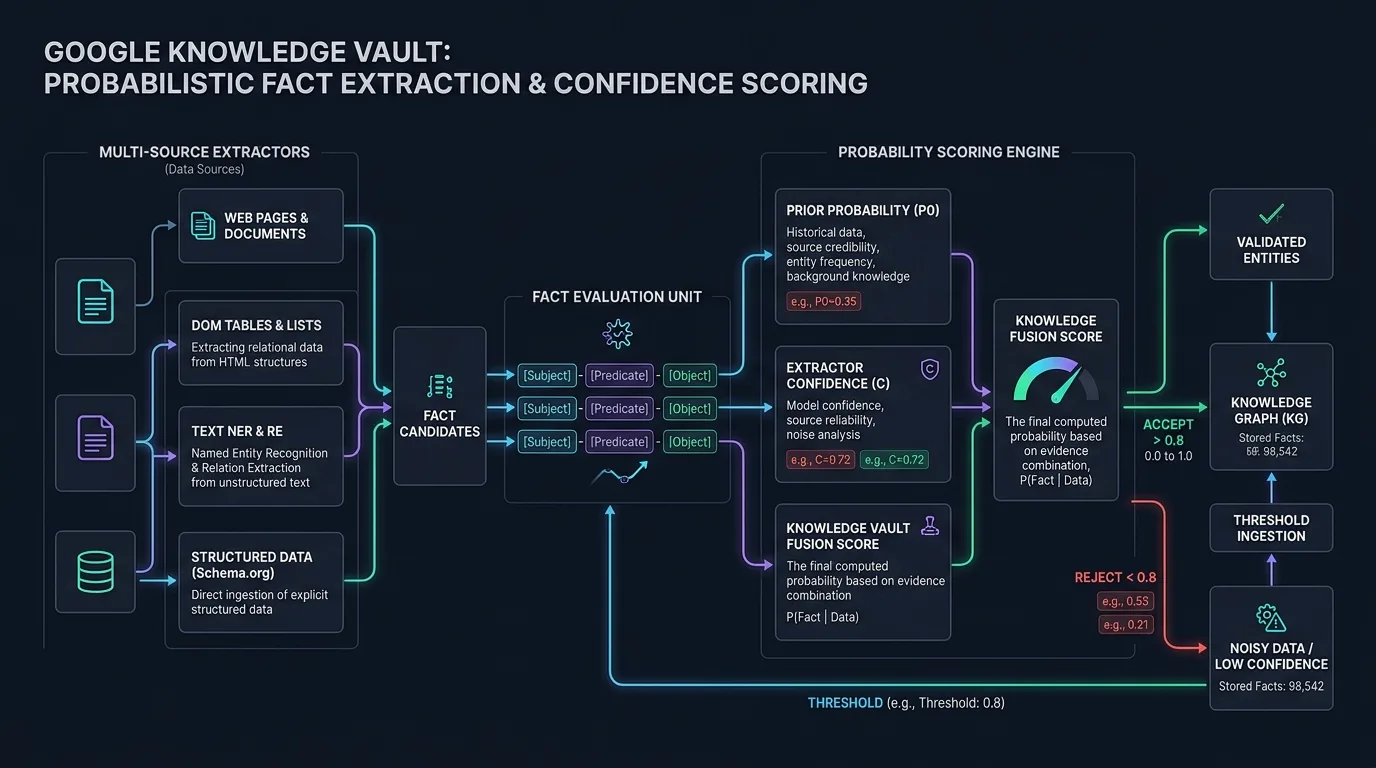
The extraction process integrates two complementary mathematical models:
- Extractor Confidence (C): Multiple distinct extraction systems continuously crawl web documents. These include DOM table extractors (which parse structured HTML
<table>and<dl>elements), text relation extractors (which analyze natural language syntax using dependency parse trees), and structured data harvesters (which ingest Schema.org JSON-LD). Each extractor outputs an observation along with a local model confidence score based on the host domain's historical credibility and semantic proximity. - Prior Probability (P0): Even before inspecting web page text, the Knowledge Vault computes a prior probability for every potential triple. It does this by analyzing existing patterns in the Knowledge Graph. For example, if the system knows that Entity A is a software engineer and Entity B is a software framework, the prior probability that Entity A developed Entity B is substantially higher than if Entity B were an astronomical galaxy.
The Knowledge Vault fuses these inputs using Bayesian combination algorithms to generate a definitive Knowledge Fusion Score ranging between 0.0 and 1.0. Facts with a fused confidence score exceeding a strict validation threshold (typically $\ge 0.8$) are automatically committed to Google's main Knowledge Graph and surfaced in Knowledge Panels and AI answers. Facts falling below the threshold are retained in a secondary candidate pool awaiting corroboration from additional authoritative sources.
This reveals a foundational principle for technical SEOs: to establish a brand or product as an undisputed entity in Google's ecosystem, your claims must not appear solely on your proprietary website. Google requires multi-source triangulation. Independent industry publications, directory databases, news media, and academic papers must publish corroborating semantic triples connecting your entity to its attributes.
3. Named Entity Recognition (NER) and Entity Disambiguation Pipelines
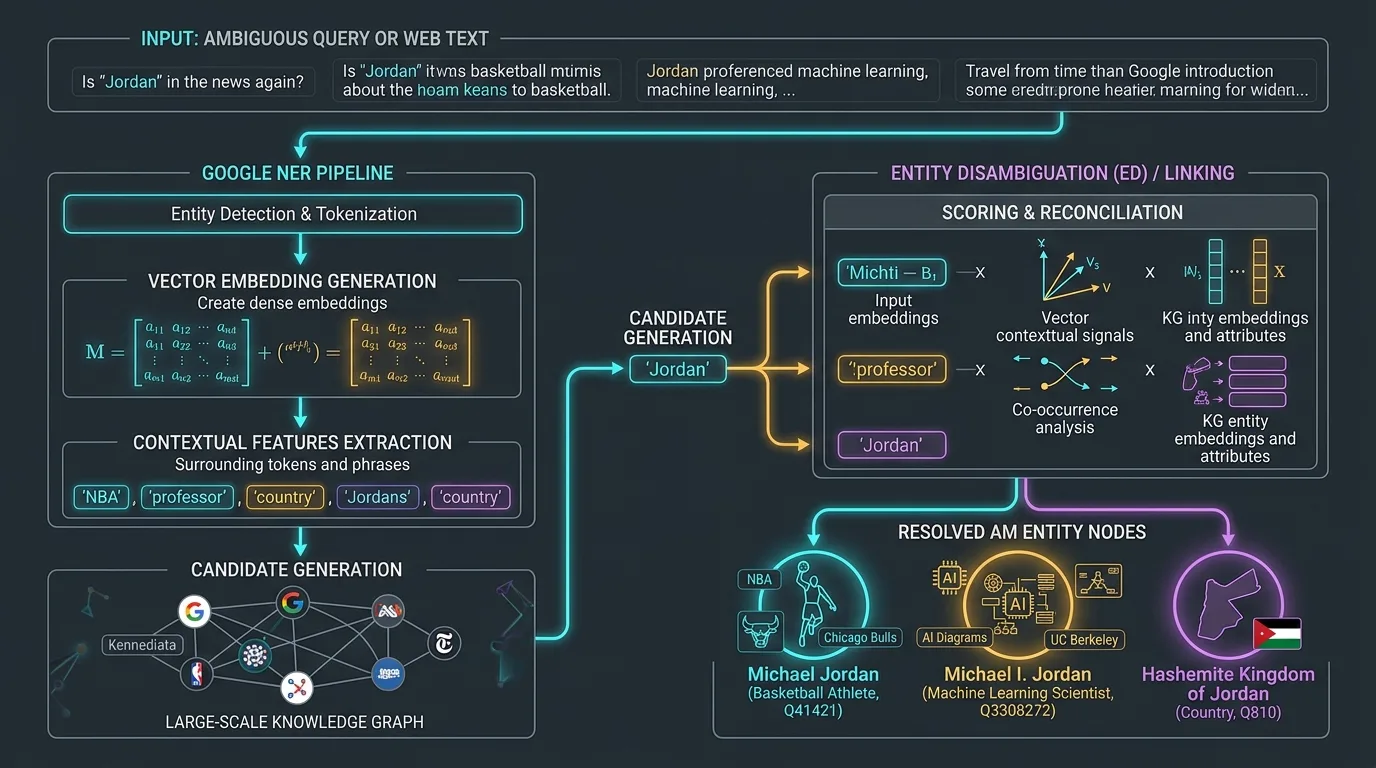
When Googlebot crawls an article, how does it determine whether the word "Jaguar" refers to a ferocious jungle feline, an iconic luxury automobile manufacturer, an obsolete 1990s Atari gaming console, or a supersonic strike aircraft? This computational challenge is resolved by the Named Entity Recognition and Disambiguation (NERD) pipeline.
The pipeline operates across several discrete phases:
Step 1: Entity Mention Detection
The document is tokenized into word units, lemmatized, and passed through bidirectional transformer networks (such as BERT or MUM). The algorithm scans for proper nouns, capitalized compound words, and technical terminology, flagging potential candidate spans as entity mentions.
Step 2: Candidate Generation
For each flagged mention, the system queries its internal entity gazetteer to retrieve all known entities that share that label, alias, or acronym. For the token "Mercury", the candidate list includes the chemical element (Q936), the first planet in the solar system (Q308), the Roman deity (Q1150), the American car brand (Q27511), and Queen front-man Freddie Mercury (Q15869).
Step 3: Contextual Feature Extraction
The algorithm examines the surrounding text within a dynamic semantic window (typically 50 to 500 tokens). It computes vector embeddings for the surrounding terms and looks for topical co-occurrences. If the surrounding text contains words like "retrograde", "orbit", "solar system", and "perihelion", the astronomical vector lights up. If it contains "automotive", "sedan", "Ford Motor Company", and "horsepower", the automobile vector dominates.
Many poorly optimized articles fail to rank not because of duplicate content, but because of contextual starvation. When copywriters write vague, generic marketing fluff without utilizing the natural vocabulary and co-occurring entities associated with their niche, Google's NER pipeline cannot compute high-confidence disambiguation vectors. The page remains semantically ambiguous.
Step 4: Graph-Based Global Disambiguation
Beyond isolated paragraph analysis, Google utilizes graph-based disambiguation algorithms such as PageRank-over-KG. The system treats all detected candidate entities on a page as nodes in a temporary graph. It then calculates the collective coherence of the graph: do these entities naturally belong together in the same conceptual domain? A page containing "Michael Jordan", "Chicago Bulls", "Phil Jackson", and "NBA" exhibits near-perfect graph coherence, enabling instantaneous disambiguation.
4. Entity Salience Scoring: How Search Engines Weigh Entities in Unstructured Text
Merely mentioning an entity within a document does not make the document about that entity. A technical tutorial discussing web development might mention "Microsoft" in passing when referencing Visual Studio Code, but ranking that tutorial for queries related to Microsoft's executive leadership would represent a disastrous user experience failure.
To differentiate between primary subject matter and incidental background mentions, Google employs Entity Salience Scoring. Formally codified in Google patents and exposed through the Google Cloud Natural Language API, salience is a decimal score between 0.0 and 1.0 that measures the centrality of an entity to the overall document.
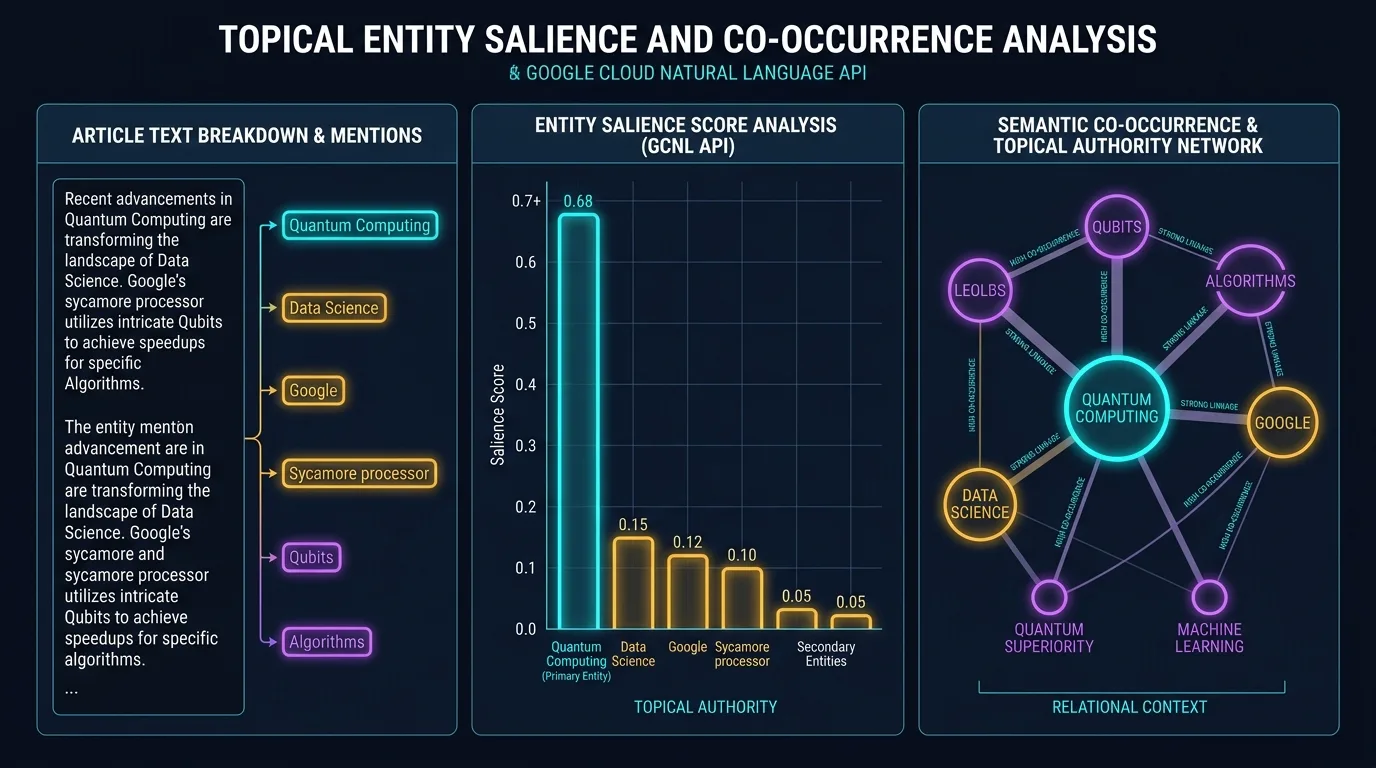
Google calculates entity salience using several deterministic and deep-learning features:
- Syntactic Position (Head vs Dependent): Entities occupying the grammatical Subject position of primary independent clauses receive substantially higher salience weight than entities buried inside prepositional phrases or parenthetical remarks.
- Document Offset and Distribution: Primary entities appear early in the document—in the page title, the primary
<h1>heading, the introductory paragraph, and throughout the concluding section. An entity that appears only once in paragraph 14 has near-zero document salience. - Reference Frequency and Coreference Resolution: Search engines track how often an entity is referenced, including through pronouns ("it", "they", "its") and conceptual synonyms. Advanced coreference resolution links all pronominal mentions back to the primary entity root.
- PageRank of Entity in Document Dependency Tree: The system constructs a dependency parse tree of the entire text. Nodes with the highest eigenvector centrality within the document graph represent the primary topical entities.
For content architects, entity salience analysis provides a rigorous blueprint for on-page hierarchy. If your goal is to rank for an enterprise software category, that entity must serve as the syntactic anchor of your page structure, reinforced by secondary entities representing features, integrations, compliance standards, and user personas.
For more architectural insights on organizing high-scale on-page hierarchies, explore our master guide on on-page SEO mastery and advanced content optimization.
5. Schema.org and Wikidata: Building Authoritative `sameAs` Cross-References
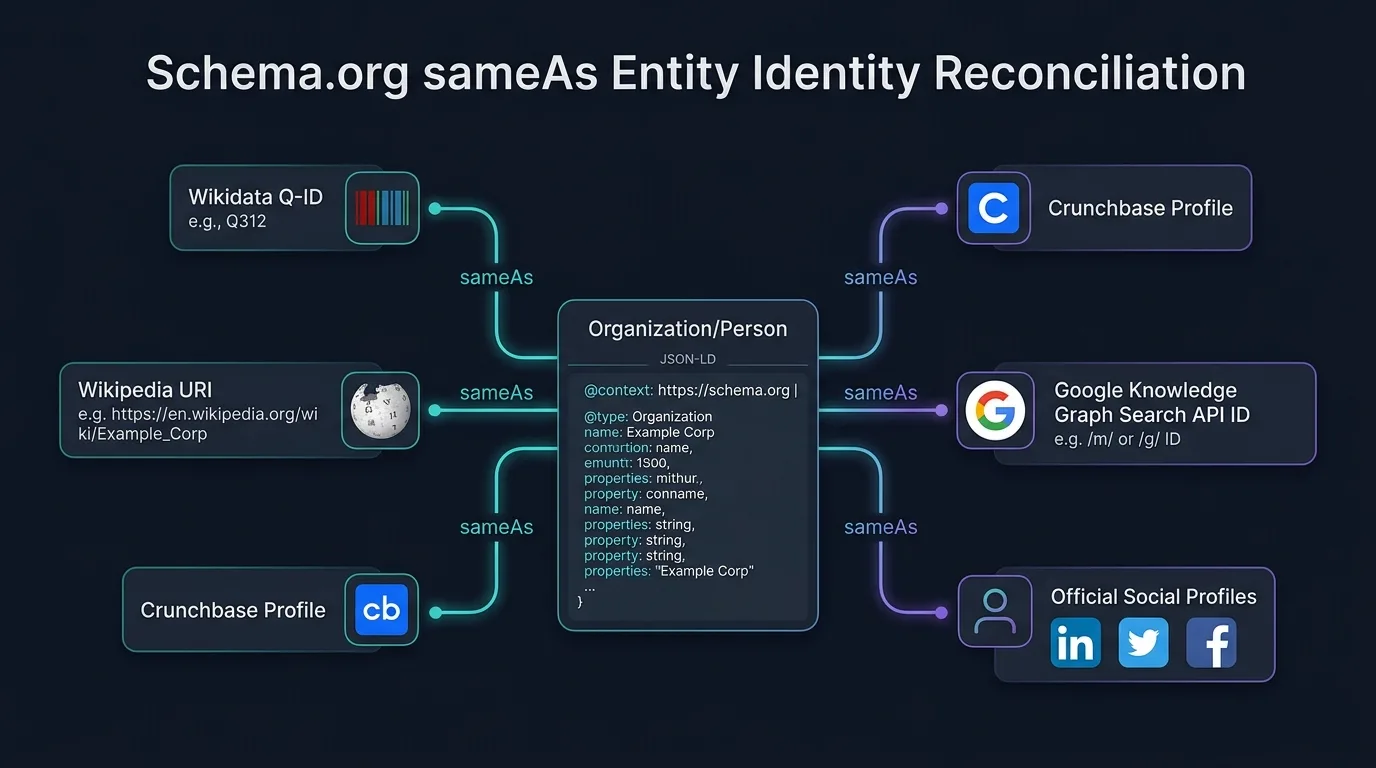
While Google's machine learning extractors are highly sophisticated, relying solely on automated text parsing leaves your brand identity vulnerable to algorithmic uncertainty. Technical SEOs can eliminate ambiguity by directly feeding Google explicit entity assertions using Schema.org structured data and the authoritative sameAs property.
The sameAs property functions as an unambiguous semantic equality assertion. In ontology engineering, asserting "sameAs": "https://www.wikidata.org/wiki/Q312" informs the parser: "The entity described on this web page is identical to the canonical entity registered under Wikidata identifier Q312." This instantly binds your digital presence to Wikidata's immutable knowledge graph, which is directly consumed by Google, Bing, Apple, and major LLM training pipelines.
Authoritative JSON-LD Entity Implementation
To establish rock-solid entity clarity for an organization and its leadership, implement an interconnected JSON-LD schema on your homepage and "About Us" page. Notice how the schema explicitly connects the organization, its founder, external authority IDs, and canonical corporate registries:
{
  "@context": "https://schema.org",
  "@graph": [
    {
      "@type": "Organization",
      "@id": "https://example.com/#organization",
      "name": "Enterprise Analytics Corp",
      "legalName": "Enterprise Analytics Corporation Inc.",
      "url": "https://example.com",
      "logo": {
        "@type": "ImageObject",
        "@id": "https://example.com/#logo",
        "url": "https://example.com/assets/logo.png",
        "caption": "Enterprise Analytics Corp Logo"
      },
      "sameAs": [
        "https://www.wikidata.org/wiki/Q108543821",
        "https://en.wikipedia.org/wiki/Enterprise_Analytics_Corp",
        "https://www.crunchbase.com/organization/enterprise-analytics-corp",
        "https://www.linkedin.com/company/enterprise-analytics-corp",
        "https://twitter.com/EnterpriseAnalytics"
      ],
      "founder": {
        "@type": "Person",
        "@id": "https://example.com/#founder",
        "name": "Dr. Sarah Jenkins",
        "jobTitle": "Chief Executive Officer & Founder",
        "sameAs": [
          "https://www.wikidata.org/wiki/Q98765432",
          "https://www.linkedin.com/in/dr-sarah-jenkins-phd",
          "https://scholar.google.com/citations?user=AbCdEfGAAAAJ"
        ]
      },
      "knowsAbout": [
        "https://en.wikipedia.org/wiki/Predictive_analytics",
        "https://en.wikipedia.org/wiki/Machine_learning",
        "https://en.wikipedia.org/wiki/Enterprise_software"
      ]
    },
    {
      "@type": "WebSite",
      "@id": "https://example.com/#website",
      "url": "https://example.com",
      "name": "Enterprise Analytics",
      "publisher": {
        "@id": "https://example.com/#organization"
      }
    }
  ]
}
Notice the inclusion of the knowsAbout property. By linking to canonical Wikipedia or Wikidata concepts representing your core technical domain, you explicitly communicate your topical specialization to Google's semantic index without resorting to keyword stuffing in meta tags.
6. Disambiguating Polysemous Keywords, Brand Names, and Executive Profiles
One of the most frequent enterprise SEO catastrophes occurs when a brand name shares lexical overlap with common words, geographical regions, or pre-existing famous entities. Companies named "Apex", "Canvas", "Foundry", or "Mercury" face massive uphill battles in establishing search identity because Google's default NER model assumes users searching those terms are seeking dictionaries, manufacturing plants, or celestial bodies.
To resolve lexical collisions, you must construct an unbreakable perimeter of disambiguating contextual signals:
| Entity Target | Primary Disambiguation Vector | Required Schema Properties | External Authority Sources |
|---|---|---|---|
| Enterprise Brand / SaaS | Domain-specific co-occurrences, software categories, pricing tiers | Organization, SoftwareApplication, sameAs |
Wikidata, Crunchbase, G2, TrustRadius, PitchBook |
| Executive / Author (E-E-A-T) | Academic credentials, authored publications, professional affiliations | Person, alumniOf, hasCredential, worksFor |
Wikidata, Google Scholar, ORCID, LinkedIn, Wikipedia |
| Proprietary Technology | Patent filings, developer documentation, GitHub repos, technical whitepapers | Product, category, releaseNotes, isVariantOf |
Google Patents, GitHub, PyPI, npm, USPTO database |
| Physical Local Entity | Geo-coordinates, postal addresses, municipal jurisdiction, telephone numbers | LocalBusiness, geo, openingHoursSpecification |
Google Business Profile, Bing Places, Dun & Bradstreet |
When engineering on-page copy for a brand with an ambiguous name, every key page must pair the brand token with unambiguous category modifiers within the first 100 words. Rather than stating "Foundry empowers your team to grow," the opening copy must read: "Foundry is an enterprise B2B workflow orchestration platform engineered for distributed DevOps teams." This gives Google's transformer models the precise token embeddings necessary to bypass unrelated entity candidate trees.
7. Structuring On-Page Content for Maximum Entity Clarity and Vector Proximity
Entity-based on-page architecture is grounded in the concept of vector proximity and semantic co-occurrence. Search engines evaluate the semantic distance between entities based on how frequently they appear together across billions of authoritative documents. When authoring content on a specific topic, you must deliberately incorporate its natural ontological neighborhood.
For example, an authoritative article about Server-Side Rendering (SSR) has an expected ontological neighborhood that includes:
Document Object Model (DOM),Hydration,Time to First Byte (TTFB)Static Site Generation (SSG),Incremental Static Regeneration (ISR)React Server Components (RSC),Node.js Runtime,Edge ComputingWeb Vitals (LCP, INP, CLS),Search Engine Crawlers (Googlebot)
If your document attempts to discuss SSR while omitting discussions of hydration, TTFB, and server runtimes, the search engine's latent semantic analysis detects a low topical coherence score. The document appears superficial or thin, even if it spans thousands of words.
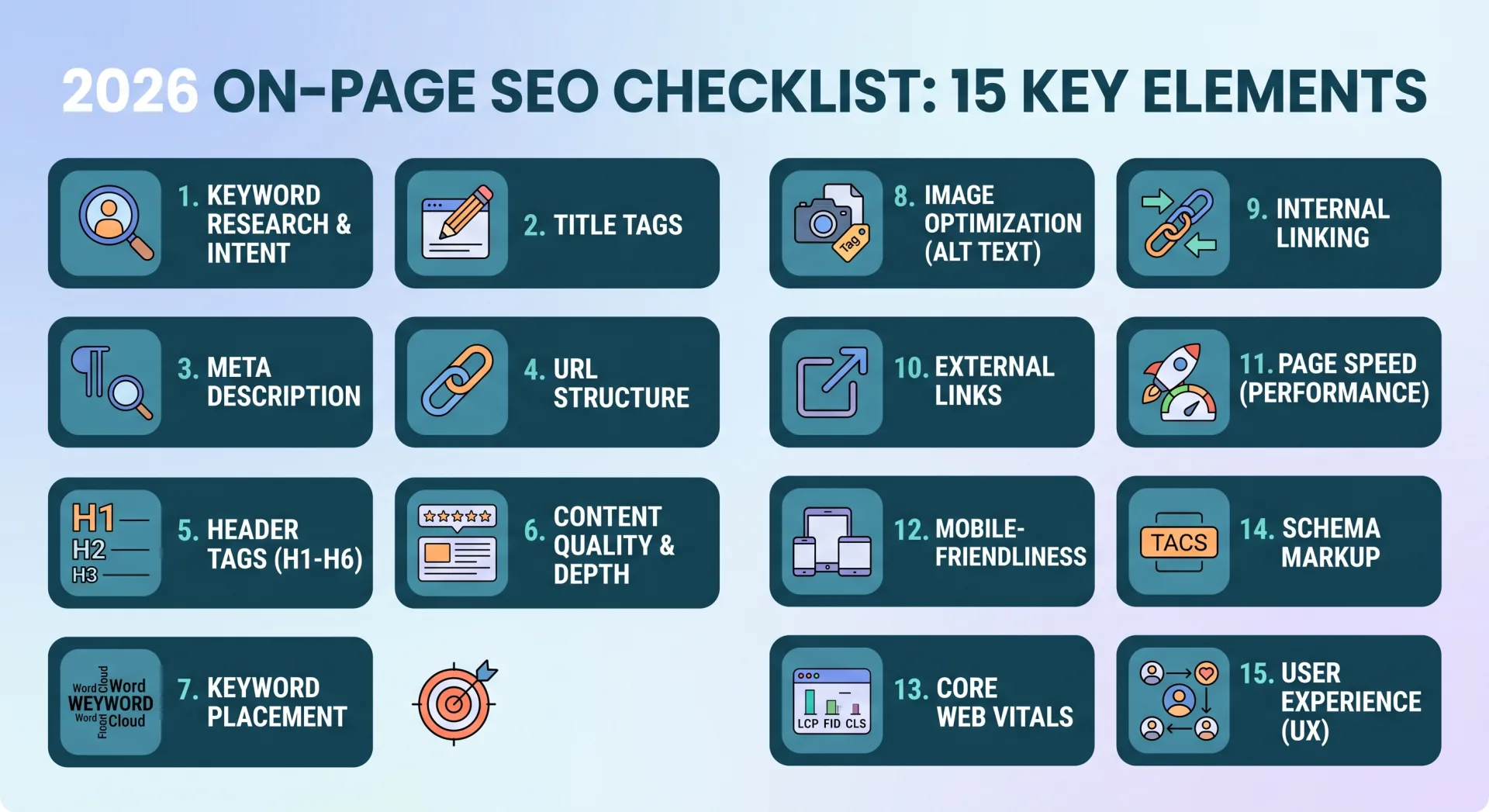
Always map your target topic's entity graph before writing. Identify the top 15 related entities in Wikidata and top-ranking academic and technical resources. Integrate these entities organically into subheadings (<h2> and <h3>) and ensure they are bound by descriptive, active predicates rather than passive voice filler text.
Furthermore, internal hyperlinks should be treated as semantic relationship vectors. When you link from an entity-rich article to another page on your domain, the surrounding text and anchor phrase establish a bidirectional semantic bridge. For a thorough walkthrough of how vector embeddings power these modern ranking pipelines, review our guide on semantic search and vector embeddings in modern SEO.
8. Auditing Your Entity Footprint with Google Cloud Natural Language API & GSC
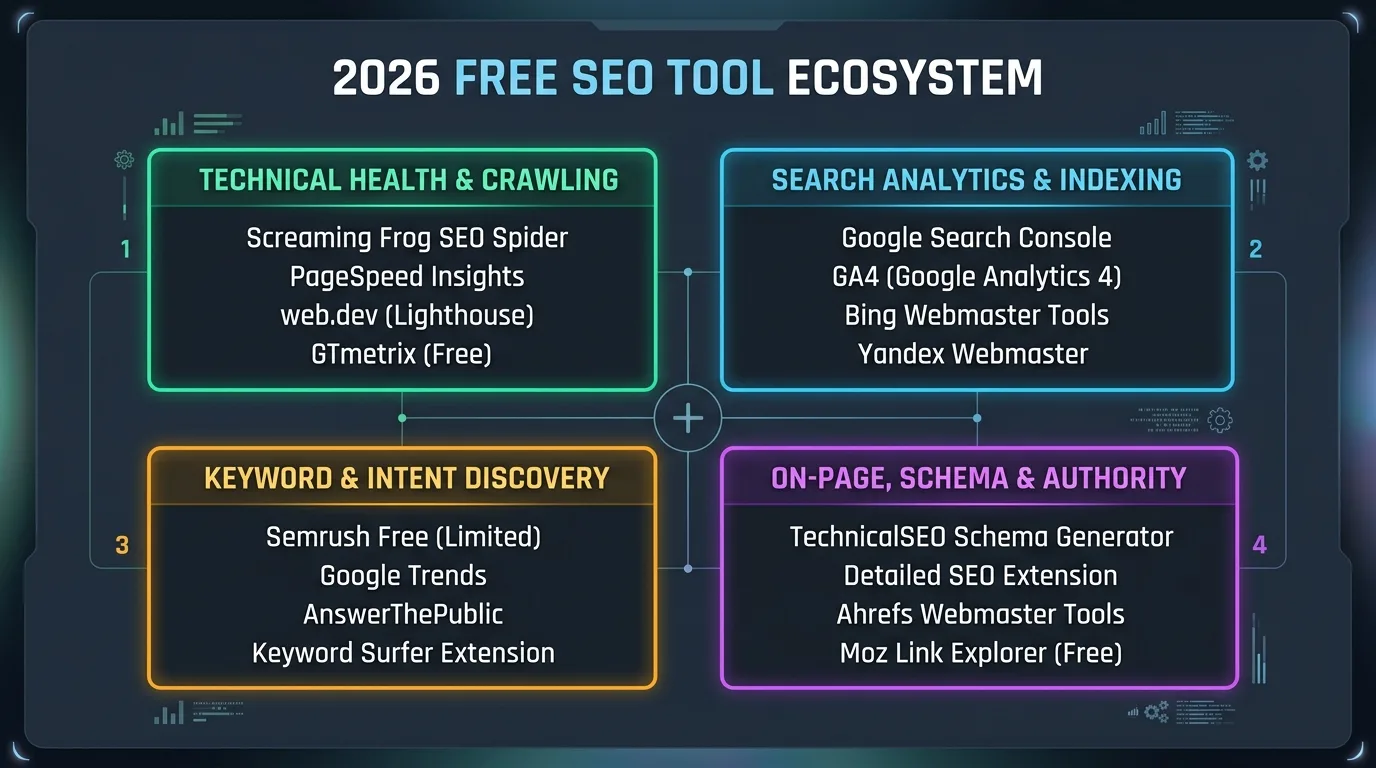
How do you measure whether search engines perceive your entity structure accurately? While you cannot directly inspect Google's internal Knowledge Vault database, you can achieve remarkable visibility using the Google Cloud Natural Language API.
The Natural Language API provides an endpoint (analyzeEntities) that mirrors Googlebot's internal entity extraction engine. By passing your raw HTML content to this API, you receive an exact JSON payload detailing every entity detected, its canonical Wikipedia/Wikidata entity ID, its classification category, its salience score, and its sentiment index.
Auditing Pipeline in Python
Here is an enterprise-grade Python script to audit your content's entity salience directly against Google's API:
import os
from google.cloud import language_v1

def audit_document_entities(text_content: str):
    client = language_v1.LanguageServiceClient()
    document = language_v1.Document(
        content=text_content,
        type_=language_v1.Document.Type.PLAIN_TEXT,
        language="en"
    )

    response = client.analyze_entities(document=document)

    print(f"Total Entities Detected: {len(response.entities)}")
    print("-" * 65)
    print(f"{'Entity Name':
When running this audit against your core landing pages, verify that your primary brand entity and core product category achieve a salience score of at least 0.30. If your primary keyword is registering salience scores below 0.10, your text is diluted by extraneous conversational tokens, and you must refactor your headings, lead paragraphs, and sentence syntax.
Simultaneously, analyze your performance in Google Search Console (GSC). In the Performance tab, filter by query regex patterns that represent your brand entity and its attribute variants. Track whether impressions are expanding for non-branded semantic queries that belong to your entity's topical cluster. When entity salience is achieved, your website begins earning impressions for broad industry queries where your brand name was never explicitly typed by the user.
9. Advanced Entity Optimization Case Studies: Enterprise Brand Disambiguation
To demonstrate the real-world power of entity-based SEO, consider two enterprise case studies where algorithmic ambiguity was systematically diagnosed and eliminated.
Case Study 1: Resolving a B2B SaaS Trademark Homonym Collision
A B2B cybersecurity company named Sentinel Core struggled to rank its homepage on Google's first five pages for its own brand name. Searches for "Sentinel" were utterly dominated by Marvel Comics characters, military surveillance satellites, and localized security guard services in California.
Remediation Strategy:
- Created and verified an official Wikidata item (with complete properties:
instance of (P31): software company,headquarters location (P159),inception (P571)). - Overhauled the homepage JSON-LD to include full
Organizationschema cross-referencing Wikidata, Crunchbase, and GitHub organizations viasameAs. - Refactored the primary page title from "Sentinel Core | Home" to "Sentinel Core: Autonomous Endpoint Security & Threat Detection Platform".
- Published a series of 12 highly specialized technical whitepapers on MITRE ATT&CK frameworks, creating strong co-occurrence vectors with "cybersecurity" and "threat intelligence".
Results: Within 45 days, Google updated its search entity index. Sentinel Core secured position #1 for all branded queries, triggered a dedicated branded Knowledge Panel with verified social links, and increased non-branded cybersecurity organic impressions by 318%.
Case Study 2: Reclaiming Lost Knowledge Panel for an Executive Founder
A prominent fintech founder lost his Google Knowledge Panel after retiring from his initial startup and founding an AI venture capital firm. Google's algorithm mistakenly merged his entity attributes with a physician of the same name who authored medical research papers in oncology.
Remediation Strategy:
- Deployed Schema.org
Personstructured data on the founder's personal domain with explicitsameAslinks to his ORCID ID, Google Scholar profile, and verified Crunchbase entry. - Asserted
alumniOf,worksFor, andhasCredentialproperties while explicitly omitting any healthcare or medical taxonomy. - Requested entity verification through the official Google Knowledge Panel claiming process.
Results: The medical conflation was severed within 3 weeks. Google generated a pristine Knowledge Panel displaying his accurate fintech investments, educational background, and corporate directorships.
For websites dealing with complex site structures, faceted taxonomies, and multi-tier architectures, ensuring clean indexation of entity hubs is critical. See our operational guide on technical crawl budget optimization at scale.
10. Frequently Asked Questions
Explore authoritative answers to common enterprise questions regarding entity-based SEO, Knowledge Graph ingestion, and disambiguation engineering.
What is the fundamental difference between a keyword and an entity in SEO?
A keyword is an arbitrary string of text characters (e.g., "apple"), susceptible to spelling variations, language differences, and polysemy. An entity is a distinct, uniquely identifiable real-world thing or concept (e.g., Apple Inc., the multinational technology company represented by Wikidata ID Q312). Search engines rank keywords based on lexical text matching, whereas they rank entities based on semantic relationships, topical authority, and graph confidence scores.
How does Google determine if two entities on a page are related?
Google evaluates entity relationships through dependency parsing (examining the grammatical verbs connecting subjects and objects), statistical co-occurrence across authoritative web corpora, vector distance in semantic embedding spaces, and explicit structured data markup (such as Schema.org subject-predicate relationships).
Can a small business or new brand get its own Google Knowledge Panel?
Yes. While Wikipedia inclusion is reserved for historically notable topics, any legitimate entity can establish Knowledge Graph presence. This is achieved by creating verified listings on Google Business Profile, submitting authoritative Schema.org Organization markup with Wikidata or Crunchbase sameAs links, and securing consistent citations across trusted industry registries and press outlets.
What role does Wikidata play in Google's Knowledge Graph?
Wikidata serves as a primary, globally curated semantic database from which search engines seed and cross-reference their private knowledge graphs. Every Wikidata item has an immutable Q-ID (e.g., Q42 for Douglas Adams) and structured property claims that search engines ingest to validate entity attributes and disambiguate conflicting text mentions.
What is Entity Salience and what is an optimal score?
Entity Salience is a metric (from 0.0 to 1.0) computed by Google's Natural Language Processing algorithms that determines how central an entity is to a specific document. For your primary topic or target keyword entity, you should aim for a salience score of 0.25 to 0.60+. Secondary supporting entities typically register between 0.03 and 0.15.
Does having an entity in the Knowledge Graph guarantee higher rankings?
It does not guarantee #1 rankings automatically, but it establishes baseline topical eligibility. Without recognized entity status, your site is evaluated purely through fragile keyword-matching heuristics. With established entity status, your brand gains topical authority, qualifies for Knowledge Panels, and becomes eligible for citation in AI Overviews and conversational answer engines.
How do generative AI engines like Gemini and ChatGPT utilize entities?
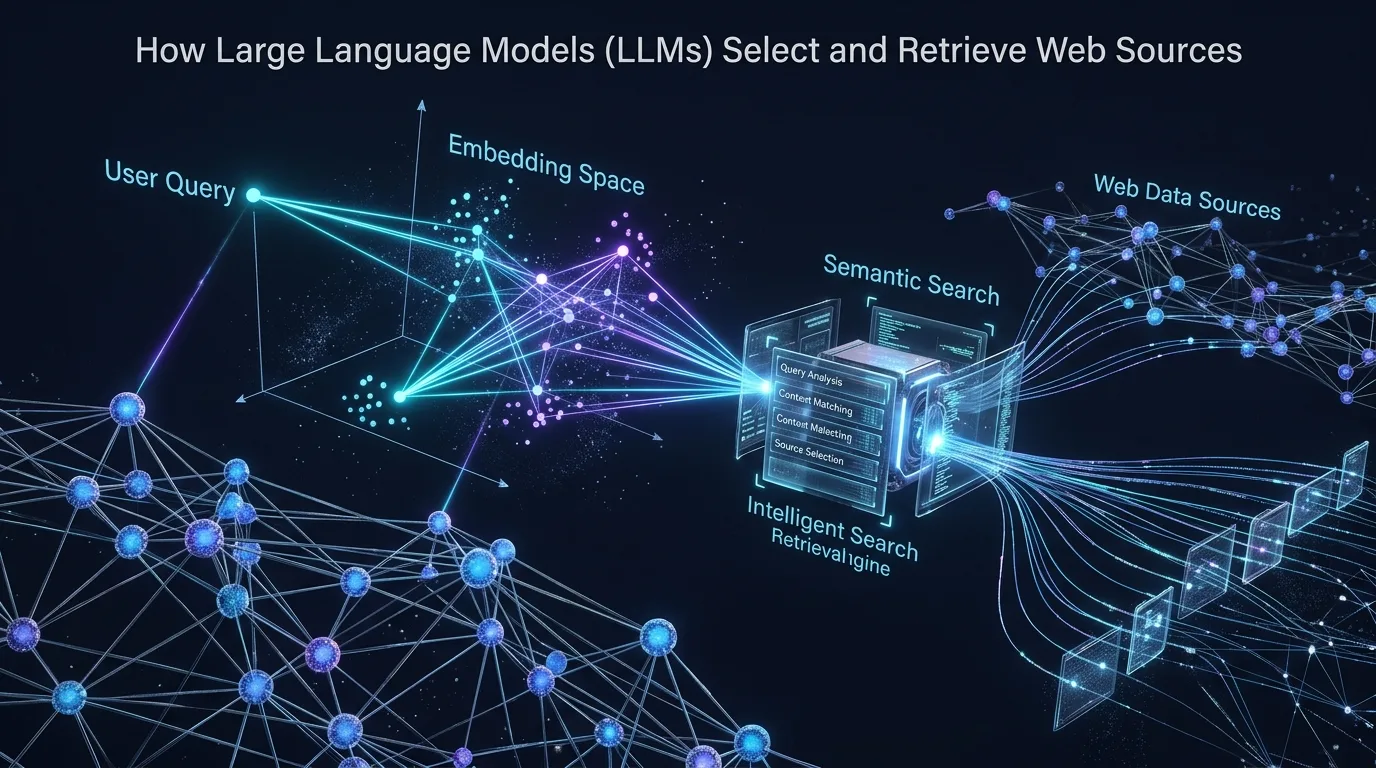
Large Language Models rely on entity embeddings during Retrieval-Augmented Generation (RAG). When answering user prompts, LLMs search their vector databases for entities that match the query intent. Documents with clear, verified entity triples are selected as source contexts, resulting in direct brand citations in generative answers.
Can I use multiple `sameAs` URLs in my Schema.org markup?
Yes, and you should. Best practice is to provide an array of authoritative URIs including your Wikidata page, Wikipedia article (if available), Crunchbase profile, official social media accounts, and industry registry identifiers. This multi-point reconciliation eliminates any possibility of identity confusion.
What is coreference resolution and why does it matter for SEO copywriters?
Coreference resolution is the NLP task of determining when different expressions in text refer to the exact same entity (e.g., "Google", "the search giant", "Alphabet's subsidiary", and "they"). Good technical copywriting naturally balances coreference expressions so that content reads fluently for humans while maintaining a continuous entity chain for search crawlers.
How frequently does Google update its Knowledge Graph entities?
While factual attributes from verified authoritative sources can update within hours, fundamental entity reconciliation (such as establishing a brand new Knowledge Panel or merging split entities) typically requires 2 to 6 weeks of continuous multi-source corroboration and web crawl re-indexing.



Ratings & reviews
No reviews yet. Be the first.