
Search intent is the supreme ranking factor in modern search engine optimization. No amount of technical schema markup, page speed micro-optimization, or domain backlink authority can force a webpage to rank on page one of Google if its core content architecture fails to satisfy the user's explicit psychological, commercial, and functional expectations. In 2026's search ecosystem, where neural matching and multi-modal AI systems evaluate user interaction signals in real time, search intent classification has evolved from simplistic keyword grouping into a granular, multidimensional science. Master the comprehensive taxonomy of informational, navigational, commercial investigation, and transactional SERP architectures to dominate high-intent organic demand.
1. The Evolution of Search Intent: Beyond Andrei Broder's Classical Model
In 2002, computer scientist Andrei Broder published a landmark paper titled "A Taxonomy of Web Search," which established the foundational three-part classification of search queries: Informational ("I want to know"), Navigational ("I want to go"), and Transactional ("I want to do"). While Broder's taxonomy provided the bedrock for first-generation search engines, the modern search landscape is vastly more sophisticated.
Today, Google's neural retrieval models—powered by RankBrain, MUM (Multitask Unified Model), and Gemini-class embeddings—recognize that search intent is not a static binary attribute. Queries exist on a continuous spectrum of latent customer needs, user journey stages, and semantic ambiguity. Furthermore, search engine results pages (SERPs) dynamically adapt their visual layouts based on perceived intent, shifting between generative AI overviews, product carousels, local map packs, interactive calculators, and authoritative video carousels.
2. The Four Primary Intent Archetypes Decoded
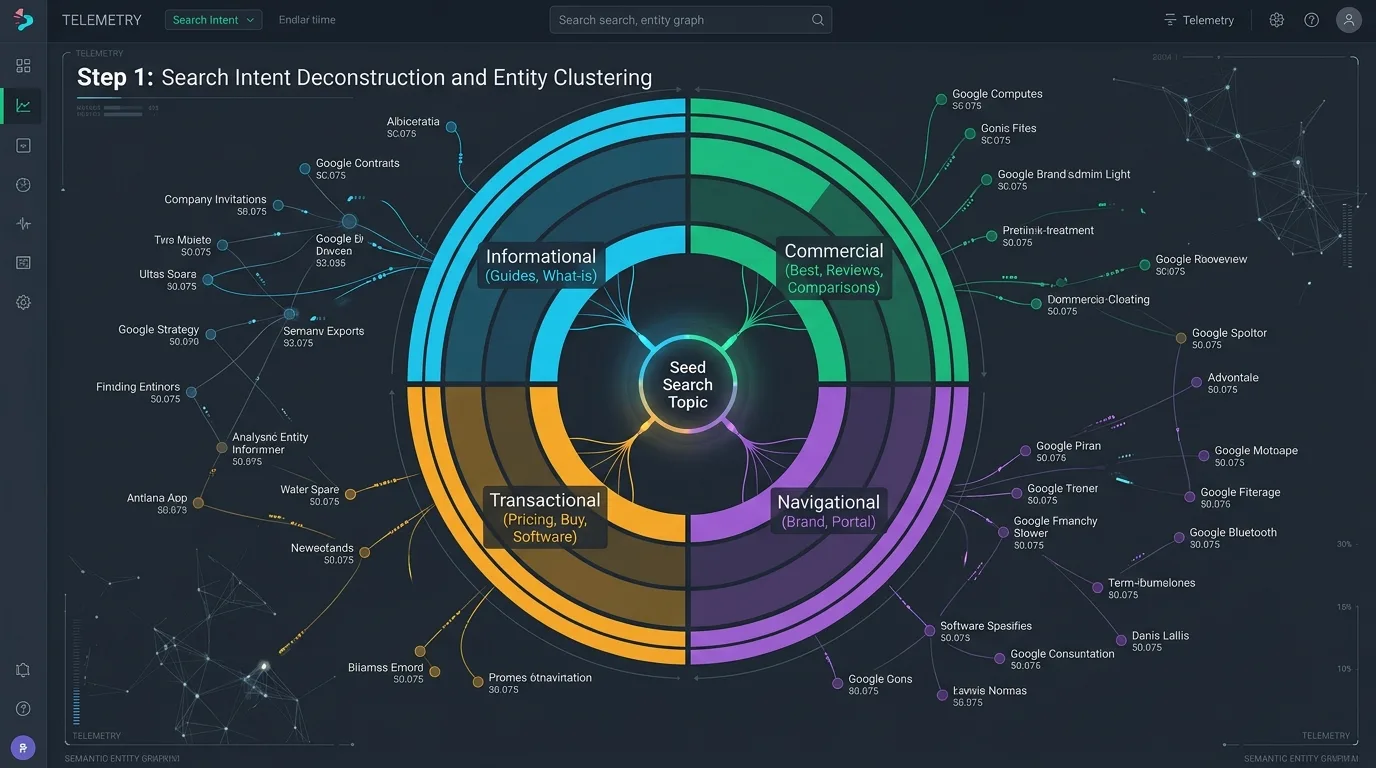
To construct winning landing pages and content assets, search marketers must engineer their content formats to align precisely with Google's algorithmic expectations across the four primary intent archetypes:
| Intent Archetype | User Psychological State | Representative Query Syntax | Dominant SERP Features | Mandatory Content Blueprint |
|---|---|---|---|---|
| Informational | Curiosity, problem definition, learning fundamentals | "how to", "what is", "why does", "guide", "tutorial" | AI Overviews, Featured Snippets, PAA, Video Carousels | Comprehensive pillar guides, definitions, step-by-step instructions. |
| Navigational | Destination-seeking, brand familiarity, portal login | "[Brand] login", "[Tool] documentation", "[Company] portal" | Sitelinks, Knowledge Panels, Direct Login Links | Lightweight, lightning-fast landing portals with clear navigational menus. |
| Commercial Investigation | Vendor evaluation, comparative analysis, feature vetting | "best [software] for [niche]", "[Brand A] vs [Brand B]", "reviews" | Comparison Tables, Review Snippets, Top 10 Listicles | Objective comparison matrices, benchmark data, pros/cons breakdowns. |
| Transactional | Purchase-ready, contract signing, demo booking | "buy [product]", "[software] pricing", "hire [service] quote" | Google Shopping, Local 3-Pack, Direct Action Buttons | High-conversion checkout pages, transparent pricing tables, demo forms. |
Failing to match the required archetype results in what technical SEOs call Intent Mismatch Friction: attempting to rank an in-depth 5,000-word informational guide for a query where Google's algorithm has determined users exclusively want a transactional pricing table and purchase button.
3. Informational Intent: Capturing Top-of-Funnel Mindshare Without Thin Content
Informational queries represent the vast majority of search volume across the global web. However, under Google's modern search quality raters guidelines and the Helpful Content System, publishing generic, superficial informational overviews is a major liability.
Winning informational SERPs requires structuring content for rapid cognitive absorption:
- The 60-Word Direct Answer Rule: Place the explicit, unhedged resolution to the target query in the very first paragraph beneath the H2, optimizing for Google Featured Snippets and AI Overviews.
- Structured Heading Taxonomies: Organize subsequent sections using semantic subheadings (H3, H4) that logically address the user's next implicit question.
- Entity-Rich Explanations: Connect concepts to recognized semantic entities, as detailed in our analysis of entity-based SEO and knowledge graphs.
4. Commercial Investigation: The High-Yield Pipeline Engine
Commercial investigation (Commercial Intent) is the ultimate growth lever for B2B SaaS and enterprise brands. Searchers conducting commercial queries have already identified their core pain point and secured budget; they are actively vetting competing options.
High-converting commercial investigation assets require specific architectural frameworks:
- Unbiased Competitive Matrices: Build honest, multi-parameter comparison tables that acknowledge competitors' strengths while clearly highlighting your proprietary differentiators.
- Transparent Evaluation Criteria: Explain exactly how products were tested, providing verifiable performance benchmarks, uptime statistics, and pricing tiers.
- Targeted "Alternative To" Landing Pages: Develop dedicated comparison pages addressing prospects looking to switch away from market incumbents (e.g., "[Incumbent] Alternatives").
The B2B Comparison Matrix Architecture
When engineering comparison pages for commercial searchers, structure your evaluation across five mandatory criteria: implementation velocity, technical extensibility (API & webhooks), total cost of ownership (transparent tier scaling), security compliance (SOC-2, HIPAA, GDPR), and customer support SLA guarantees. Presenting these parameters in a clean HTML comparative table satisfies search engines' E-E-A-T evaluation models and captures high-conversion buyer mindshare.
By connecting commercial assets to your brand's editorial engine through modern content marketing workflows, you capture buyers at the exact moment of decision-making.
5. Transactional Intent: Eliminating Conversion Friction
Transactional searchers exhibit zero tolerance for unnecessary narrative preamble. When a prospect searches for "enterprise SOC-2 compliance automation pricing," they expect immediate, transparent tier breakdowns, feature tables, and friction-free call-to-action buttons.
Key technical optimization requirements for transactional landing pages include:
- Above-the-Fold Value Proposition: Position your core offering, pricing summary, and primary conversion button within the initial viewport (above 700px vertical height).
- Instant Page Load & Zero Layout Shift: Maintain pristine Core Web Vitals; a 100ms delay on transactional pages reduces conversion velocity by over 7%.
- Trust Signals & Schema Validation: Deploy rich
Product,Offer, andAggregateRatingJSON-LD schema to secure glowing star ratings and price ranges directly within the SERP snippet.
Structured Product Schema for Transactional SERP Domination
To capture maximum visual real estate in transactional Google search results, transactional pages must embed comprehensive structured data markup directly into the HTML document:
<script type="application/ld+json">
{
  "@context": "https://schema.org",
  "@type": "Product",
  "name": "Enterprise SEO Platform",
  "description": "Automated technical SEO auditing and Generative Engine Optimization software for enterprise domains.",
  "brand": {
    "@type": "Brand",
    "name": "Seobeen"
  },
  "offers": {
    "@type": "AggregateOffer",
    "priceCurrency": "USD",
    "lowPrice": "499",
    "highPrice": "1999",
    "offerCount": "3"
  },
  "aggregateRating": {
    "@type": "AggregateRating",
    "ratingValue": "4.9",
    "reviewCount": "184"
  }
}
</script>
By defining explicit pricing ranges and verified review aggregates, search engines enrich your organic search snippet with star ratings, price tags, and in-stock badges, dramatically boosting transactional click-through rates.
6. Navigational Intent: Brand Defense and Domain Sitelinks Optimization
While navigational searches seem simple, failing to optimize for branded queries allows opportunistic competitors to hijack your customer traffic through paid search ads and aggressive comparative content.
To defend navigational queries:
- Domain Sitelinks Control: Maintain clean, hierarchical navigation menus and XML sitemaps to ensure Google displays rich, expanded sitelinks beneath your primary domain result.
- Portal URL Stability: Avoid altering URLs for high-frequency navigational destinations (such as
/login,/support, or/docs). If updates are mandatory, implement immediate 301 redirects as specified in our guide to HTTP status codes and redirection architectures.
7. Fracture-Intent SERPs: Serving Mixed and Ambiguous Query Demand
Frequently, search queries exhibit Fractured Intent: a state where search engine user testing reveals that half the searchers want a quick definition, while the other half want to buy software. A classic example is the query "customer feedback software"—some users seek educational articles on methodology, while others seek enterprise SaaS platforms.
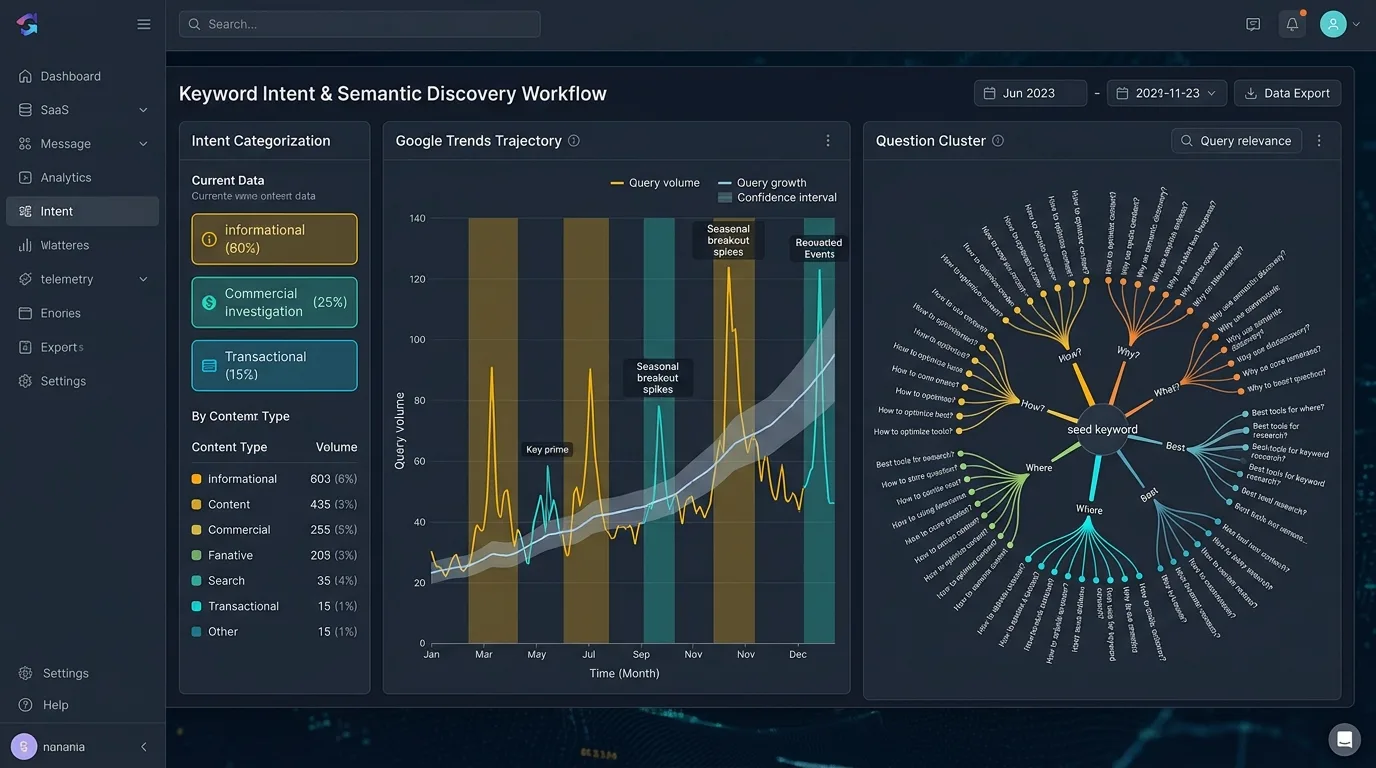
When optimizing for fractured-intent SERPs, adopt a Hybrid Architectural Template:
- Lead with a concise, authoritative definition answering the informational query.
- Immediately follow with an interactive comparison widget or software selector addressing commercial searchers.
- Provide an embedded contact or free-trial module for immediate transactional fulfillment.
8. Intent Mapping and Topic Cluster Topologies
Rather than treating keywords as disconnected isolated targets, enterprise SEO requires mapping search intent across an interconnected topical mesh. Each cluster contains an informational pillar guide, several commercial investigation comparisons, and dedicated transactional product landing pages.
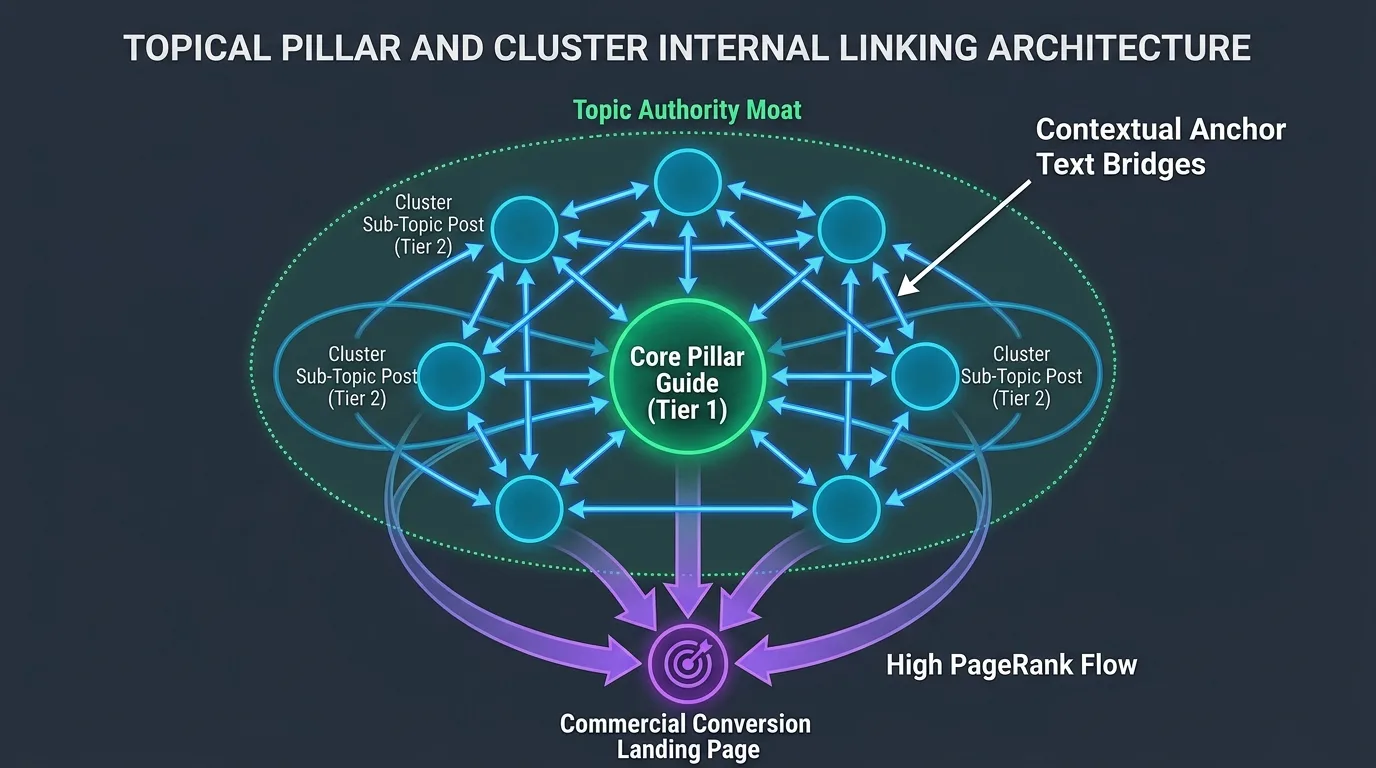
Internal link architecture plays an indispensable role here: informational guides must funnel link equity down to commercial comparison hubs, which subsequently direct prospects to transactional sign-up flows using natural, keyword-rich anchor text.
9. Reverse-Engineering Intent Using Google Search Console Telemetry
How do you identify whether your existing landing pages suffer from intent mismatch? By analyzing Google Search Console performance data. When a page registers high impressions but an abnormally low Click-Through Rate (CTR) and near-zero average dwell time, the search engine is testing your page against an intent profile your content does not satisfy.
By leveraging advanced regular expressions in GSC, you can segment query intent automatically. Learn how to configure these diagnostic regex filters in our masterclass on Google Search Console regex filtering and performance diagnostics.
Automated Search Intent Categorization with Python
To audit tens of thousands of search queries efficiently, growth engineers deploy automated classification scripts using regular expressions to assign queries into intent buckets:
import re

INTENT_PATTERNS = {
    'transactional': r'(buy|pricing|price|cost|quote|discount|coupon|hire|purchase|order)',
    'commercial': r'(best|vs|versus|review|reviews|top|alternative|alternatives|comparison|compare)',
    'informational': r'(how|what|why|guide|tutorial|tips|learn|overview|explained|examples)',
    'navigational': r'(login|portal|signin|sign in|account|dashboard|app|docs|support)'
}

def classify_query_intent(query):
    query_clean = query.lower()
    for intent, pattern in INTENT_PATTERNS.items():
        if re.search(pattern, query_clean):
            return intent
    return 'mixed_or_unclassified'

sample_queries = [
    "best enterprise seo platform",
    "how to optimize for google ai overviews",
    "seobeen pricing plans",
    "seobeen login dashboard"
]

for q in sample_queries:
    print(f"Query: '{q}' -> Intent: {classify_query_intent(q)}")
Executing this classification pipeline over exported Google Search Console datasets identifies which landing pages suffer from intent mismatches—such as informational articles generating thousands of commercial impressions with low click-through rates.
10. The 6-Step Search Intent Optimization Audit Protocol
To audit and optimize your entire domain's content portfolio for flawless intent alignment, execute this recurring 6-step protocol:
| Audit Phase | Core Objective | Key Diagnostic Question | Actionable Output |
|---|---|---|---|
| 1. SERP Scraping | Analyze live Top 5 results | What content format is Google actively rewarding? | Format classification (Listicle, Tool, Guide, or Product). |
| 2. Feature Audit | Inspect SERP visual modules | Are AI Overviews, shopping ads, or map packs present? | Identify required rich schema and embed requirements. |
| 3. Content Re-architecture | Eliminate intent mismatch | Does our content force narrative reading when users want tables? | Restructure layouts; add comparison tables and direct answers. |
| 4. CTA Alignment | Match call-to-action to stage | Is an informational reader being pressured with an aggressive sales demo? | Replace hard sales pitches with educational lead magnets or tools. |
| 5. Internal Link Routing | Guide user progression | Can a commercial searcher transition smoothly to checkout? | Deploy contextual in-paragraph links to next-stage assets. |
| 6. Behavioral Telemetry | Monitor bounce & dwell time | Are users bouncing back to Google within 5 seconds (pogo-sticking)? | Refine above-the-fold content to instantly validate user expectations. |
Frequently Asked Questions About Search Intent Optimization
What are the four main types of search intent in SEO?
The four primary search intent types are Informational (seeking answers, explanations, or tutorials), Navigational (seeking a specific website, brand, or portal), Commercial Investigation (comparing vendors, reading reviews, or evaluating solutions), and Transactional (ready to purchase, download, or subscribe).
What happens if a webpage fails to match search intent?
If a webpage fails to match search intent, visitors will immediately bounce back to the search results (a phenomenon known as pogo-sticking). Google's ranking algorithms interpret this negative behavioral signal as dissatisfaction, rapidly demoting the page from top rankings regardless of backlink strength.
Can a single search query have multiple intents?
Yes. This is called fractured or mixed intent. Google frequently serves a diverse mix of results on the first page (such as two informational guides, two commercial comparison lists, and one direct product page) to satisfy different segments of searchers until user data reveals a dominant preference.
How do I determine the search intent of a target keyword?
The most reliable method is to perform an incognito Google search for the target keyword and inspect the top-ranking results. Look at the content formats (are they how-to guides, product pages, or comparison listicles?) and examine the SERP features (such as shopping carousels, video packs, or AI Overviews).
Why is commercial intent more valuable than informational intent for B2B?
Commercial intent queries attract decision-makers who have already acknowledged their business problem and possess active budget. Ranking for commercial terms generates qualified sales leads and direct revenue, whereas informational queries often attract casual students or non-buyers.
How does Google AI Overviews affect search intent?
AI Overviews synthesize direct answers for simple informational queries directly within the SERP, reducing organic click-through rates on basic definition content. Marketers must pivot toward deeper commercial analysis, proprietary benchmark data, and transactional offerings that require full website visits.
What is the 60-word direct answer rule?
The 60-word direct answer rule states that you should provide a clear, comprehensive, and unambiguous answer to the search query within the first 60 words under your primary heading. This optimizes your content for Google Featured Snippets and generative engine citations.
How should internal links be used across different search intents?
Internal links should guide users logically through the marketing funnel: link from broad informational articles down to commercial comparison guides, and link from commercial comparison guides directly to transactional checkout or demo booking pages.
What role do Core Web Vitals play in transactional search intent?
On transactional pages, users expect instant page responsiveness and zero visual layout shifts. High latency or unstable layouts frustrate ready-to-buy consumers, causing immediate cart abandonment and harming your commercial conversion metrics.
Can search intent change over time for the same keyword?
Yes. Search intent shifts as consumer habits, market awareness, and technology evolve. A keyword that was originally 100% informational when a technology was new may transition into a primarily transactional or commercial query as the market matures.



Ratings & reviews
No reviews yet. Be the first.