
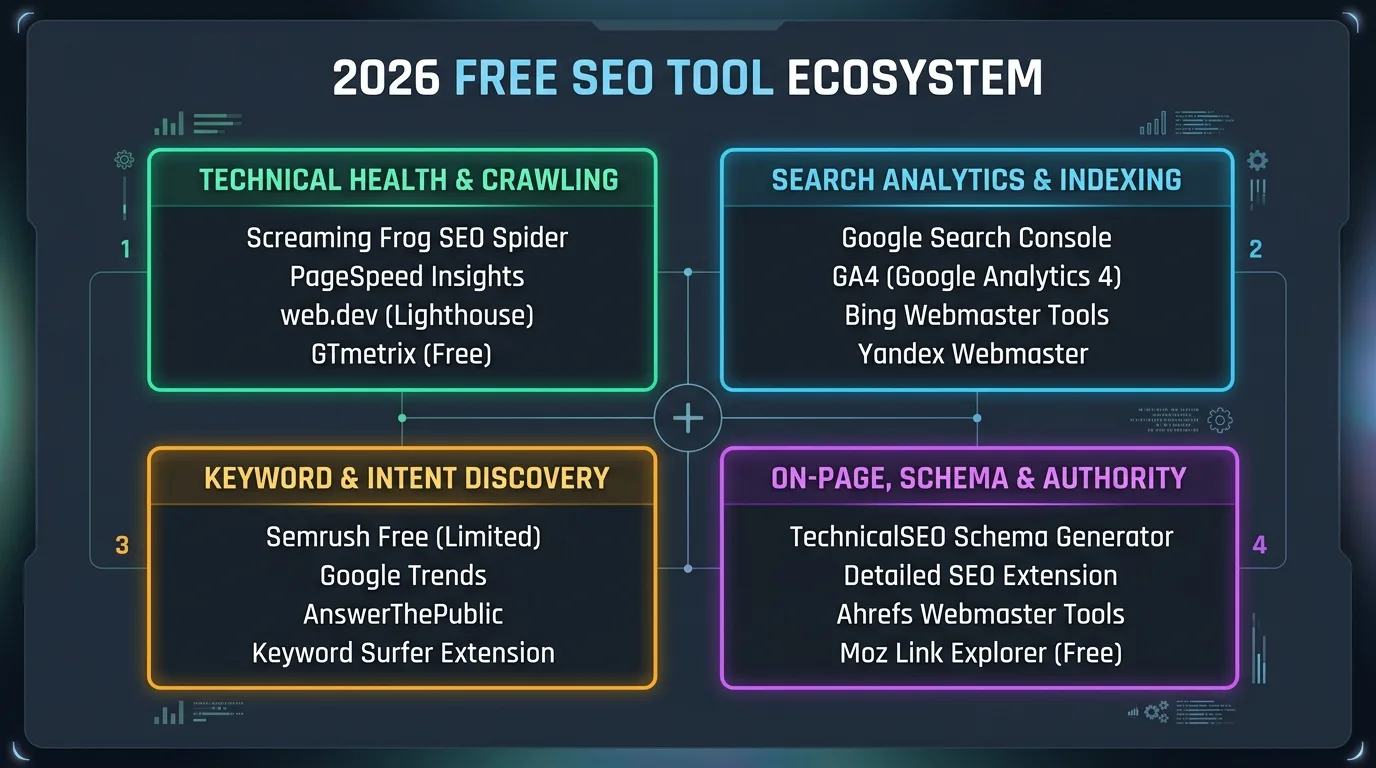
In organic search, the Pareto Principle is an unyielding law of enterprise economics: exactly 20% of your search engine optimization activities generate 80% of your qualified pipeline, customer conversions, and durable market authority. The remaining 80% of tactical tasks—obsessing over minor PageSpeed sub-scores, tweaking meta descriptions that Google dynamically rewrites, endless keyword tag taxonomies, and chasing low-intent vanity search volume—absorb hundreds of engineering hours while barely moving the revenue needle. Discover how elite growth teams cut through operational noise to execute the high-leverage initiatives that genuinely dominate search engine results pages.

1. The Pareto Principle Applied to Organic Search: Why Most SEO Busywork Fails
The Pareto Principle—originally articulated by Italian economist Vilfredo Pareto in 1896—posits an inherent power-law distribution where roughly 80% of consequences stem from 20% of causes. In enterprise organic marketing, this asymmetry is even more severe: frequently, 5% of a website's landing pages drive 85% of downstream conversions, and a tightly focused cluster of technical and architectural optimizations accounts for virtually all algorithmic indexing gains.
Most search marketing teams fall victim to tactical perfectionism. Because SEO tools generate thousands of automated audit notifications—flagging missing alt tags on decorative icons, non-critical CSS warnings, trivial word count variances, and arbitrary readability grades—practitioners drown in low-yield triage. Meanwhile, foundational growth levers such as entity-based disambiguation and knowledge graph positioning, high-intent transactional query capture, and strategic internal link equity routing remain perpetually neglected on backlogged sprint boards.
To achieve market leadership in 2026's search landscape, where generative AI overviews and zero-click answer engines distill web pages into concise semantic summaries, you cannot afford to waste engineering bandwidth on superficial optimizations. You must evaluate every SEO ticket through an asymmetric lens: does this task directly unblock crawl discovery, amplify topical authority, capture purchase-ready intent, or defend organic moat? If the answer is no, it belongs in the discarded 80%.
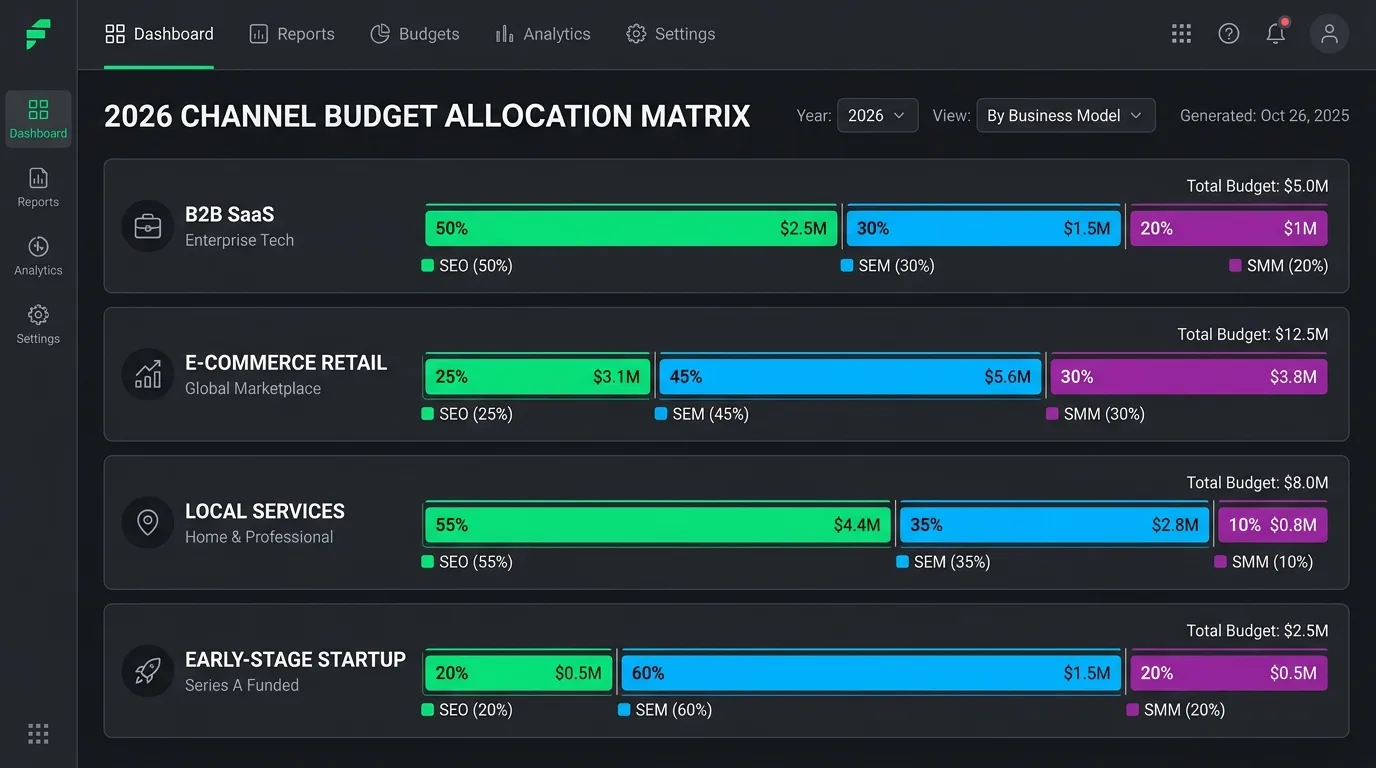
2. The High-Impact vs. Low-Impact Matrix: Prioritizing the 20%
Differentiating high-impact initiatives from time-sink distractions requires an objective prioritization model. The table below outlines twelve universal search marketing activities, dissecting their typical resource requirements against their empirical impact on rankings, pipeline, and business revenue.
| SEO Activity | Resource Investment | Revenue Correlation | Time-to-Impact | Pareto Classification |
|---|---|---|---|---|
| High-Intent BOFU Landing Pages | Moderate (Editorial + CRO) | Exceptionally High | 30–60 Days | Top 20% (Core Revenue Lever) |
| Crawlability & Rendering Architecture | High (Engineering/DevOps) | Very High (Prerequisite) | 14–45 Days | Top 20% (Foundational Infrastructure) |
| Topical Entity Hub Architecture | Moderate to High | High | 60–90 Days | Top 20% (Topical Authority Engine) |
| High-Leverage Internal PageRank Routing | Low (Content/Template) | Very High | 14–30 Days | Top 20% (Highest ROI per Hour) |
| Original Survey Data & Digital PR | Moderate to High | High (Domain Moat) | 45–90 Days | Top 20% (Authority Multiplier) |
| Resolving Critical Indexing & 404 Leaks | Low to Moderate | Moderate to High | 7–21 Days | Top 20% (Equity Preservation) |
| Minor PageSpeed Tweaks (92 to 98) | High (Engineering) | Negligible | None | Bottom 80% (Diminishing Return) |
| Rewriting Meta Descriptions at Scale | High (Manual Editorial) | Extremely Low | Minimal | Bottom 80% (Google Dynamic Overwrite) |
| Disavowing Toxic Low-Tier Backlinks | Moderate (Auditing) | Zero (Ignored by Algorithm) | None | Bottom 80% (Obsolete Practice) |
| Keyword Tag & Taxonomy Pages | Moderate | Negative (Thin Content Risk) | Immediate | Bottom 80% (Crawl Waste & Dilution) |
| Publishing Generic Top-of-Funnel AI Articles | Low to Moderate | Negative (HCS Penalty Risk) | 30–90 Days | Bottom 80% (Traffic Vanity / High Churn) |
| Micro-Tweaking Heading Tag Hierarchies | Low | Negligible | None | Bottom 80% (Cosmetic Busywork) |
As revealed in this empirical matrix, the activities that demand the greatest manual labor—such as disavow file maintenance, micro-optimizing meta tags across thousands of legacy URLs, or chasing a 99 Lighthouse Performance score—rarely influence algorithmic ranking. By shifting focus to internal PageRank distribution, rendering integrity, and high-commercial keyword targeting, marketing teams achieve outsized outcomes with minimal friction.
3. Technical Foundation: The Non-Negotiable 20% That Enables 100% Crawlability
Technical search optimization is frequently misunderstood. Junior practitioners often treat technical audits as exhaustive punch-lists of hundreds of warnings. In reality, modern search engines like Googlebot are resilient parsing engines. What truly matters is a tight, impenetrable foundation: can search bots discover, render, and index your canonical documents without wasting crawl budget or encountering rendering dead-ends?
The high-leverage 20% of technical SEO centers on three critical pillars: server-side rendering parity, clean canonicalization hierarchies, and pristine index status. When implementing modern JavaScript frameworks like Next.js, adopting proper server-side rendering (SSR) vs static site generation (SSG) architectures ensures search engine crawlers receive fully populated HTML without relying on fragile second-wave headless Chromium rendering queues.
Furthermore, maintaining clean server headers (true 200 OK, pristine 301 redirects without multi-hop chains, and unambiguous 404/410 headers for discontinued resources) prevents PageRank dilution. As modern sites expand through faceted navigation or dynamic filters, failing to manage URL parameters creates exponential URL bloat that suffocates Googlebot's crawl budget, as detailed in our guide to faceted navigation SEO and crawl preservation.
4. Commercial Intent Over Search Volume: Capturing Bottom-of-Funnel Pipeline
One of the most destructive habits in organic search strategy is prioritizing keyword search volume over commercial conversion intent. A query with 50,000 monthly searches such as "what is customer relationship management" attracts university students, casual researchers, and job applicants with near-zero propensity to purchase enterprise software. Conversely, a long-tail search with 250 monthly queries such as "enterprise open source CRM with HIPAA compliance" attracts senior technical decision-makers holding approved corporate budgets.
Under the 80/20 framework, growth teams dedicate their primary content resources to bottom-of-the-funnel (BOFU) and middle-of-the-funnel (MOFU) intent categories:
- Direct Competitor Comparisons ("Alternative To", "vs", "Review"): Users evaluating alternative solutions have already recognized their pain point and committed budget; they are simply selecting a vendor. High-integrity, objective comparison landing pages consistently convert at 8% to 15%.
- Feature and Use-Case Specific Pages: Dedicated pages addressing high-friction enterprise use cases (e.g., "SOC-2 compliant cloud storage for financial services") bypass broad generic competition to establish immediate buyer relevance.
- Programmatic Industry & Integration Landing Pages: Programmatic templates targeting technology stack integrations (e.g., "[Product] + [Ecosystem Tool] integration") capture searchers actively building workflows.
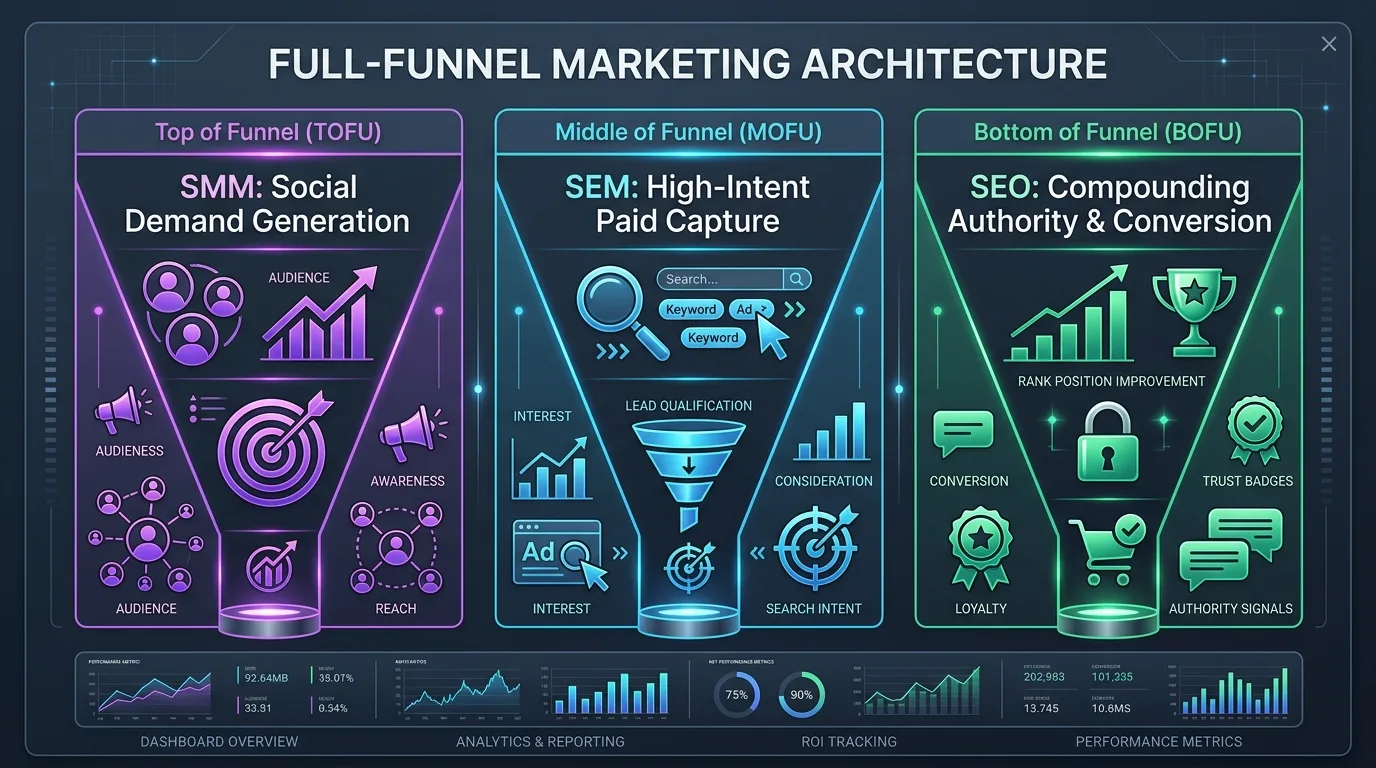
Capturing commercial intent also protects your domain from systemic algorithmic fluctuations. As Google's systems continuously elevate authentic user satisfaction, pages that solve concrete operational requirements experience superior dwell times and lower bounce rates, insulating your site against the sitewide ranking drops associated with the Google Helpful Content System (HCS).
5. Topical Authority and Entity Density: Winning Generative Engines with High-Density Hubs
Modern search engines do not rank strings; they rank entities and concepts. Rather than publishing fifty superficial 800-word articles scattered across disjointed topics, the 80/20 principle dictates building exhaustive, interconnected topic clusters around your core value proposition.
A single authoritative pillar guide surrounded by four to six deeply researched satellite articles establishes unambiguous topical dominance. Within each asset, integrating structured entity relationships, verified industry data, and explicit definitions signals semantic completeness to search engines' natural language processing engines. This approach is essential for dominating both traditional organic blue links and emerging generative answer experiences.

When structuring content for generative engine optimization (GEO), direct answers must precede elaborate commentary. Use the inverted pyramid method: provide the definitive, unhedged resolution to the primary user query within the first 150 words of each section, followed by data-backed evidence, comparative analysis, and practical implementation blueprints.
6. High-Leverage Internal Linking Architecture: Passing PageRank to Decision-Stage Assets
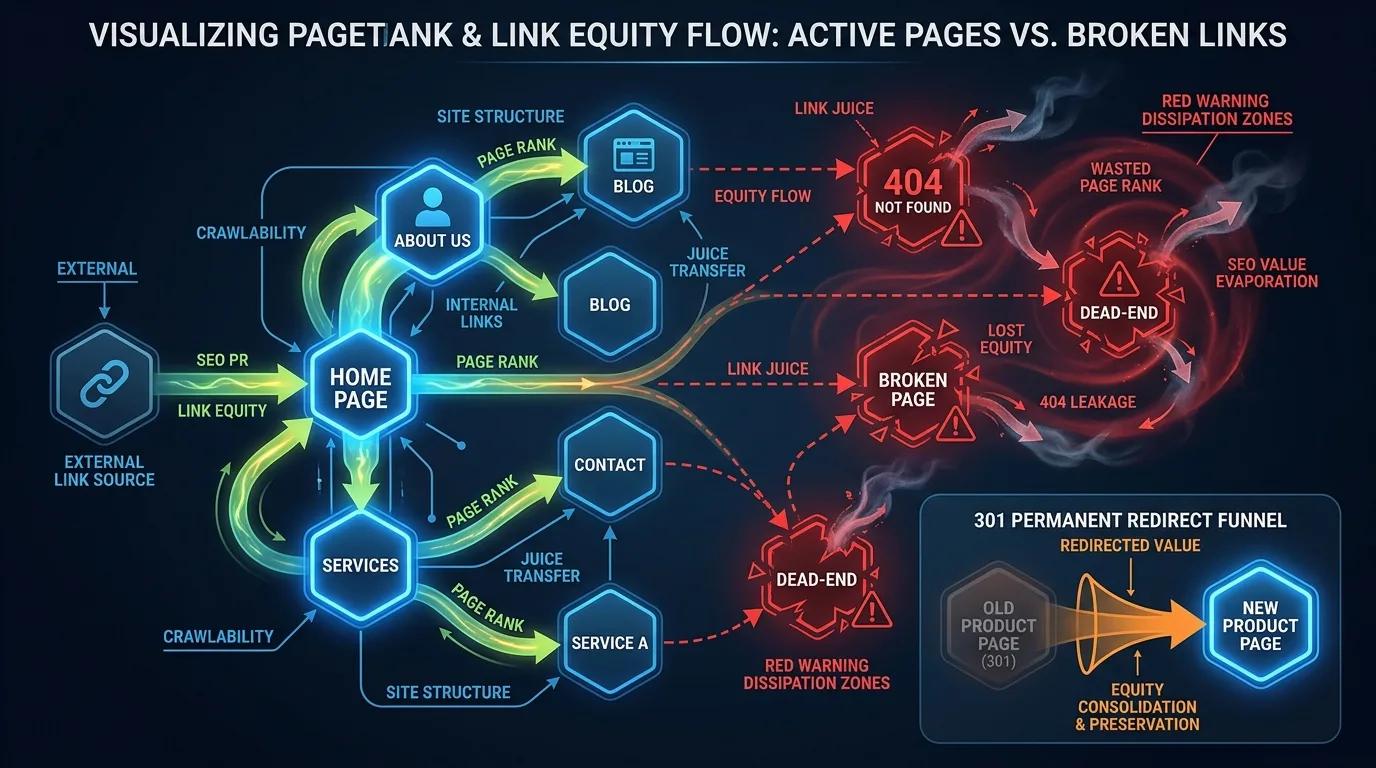
Internal linking is universally acknowledged as one of the few pure ranking factors entirely within a webmaster's direct control. Yet, on most websites, internal link equity is distributed haphazardly—pointing predominantly to the homepage, generic "About Us" pages, or outdated blog posts with no conversion path.
The 80/20 rule of internal linking focuses on asymmetric equity routing: systematically siphoning PageRank accumulated by high-authority informational assets and funneling it directly into high-converting commercial landing pages. Consider the following architectural rules:
- Descriptive, Varied Anchor Text: Abandon generic "click here" or "learn more" anchors in favor of keyword-rich, natural-language phrases that communicate exact topical relevance to Googlebot.
- Contextual In-Paragraph Hyperlinks: Search engines weigh hyperlinks embedded within editorial body copy significantly higher than footer links or boilerplate sidebar widgets.
- Eliminating Orphan Pages: Every commercial asset must have at least three to five inbound internal links from contextually relevant parent pillar articles.
- Bidirectional Cluster Linking: Sub-topic articles must link back to their parent pillar, while the parent pillar links down to all sub-topics, forming an unbroken topical semantic mesh.
Automating your link graph auditing through scripts or telemetry tools allows you to identify isolated pockets of authority and redirect equity where it generates measurable revenue, as detailed in our deep dive on automating Google Search Console data exports with Python and the Search Analytics API.
7. Digital PR and Asymmetric Link Acquisition: Securing Top-Tier Editorial Endorsements
Building high-authority backlinks remains a cornerstone of algorithmic trust. However, conventional manual outreach—sending cold emails asking for link insertions or trading guest posts on low-tier industry blogs—is an operational grind with diminishing returns. It represents the quintessential 80% busywork trap.
The 20% asymmetric link-building strategy relies on proprietary data journalism and hook-based digital PR. By surveying your customer base, analyzing anonymized platform telemetry, or publishing original industry benchmark reports, you create an authoritative primary source that journalists, industry analysts, and top-tier publications actively seek to reference.

A single tier-one editorial citation from a major publication (such as Forbes, TechCrunch, or Reuters) confers more algorithmic authority and trust than five hundred directory listings or automated Web 2.0 links. Focus all link-building effort on creating citation-worthy assets that compound in link equity over multiple years.
8. Data-Driven Resource Allocation: Measuring ROI and Compounding Returns
How do elite growth leaders ensure their teams remain disciplined within the 20% high-leverage boundary? By establishing rigorous performance attribution and monitoring compounding return curves rather than celebrating vanity traffic spikes.
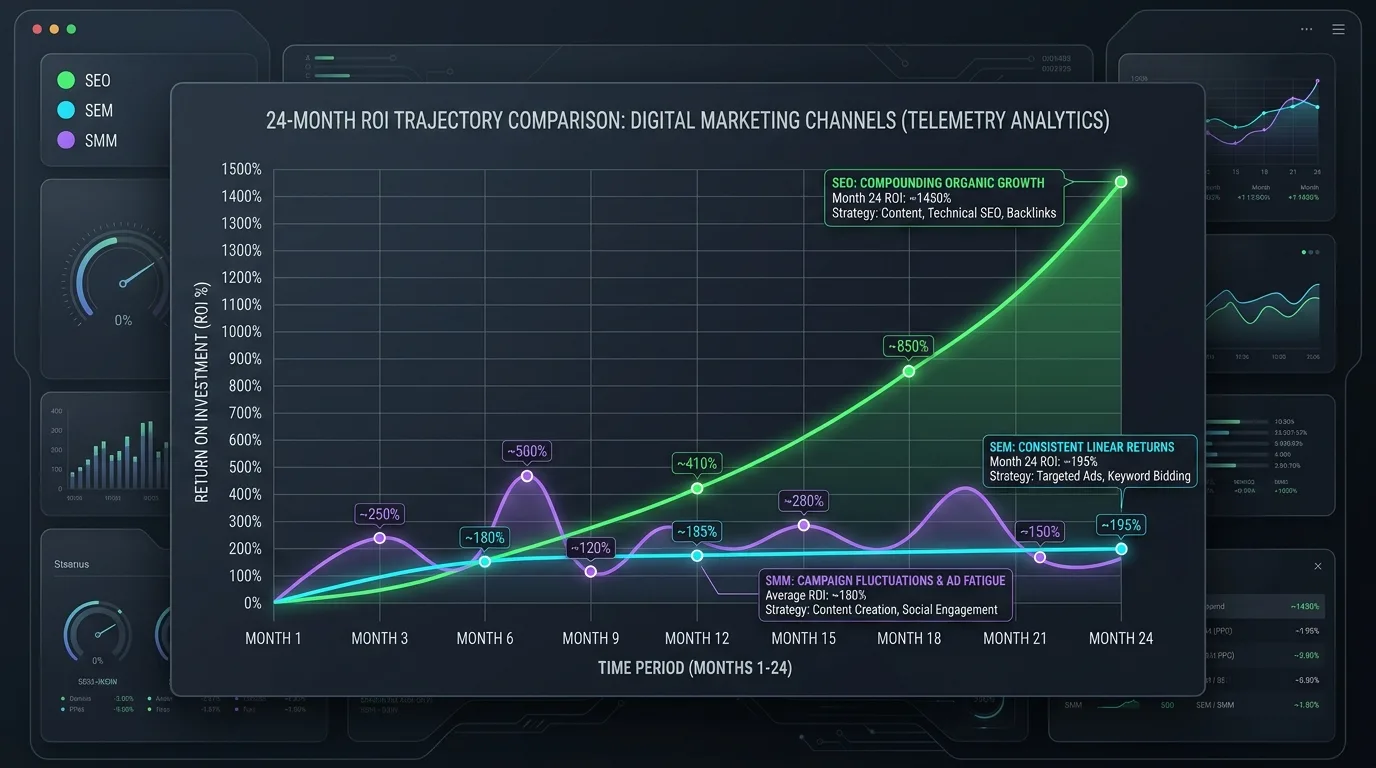
To audit performance accurately, webmasters must move beyond high-level aggregate metrics in Google Search Console. Utilizing advanced regex filters to segment queries into branded, non-branded transactional, and informational buckets reveals true commercial trajectory. To implement these filters, review our masterclass on Google Search Console regex filtering and performance diagnostics.
| Audit Dimension | The 80/20 High-Leverage Focus | Common Low-Yield Distraction | Recommended Strategic Action |
|---|---|---|---|
| Analytics & Reporting | Pipeline attribution & conversion tracking per URL | Tracking 5,000 keyword rank fluctuations daily | Integrate GSC API with CRM to measure closed-won revenue by entry page. |
| Content Audits | Pruning thin content & consolidating keyword cannibalization | Rewriting intro paragraphs on 200 low-traffic posts | Redirect or 410 dead articles; merge 3-4 weak posts into definitive pillars. |
| Mobile Performance | First Contentful Paint (FCP) & Cumulative Layout Shift (CLS) | Eliminating render-blocking third-party scripts that marketing needs | Inline critical CSS, defer non-essential trackers, and optimize hero images. |
| Schema Markup | Nested Organization, Product, FAQPage, and Author JSON-LD | Adding microdata tags to every generic blog author bio | Deploy unified JSON-LD graph linking primary brand entities to Wikidata. |
9. The Anti-Pattern Playbook: 7 Common SEO Traps That Waste Engineering Bandwidth
To protect your sprint cycles, you must establish an explicit "Stop Doing" list. When marketing requests arise, screen them against these seven notorious anti-patterns:
- The 100/100 Core Web Vitals Obsession: Once your mobile URLs achieve "Good" thresholds across LCP, INP, and CLS in field data (CrUX), spending another three engineering sprints attempting to increase a lab score from 94 to 99 yields zero organic ranking improvement.
- Disavowing Inconsequential Backlinks: Google's search algorithms have ignored low-quality automated spam links for years without penalizing domains. Unless you are dealing with an explicit manual action, disavow file management is pure wasted effort.
- Mass Rewriting of Meta Descriptions: Google dynamically overrides user-written meta descriptions over 70% of the time based on user query intent. Focus your copywriting energy on compelling, click-worthy H1 headlines and high-value value propositions.
- Publishing for Publishing's Sake: Maintaining an arbitrary editorial cadence (e.g., "three generic posts per week") clutters your site with uninspired, low-depth articles that risk dragging down domain quality scores under the Helpful Content System.
- Keyword Tag Cloud Generation: Creating WordPress tag pages or category taxonomies for every minor permutation creates massive internal duplicate content and cannibalization.
- Excessive Micro-Redirect Audits: Chasing single internal 301 redirects on low-traffic assets instead of resolving macro crawl loops and broken external incoming backlinks.
- Ignoring Search Intent Mismatch: Attempting to force an informational blog post to rank for a search query where Google exclusively rewards transactional pricing calculators or comparison tables.
10. The Executive 80/20 Implementation Roadmap: A 90-Day High-Velocity Blueprint
Transforming your search strategy from a scattered tactical to-do list into a streamlined 80/20 engine requires structured, disciplined execution. Here is how modern enterprise growth teams execute this transition across a 90-day sprint cycle:
Days 1–30: Technical Sanitization & Intent Mapping
Audit your crawl index to identify and prune zombie URLs, resolve critical rendering bottlenecks, eliminate broken high-equity 404s, and categorize all existing ranking keywords by commercial intent. Eliminate low-performing content that dilutes domain quality.
Days 31–60: Core Moat Construction & Architectural Internal Linking
Publish two to three comprehensive pillar guides targeting core product categories. Build high-converting BOFU comparison and alternative pages. Re-engineer your site's internal linking mesh to channel PageRank from authority guides directly into commercial conversion pages.
Days 61–90: Asymmetric Distribution & Measurement
Launch your first original data study or industry survey to initiate passive tier-one link acquisition. Connect your Search Console data stream directly to your business intelligence stack, measuring organic growth by qualified leads and customer pipeline rather than vanity clicks.
Frequently Asked Questions About the 80/20 Rule in SEO
What does the 80/20 rule mean in SEO?
The 80/20 rule in SEO states that 20% of your search engine optimization activities—such as high-intent content creation, core rendering and indexability, strategic internal linking, and top-tier link acquisition—produce 80% of your website's organic traffic, conversions, and revenue. The remaining 80% consists of low-impact tactical tasks that consume significant resources with negligible ranking effects.
Which SEO tasks should I stop doing immediately?
You should immediately stop submitting disavow files for ordinary low-tier links (Google naturally ignores them), obsessing over micro PageSpeed score improvements once Core Web Vitals are within the green threshold, mass-rewriting meta descriptions, publishing low-effort generic blog posts to hit arbitrary volume quotas, and generating excessive tag or taxonomy archive pages.
How do I identify my site's top 20% revenue-generating pages?
Integrate Google Analytics 4 and Google Search Console with your CRM or product analytics tool. Filter landing pages by assisted conversions, demo requests, and direct sales rather than raw pageviews. You will typically find that a small fraction of commercial comparison pages, feature landing pages, and core pillar guides generate the vast majority of qualified pipeline.
Is technical SEO part of the 20% or the 80%?
Critical technical SEO (proper server rendering, indexation status, canonicalization, mobile responsiveness, and clean HTTP headers) is firmly in the high-impact 20%, because search engines cannot rank pages they cannot properly crawl and render. However, hyper-optimizing non-critical CSS warnings, minor schema errors that do not affect rich snippets, and micro-audits belong in the low-impact 80%.
Why is commercial intent more important than search volume?
Search volume measures curiosity, whereas commercial intent measures purchase readiness. Ranking #1 for a 200-monthly-search term with high purchase intent (such as "enterprise SOC-2 compliance software") will generate vastly more revenue than ranking #1 for a 50,000-search generic educational keyword that attracts non-buyers.
How does internal linking fit into the 80/20 framework?
Internal linking is arguably the highest-ROI activity per hour invested in SEO. It costs zero dollars in third-party outreach and requires minimal engineering time, yet strategically passing PageRank from high-authority informational guides to under-linked commercial assets can boost target rankings in days.
What is the most asymmetric way to build high-authority backlinks?
Conducting original industry surveys and publishing proprietary benchmark reports. Creating primary data sources allows you to passively attract tier-one editorial citations from journalists and analysts who need verifiable statistics to cite in their articles.
Does the 80/20 rule apply to AI search engines and Generative Engine Optimization (GEO)?
Yes. Generative engines like Google AI Overviews and Perplexity synthesize information from authoritative entity hubs and high-density primary sources. Focusing your editorial efforts on clear definitions, original data, and comprehensive topical coverage provides maximum citation visibility with minimum content bloat.
How often should a growth team audit their SEO priorities?
Perform a comprehensive 80/20 audit quarterly. Review landing page conversion velocity, prune underperforming or decayed URLs, inspect the internal PageRank flow, and reallocate content resources toward rising high-commercial search clusters.
How can small marketing teams compete against massive enterprise competitors using this rule?
Large enterprises often suffer from organizational inertia and waste huge budgets on the bottom 80% of low-impact busywork. A nimble team that focuses exclusively on hyper-targeted BOFU comparison content, pristine technical rendering, and deep topical expertise can easily outrank legacy competitors for the highest-converting queries in the niche.



Ratings & reviews
No reviews yet. Be the first.