

In modern web engineering, few architectural decisions exert as profound an impact on organic search visibility, server infrastructure costs, and user conversion velocity as the choice of rendering pattern. The debate between Server-Side Rendering (SSR), Static Site Generation (SSG), and Incremental Static Regeneration (ISR) is not merely a theoretical debate among software developers; it is the fundamental technological axis upon which crawl budget, Time to First Byte (TTFB), Core Web Vitals, and indexation reliability succeed or fail.
Client-Side Rendering (CSR) single-page applications are non-viable for enterprise search. In 2026, the competitive standard requires pre-rendering 100% of critical HTML before it reaches Googlebot. Choosing between SSR and SSG requires balancing data freshness against edge caching latency: SSG delivers unmatched sub-50ms TTFB for evergreen content, while SSR and ISR provide dynamic real-time personalization for high-inventory multi-million-page catalogs.
1. The Rendering Spectrum: Evolution from Client-Side SPA to Hybrid Edge Architectures
To evaluate rendering models objectively, one must trace the historical pendulum swing of web architecture. In the early 2000s, websites were strictly server-rendered: every page request initiated a round-trip database query that returned a static HTML string. The mid-2010s saw the explosive rise of JavaScript single-page applications (SPAs) built with React, Angular, and Vue. These applications shifted all rendering computation onto the client's browser, delivering sleek app-like transitions but creating an unmitigated catastrophe for search engine optimization.
Search engine crawlers encountering raw client-side JavaScript were forced to queue pages in a resource-intensive rendering pipeline. Critical meta tags, canonical links, schema markup, and contextual content were invisible to the initial crawl wave. Pages sat unindexed for weeks, while mobile users on low-powered devices suffered excruciating hydration lag.
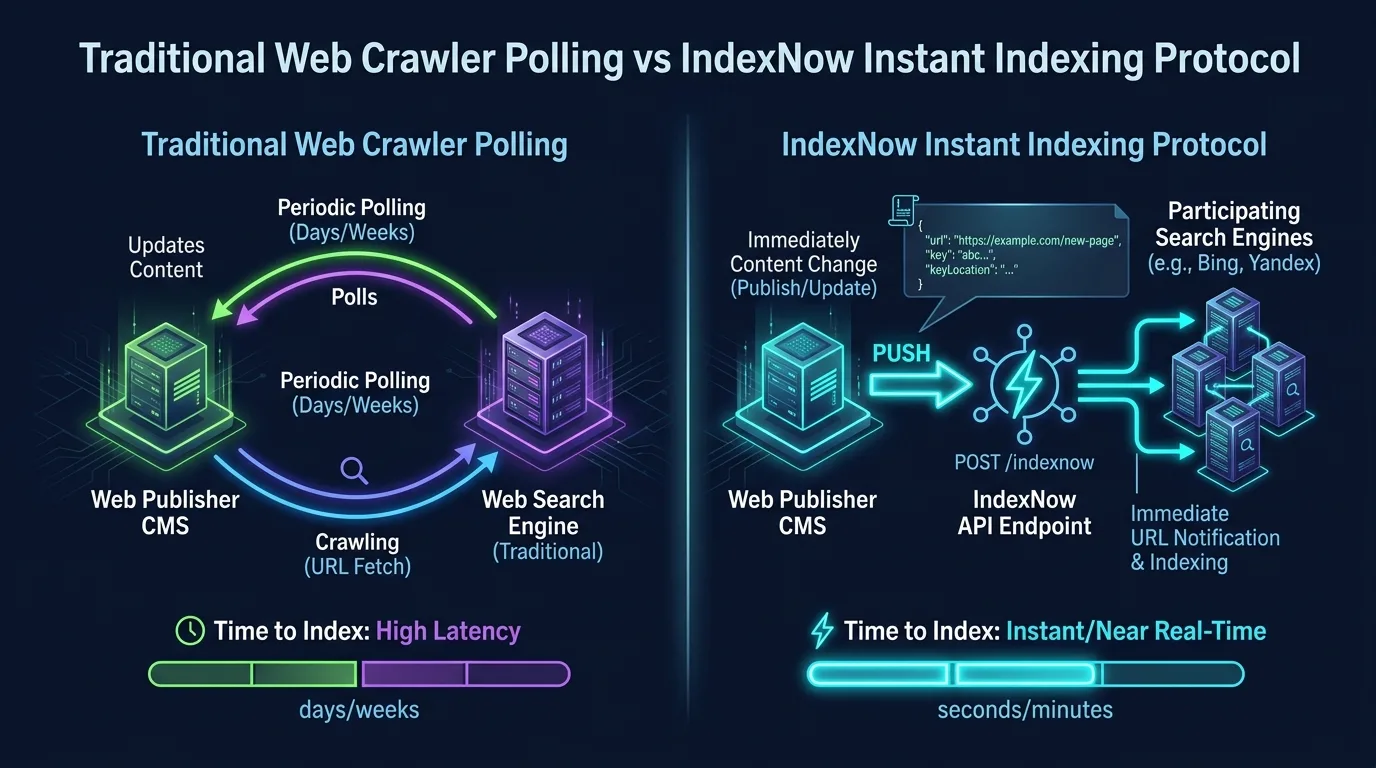
Today, the modern web has moved past the binary choice between raw client-side JavaScript and monolithic backend servers. Modern meta-frameworks operate across a sophisticated spectrum of hybrid rendering models designed to deliver complete, crawl-ready HTML in milliseconds.
| Rendering Pattern | HTML Compilation Point | Time to First Byte (TTFB) | Server Compute Cost | Catalog Scalability | Enterprise SEO Recommendation |
|---|---|---|---|---|---|
| Static Site Generation (SSG) | Build time (Ahead-of-Time compilation) | Exceptional (15–50ms via CDN Edge) | Zero ongoing compute per request | Limited by build duration (< 25,000 pages) | Ideal for Editorial & Blogs: Maximum Core Web Vitals scores and instantaneous crawler indexation. |
| Server-Side Rendering (SSR) | Request time (On-demand per user hit) | Variable (200–800ms+ depending on DB) | High (Continuous CPU/Memory consumption) | Infinite (Dynamic database queries) | Essential for Real-Time Inventories: Stock levels, dynamic auctions, authenticated user feeds. |
| Incremental Static Regeneration (ISR) | Hybrid (Cached statically; updated asynchronously) | Exceptional (Served from Edge cache) | Low (Compute incurred only on revalidation) | Massive (Multi-million SKU portals) | Gold Standard for E-Commerce: Combines SSG speed with dynamic inventory revalidation. |
| Client-Side Rendering (CSR) | Runtime inside user browser via JS bundle | Fast initial empty shell; slow LCP (> 3,000ms) | Zero server compute | High | Strictly Deprecated for SEO: High risk of crawl starvation and delayed indexing. |
For an architectural blueprint on implementing server-rendered metadata and dynamic routes in Next.js, consult our technical guide on Next.js App Router SEO for server components and dynamic sitemaps.

2. Server-Side Rendering (SSR) Deep Dive: Dynamic Hydration, TTFB Costs, and Freshness Guarantees
In a pure Server-Side Rendering (SSR) model, when Googlebot or a human visitor issues an HTTP GET request for a URL, a Node.js, Python, or Go server processes the request in real time. The server executes application logic, queries backend databases or headless CMS APIs, renders the React/Vue component tree into a raw HTML string, and streams the document back to the client.
The SEO Strengths of SSR
- Guaranteed Data Freshness: If a product sells out, a flight price changes, or a breaking news headline updates, the very next HTTP request immediately reflects the updated state. There is zero risk of serving stale, obsolete data to search crawlers.
- Unconstrained Personalization & Geolocation: The server can inspect incoming request headers (such as
Accept-Language,CF-IPCountry, and cookies) to dynamically render localized currency, language, and regional inventory without client-side redirect chains. - Pristine DOM for Crawlers: Search bots receive a fully hydrated, semantic HTML document on the very first byte transmission, ensuring all meta tags, canonical headers, and structured JSON-LD schemas are ingested immediately.
The Severe SEO Pitfalls of SSR
The Achilles' heel of pure SSR is Time to First Byte (TTFB). Because the server cannot respond until all database queries, API microservice calls, and component rendering loops complete, any latency spike in your backend infrastructure translates directly into high TTFB.

If your database takes 600ms to resolve complex queries, your TTFB will exceed 800ms. According to Google's Core Web Vitals thresholds, an LCP under 2.5 seconds becomes mathematically difficult to achieve when TTFB alone consumes nearly a full second. Furthermore, when Googlebot launches a heavy crawl wave of 50,000 requests in an hour, an un-cached SSR server can suffer CPU exhaustion, leading to HTTP 503 Service Unavailable errors that severely harm search rankings.
3. Static Site Generation (SSG) Deep Dive: Edge Distribution, Zero-Compute Latency, and Build Time Scaling
Static Site Generation (SSG) takes the exact opposite approach. Rather than executing server logic at request time, SSG compiles the entire website into static HTML, CSS, and JavaScript files at build time. These pre-compiled assets are deployed directly to global Content Delivery Networks (CDNs) such as Cloudflare, Fastly, or AWS CloudFront.
The SEO Superiority of SSG
From a pure web performance and search crawler perspective, SSG represents the theoretical ideal:
- Sub-50ms Global TTFB: When Googlebot requests an SSG page, the request is terminated at the nearest CDN edge point of presence (PoP). No server compute, database queries, or runtime code execution occurs. The HTML file is served directly from high-speed NVMe edge cache.
- Flawless Core Web Vitals: With near-instantaneous HTML delivery, the browser renders the Largest Contentful Paint (LCP) element in record time, routinely achieving perfect 100/100 performance scores in Google PageSpeed Insights.
- Infinite Scalability and Zero Crawl Crash Risk: Even if Googlebot or a viral media surge dispatches millions of concurrent requests, the CDN absorbs the traffic effortlessly. Your backend origin server remains entirely offline and immune to traffic spikes.
The Build-Time Scaling Wall
The fatal limitation of pure SSG is build duration. If your website contains 1,000 articles, compiling them at build time might require 2 minutes. But if you operate an enterprise e-commerce marketplace or real estate portal with 500,000 URLs, a full static build can take 4 to 8 hours. If a single typo needs correction or a price changes, re-building the entire site becomes computationally and logistically prohibitive.
4. Incremental Static Regeneration (ISR) and On-Demand Revalidation: The E-Commerce Compromise
To resolve the irreconcilable conflict between SSG's blazing edge speed and SSR's real-time dynamic freshness, Vercel and the Next.js core team pioneered Incremental Static Regeneration (ISR).
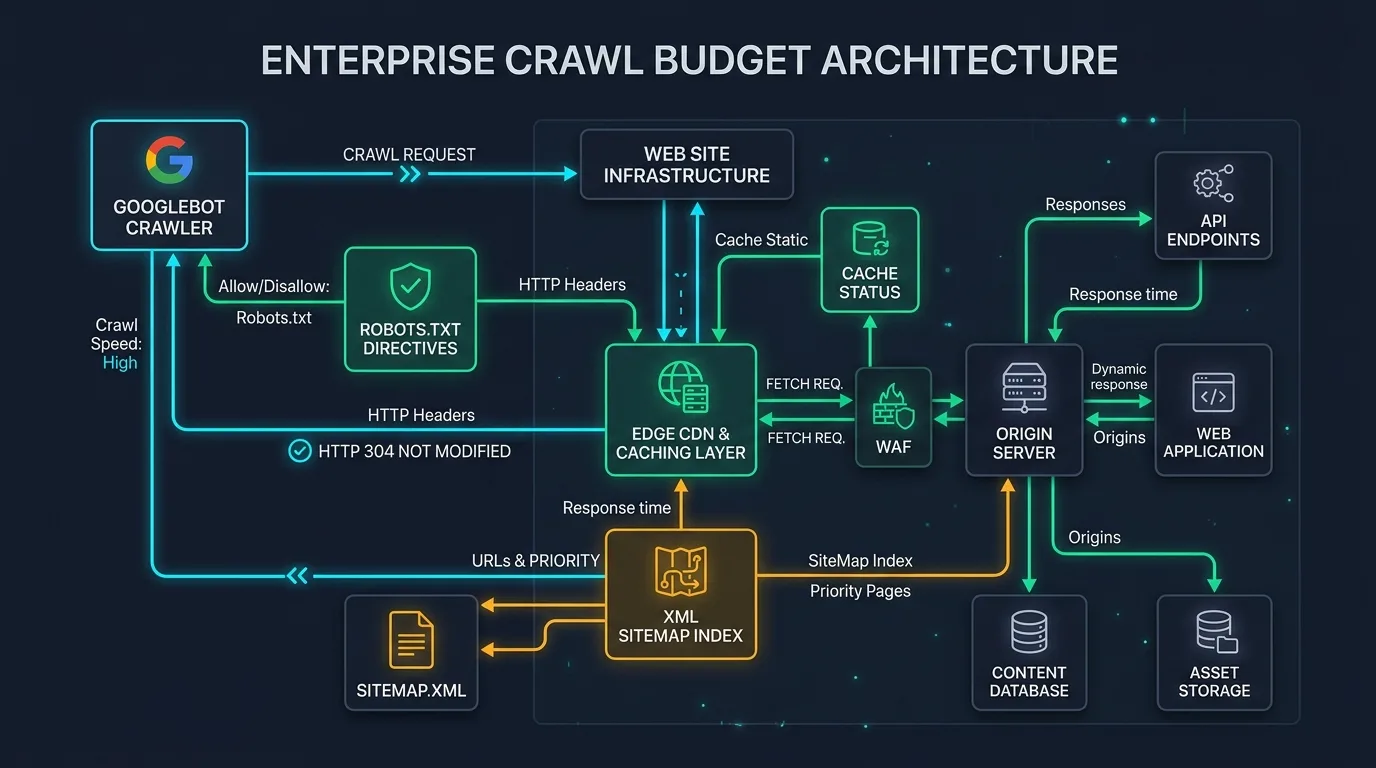
ISR allows webmasters to generate static pages at the edge while retaining the ability to revalidate and update individual pages in the background without rebuilding the entire website.
The Stale-While-Revalidate Lifecycle
ISR operates using the classic HTTP stale-while-revalidate caching primitive:
- Initial Request: User A requests
/products/running-shoes. The edge CDN serves the pre-rendered static HTML instantly with 25ms TTFB. - Revalidation Threshold: The page has a declared revalidation interval (e.g.,
revalidate: 3600seconds). Requests arriving within the 1-hour window continue receiving the cached static page. - Background Regeneration: The first request that arrives after the 1-hour window still receives the cached static page (ensuring zero latency penalty for the visitor). However, the edge server triggers an asynchronous background regeneration.
- Cache Invalidation: The background worker queries the latest database data, compiles the new HTML, and updates the edge CDN cache. All subsequent visitors and search engine crawlers immediately receive the updated document.
Furthermore, modern frameworks support On-Demand Revalidation via webhooks. When a product price updates in your headless CMS or ERP system, an automated API call (revalidatePath('/products/running-shoes')) purges the edge cache instantly, eliminating the need to wait for time-based revalidation windows.
For large e-commerce platforms handling millions of filtered product combinations, pairing ISR with smart canonicalization is critical. For deep tactical guidance, consult our operational analysis on faceted navigation SEO and crawl budget preservation.

5. The Two-Wave Indexing Dilemma: How Googlebot Parses JavaScript vs Pre-Rendered HTML
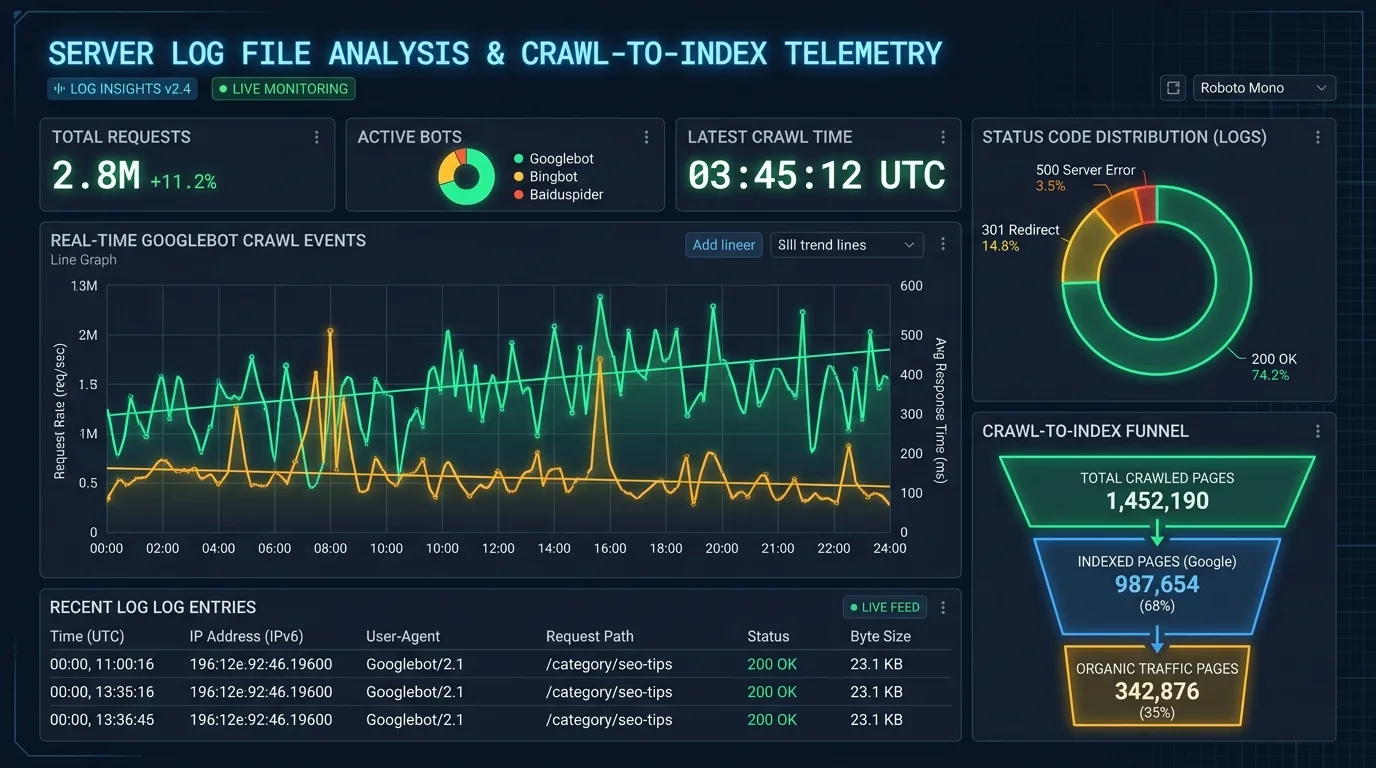
To fully appreciate why pre-rendered HTML (via SSG, SSR, or ISR) is mandatory for enterprise search, one must understand how Googlebot processes web documents. Google's search indexing pipeline operates across two distinct, asynchronous phases known as Two-Wave Indexing.
Wave 1: The Instantaneous HTML Crawl
When Googlebot fetches a URL, its primary crawler parses the initial raw server response. It immediately extracts all plain-text content, HTML headings, canonical tags, meta robots directives, and outgoing <a href> hyperlinks. If your site uses SSG, SSR, or ISR, your entire document is fully indexed during Wave 1. Keywords begin ranking within hours, and link equity flows immediately.
Wave 2: The Delayed Web Rendering Service (WRS)
If your page relies on client-side JavaScript rendering (CSR) to populate its content or internal links, Googlebot cannot index the page during Wave 1. Instead, the URL is relegated to the Web Rendering Service (WRS) queue. WRS utilizes a headless Chromium instance to execute JavaScript, download external bundles, and render the complete Document Object Model.
Because rendering JavaScript consumes enormous computational resources, Google strictly rate-limits WRS execution. Depending on Google's current global data center load and your domain's authority score, pages in the Wave 2 rendering queue can sit un-rendered for days, weeks, or even months. For fast-moving publications, e-commerce stores, and job boards, this latency destroys organic search profitability.
6. Web Performance & Core Web Vitals Comparison: TTFB, LCP, and INP Across Rendering Models
Google's Core Web Vitals algorithms evaluate the real-world user experience of your pages using Chrome User Experience Report (CrUX) data. The rendering architecture you deploy fundamentally dictates your Core Web Vitals profile.
| Core Web Vital Metric | Static Site Generation (SSG) | Server-Side Rendering (SSR) | Incremental Static Regeneration (ISR) | Client-Side Rendering (CSR) |
|---|---|---|---|---|
| Time to First Byte (TTFB) | Flawless (< 50ms) | Poor to Moderate (300–1,200ms) | Flawless (< 50ms) | Fast (Empty HTML shell) |
| Largest Contentful Paint (LCP) | Pristine (0.8s–1.5s) | Borderline (2.2s–3.5s) | Pristine (0.8s–1.6s) | Failing (3.5s–6.0s+) |
| Interaction to Next Paint (INP) | Good (< 150ms) | Good (< 180ms) | Good (< 150ms) | Severe Main Thread Hydration Lag |
| Cumulative Layout Shift (CLS) | Zero (0.00) | Zero (0.00) | Zero (0.00) | High (Components pop in late) |
For high-traffic platforms, optimizing server resources and monitoring raw crawler telemetry ensures that rendering architectures remain stable under heavy crawl loads. Consult our technical masterclass on crawl budget optimization at scale.

7. Framework Evaluation 2026: Next.js (App Router), Nuxt, Astro, and Remix
Modern frontend engineering offers multiple elite meta-frameworks, each optimized around distinct rendering paradigms. Choosing the right framework requires aligning your content volume with framework strengths:
| Framework | Primary Rendering Philosophy | Edge Runtime & Caching Capabilities | Partial Hydration / Islands Architecture | Best Enterprise SEO Fit |
|---|---|---|---|---|
| Next.js (App Router) | Hybrid RSC (React Server Components) by default | Native Vercel / Cloudflare Edge support; robust ISR & Tag Revalidation | Server Components emit zero client-side JS by default | Enterprise SaaS & Massive E-Commerce: Unmatched flexibility across SSG, SSR, and dynamic streaming. |
| Astro | Zero-JS Island Architecture by default | Blazing fast static builds; adapters for Node, Cloudflare, Netlify | Islands architecture hydrates only interactive UI widgets on scroll/click | Content-Heavy Portals & Editorial Hubs: Consistently achieves the highest Lighthouse performance scores on the web. |
| Nuxt (Vue.js) | Universal SSR / SSG with Nitro Engine | Nitro engine enables multi-cloud edge deployments and route rules caching | Client-only wrappers and component islands | Vue-Centric Enterprise Ecosystems: Outstanding developer experience with built-in SEO module meta management. |
| Remix / React Router v7 | Standards-first Web Fetch API & Streaming SSR | Aggressive HTTP Cache-Control headers; decoupled from proprietary clouds | Fine-grained progressive enhancement and nested layout data loaders | High-Dynamic Applications & Dashboards: Superior handling of dynamic data mutations and form submissions. |
8. Architectural Decision Framework: Matching Content Velocity and Catalog Size to Rendering Models
To eliminate ambiguity when architecting a new web platform or refactoring an existing enterprise monolith, deploy this deterministic decision tree:
- Catalog Size $\le 10,000$ URLs with Infrequent Updates (< 5 times daily):
$ ightarrow$ Deploy Pure Static Site Generation (SSG) with Astro or Next.js.
Rationale: Fast build times, zero server infrastructure maintenance, sub-40ms TTFB worldwide, and maximum Core Web Vitals rankings. - Catalog Size 10,000 to 5,000,000 URLs with Moderate Update Velocity:
$ ightarrow$ Deploy Incremental Static Regeneration (ISR) with On-Demand Revalidation.
Rationale: Pre-render top 1,000 revenue-generating category and product hubs at build time; generate long-tail product pages on-demand; revalidate via CMS webhooks. - High-Frequency Real-Time Content (Financial Tickers, Live Auctions, User-Generated Feeds):
$ ightarrow$ Deploy Streaming Server-Side Rendering (SSR) with Edge HTML Caching.
Rationale: Guarantees zero stale data while leveraging React Server Components to stream the initial HTML shell immediately to minimize perceived TTFB.
For comprehensive e-commerce implementations scaling across multi-category taxonomies, review our flagship blueprint on the ultimate e-commerce SEO playbook.

9. Case Study: Slashing TTFB by 78% and Doubling Organic Indexation via Static Edge Migration
To illustrate the tangible business impact of rendering migrations, examine the technical overhaul of a major B2B enterprise software marketplace with 180,000 product listing pages.
The Monolithic Bottleneck
The marketplace originally operated on a legacy, un-cached Server-Side Rendered (SSR) monolithic Node.js infrastructure hosted on AWS EC2. Each incoming request executed 7 separate PostgreSQL queries to assemble vendor profiles, customer ratings, pricing tiers, and related software categories.
The consequences were catastrophic:
- Average TTFB fluctuated between 1,150ms and 2,400ms under peak traffic.
- Average LCP exceeded 4.2 seconds, causing 94% of URLs to fail Core Web Vitals in Google Search Console.
- Googlebot crawled only 12,000 URLs per day due to server latency throttling, leaving 65% of the catalog unindexed in "Discovered - currently not indexed" status.
The Migration to Hybrid ISR on Cloudflare Edge
- Migrated the application to Next.js App Router using React Server Components.
- Implemented Incremental Static Regeneration (ISR) with a 24-hour background revalidation interval.
- Integrated headless CMS webhooks to trigger instant On-Demand Revalidation whenever vendor profiles were updated.
- Deployed globally across Cloudflare Workers edge network, caching fully rendered static HTML within 20ms of end-users worldwide.
The Performance and Commercial Results
- Global average TTFB plummeted from 1,400ms to 48ms (a 96.5% reduction).
- Average LCP improved from 4.2s to 1.1s, moving 100% of URLs into the "Good" Core Web Vitals bracket in GSC.
- Googlebot daily crawl volume exploded from 12,000 to 185,000 pages per day, fully indexing the entire 180,000-page catalog within 3 weeks.
- Organic search sessions increased by +118% within 90 days, generating a record surge in qualified vendor demo leads.
10. Frequently Asked Questions
Explore authoritative answers to essential engineering and SEO questions regarding SSR, SSG, ISR, and modern web rendering architectures.
Can Googlebot successfully crawl and index client-side rendered (CSR) React apps?
While Googlebot's Web Rendering Service (WRS) can technically execute JavaScript, relying on CSR is extraordinarily risky for SEO. CSR documents enter a delayed rendering queue that can postpone indexing by days or weeks. Furthermore, if your JavaScript bundle times out, exceeds computational budgets, or fails due to network glitches, Googlebot indexes an empty page, leading to zero organic rankings.
Is SSG always better for SEO than SSR?
From a pure speed and Core Web Vitals standpoint, yes—SSG delivers superior sub-50ms TTFB from edge CDNs. However, if your content changes continuously (such as live stock availability, fluctuating commodity prices, or personalized user recommendations), pure SSG is unviable due to build time constraints. For dynamic environments, ISR or streaming SSR is required.
How does Time to First Byte (TTFB) directly influence SEO rankings?
TTFB influences rankings in two ways: directly as a foundational prerequisite for Largest Contentful Paint (LCP) in Google's Core Web Vitals ranking factor, and indirectly through crawl budget. Fast server responses allow Googlebot to fetch vastly more pages per second without stressing host resources, accelerating the discovery and re-indexing of your entire site.
What is the difference between ISR and standard HTTP caching?
Standard HTTP caching (via Cache-Control headers) simply stores assets on an edge server until expiration. When expired, the next user request blocks while waiting for the origin server to generate new HTML. ISR implements stale-while-revalidate at the framework level: it serves the cached page immediately without blocking the user, while triggering an asynchronous background re-generation to update the edge cache seamlessly.
Does Incremental Static Regeneration work on self-hosted servers or only on Vercel?
While ISR was pioneered by Vercel, it is an open framework architecture. You can self-host Next.js ISR applications using custom Node.js servers, Docker containers, or community adapters for Cloudflare OpenNext and AWS Lambda/CloudFront.
What is Hydration in modern JavaScript frameworks and why does it harm INP?
Hydration is the process where client-side JavaScript attaches event listeners and boots up application state on top of pre-rendered HTML sent from the server. If a page downloads massive JavaScript bundles, the browser's main execution thread becomes blocked during hydration. If a user attempts to click a button while hydration is occurring, the page freezes, causing severe Interaction to Next Paint (INP) failures.
What is Astro's 'Islands Architecture' and why is it popular for SEO?
Astro's Islands Architecture pre-renders 100% of the page as pure, static HTML with zero client-side JavaScript by default. Interactive elements (such as an image carousel or search bar) are isolated into independent "islands" that load and hydrate JavaScript only when scrolled into view. This eliminates main-thread JavaScript bloat, ensuring perfect 100/100 Core Web Vitals scores.
How do search engines handle streaming SSR (HTML chunking)?
Googlebot fully supports HTTP chunked transfer encoding used in streaming SSR (such as React 18+ Suspense). Googlebot receives the initial HTML head and navigation shell immediately, keeping TTFB low, and waits for streamed chunks to finish before evaluating the complete DOM.
Can I use dynamic sitemaps with Static Site Generation?
Yes. In modern meta-frameworks, you can generate your XML sitemaps using dynamic Route Handlers or edge functions that query your database at request time, while keeping your actual content pages statically generated at build time.
What is Partial Prerendering (PPR)?
Partial Prerendering is an advanced hybrid rendering model available in modern Next.js. It allows a single web page to combine static and dynamic components simultaneously: the static layout and shell are served instantly from the edge CDN, while dynamic personalized holes (such as user shopping carts) are streamed in from the server in parallel.



Ratings & reviews
No reviews yet. Be the first.