

Most enterprise B2B blogs operate as digital cost centers rather than predictable revenue engines. Marketing teams produce encyclopedic, generic guides that attract vanity impressions but generate zero pipeline because they fail to engineer psychological friction, proprietary proof, and clear conversion paths. In 2026, ranking on Google is merely table stakes; surviving generative search summaries and converting sophisticated enterprise buyers requires a disciplined architectural framework: the Hook, the Problem Statement, the Solution, and the Irresistible Call-to-Action (CTA).

1. The Four-Stage B2B Content Architecture Framework
B2B enterprise buyers do not consume content leisurely. According to enterprise sales telemetry, decision-makers spend an average of 47 seconds evaluating whether an organic article contains unique, actionable insight or regurgitated generic definitions before hitting the back button. If your article fails to demonstrate immediate business value and empathy for their operational bottlenecks, your organic traffic evaporates without pipeline contribution.
A high-converting B2B post is structured like a legal brief or a clinical diagnosis. It guides the reader through four distinct psychological stages:
- The Hook (First 150 Words): Agitates a specific commercial pain point, presents counter-intuitive data or proprietary findings, and establishes why traditional solutions have failed.
- The Problem Statement (Deconstruction): Deeply explores the systemic root causes of the issue, quantifying the hidden business costs of inaction and validating the buyer's frustrations.
- The Solution (Prescriptive Blueprint): Outlines the exact methodology, technical protocols, and operational workflows needed to solve the problem, complete with real-world examples and verifiable frameworks.
- The Frictionless Conversion (CTA): Seamlessly bridges the conceptual solution to your software platform or consulting engagement through interactive tools, audit templates, or low-commitment pilot workflows.
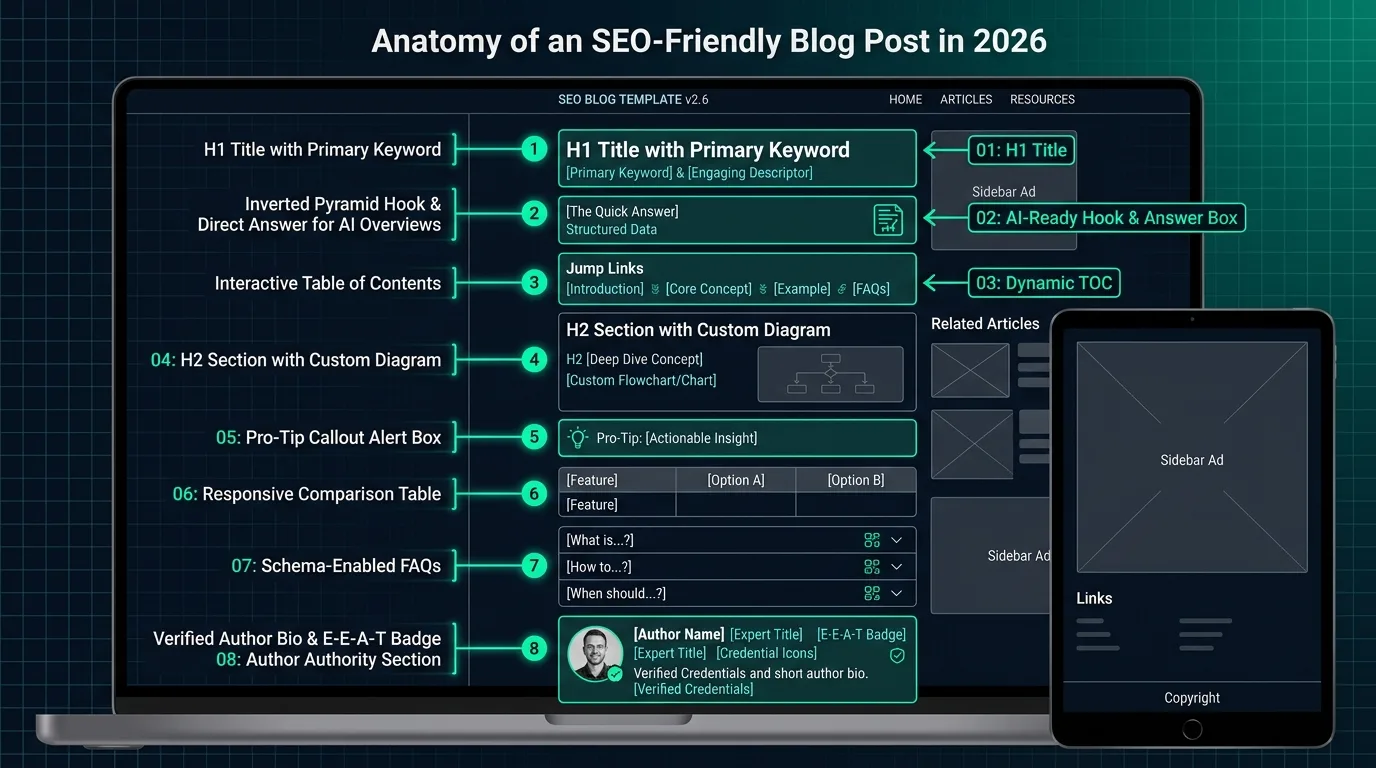
2. Engineering the Hook: The Anatomy of the First 150 Words
The majority of B2B content creators lose 70% of their readership in the opening paragraph by committing the fatal error of stating obvious platitudes: "In today's fast-paced digital world, search engine optimization is more important than ever." Such generic filler communicates to both the human executive and Google's Quality Raters that the author possesses zero firsthand practitioner experience.
The Disruption Hook Formula
An effective B2B hook disrupts complacency. To capture executive focus, you must deploy one of three proven opening mechanisms:
- The Contrarian Revelation: Challenge an established industry dogma with empirical proof. For example, explain why chasing traditional search volume destroys organic ROI, as detailed in our guide on modern keyword research methodology.
- The Financial Hemorrhage: Quantify the financial loss, engineering churn, or security risk that the reader is actively experiencing right now without realizing it.
- The Proprietary Benchmark: Lead with an original data point derived from internal telemetry, survey analysis, or enterprise platform benchmarks.
Notice how our introduction avoids dictionary definitions and dives straight into commercial realities: identifying B2B blogs as digital cost centers and establishing quantifiable reading thresholds. By setting this urgent tone, you condition the reader to treat your insights as mission-critical counsel.
3. Deconstructing the Problem: Validating Operational Pain
Before a prospect can trust your solution, they must believe you understand their problem better than they do themselves. In enterprise B2B sales cycles, multiple stakeholders—including CTOs, Heads of Growth, and Chief Financial Officers—must justify any purchasing decision. Your problem statement must equip your champion with the vocabulary, metrics, and internal business cases required to persuade internal skeptics.
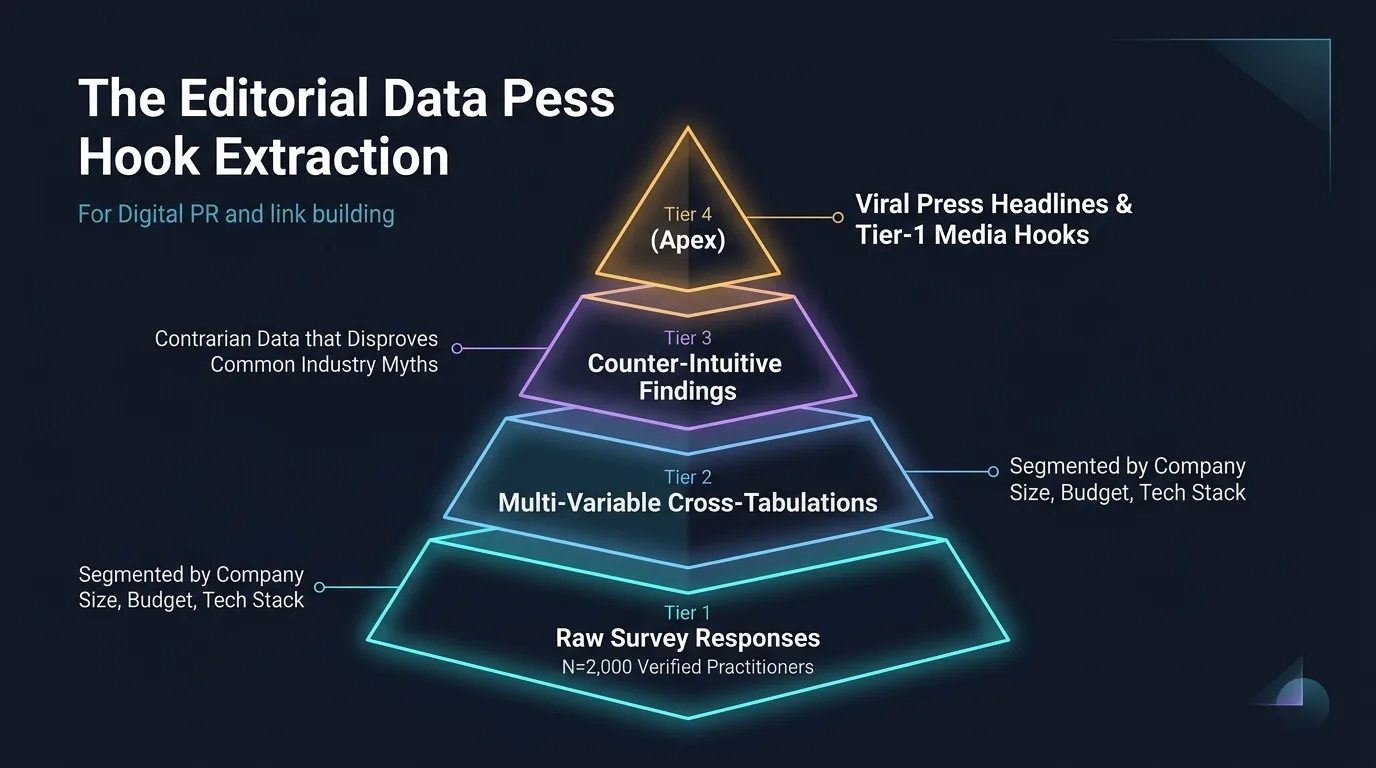
Quantifying the Inaction Tax
The greatest competitor in enterprise software is not another vendor; it is customer inertia—the decision to do nothing and endure the status quo. To overcome inertia, your problem deconstruction must calculate the "Inaction Tax."
Demonstrate what happens when an organization fails to optimize core infrastructure. For instance, in technical commerce environments, failing to monitor server response headers or managing inventory turnover leads to severe crawl budget waste, as explored in our deep-dive on technical HTTP status codes and redirection. Translating technical inefficiencies into lost gross merchandise value (GMV) creates boardroom urgency.
4. The Information Gain Pyramid: Delivering Prescriptive Solutions
In the era of automated AI overview extraction, content that merely aggregates widely accessible web information will be cannibalized directly in search results. Google's Information Gain Patents explicitly prioritize documents that provide novel vectors, fresh statistical evidence, or proprietary frameworks absent from existing SERP corpora. Learn how machine-learning search engines evaluate vector embeddings in our breakdown of how LLMs select sources and semantic cosine similarity.
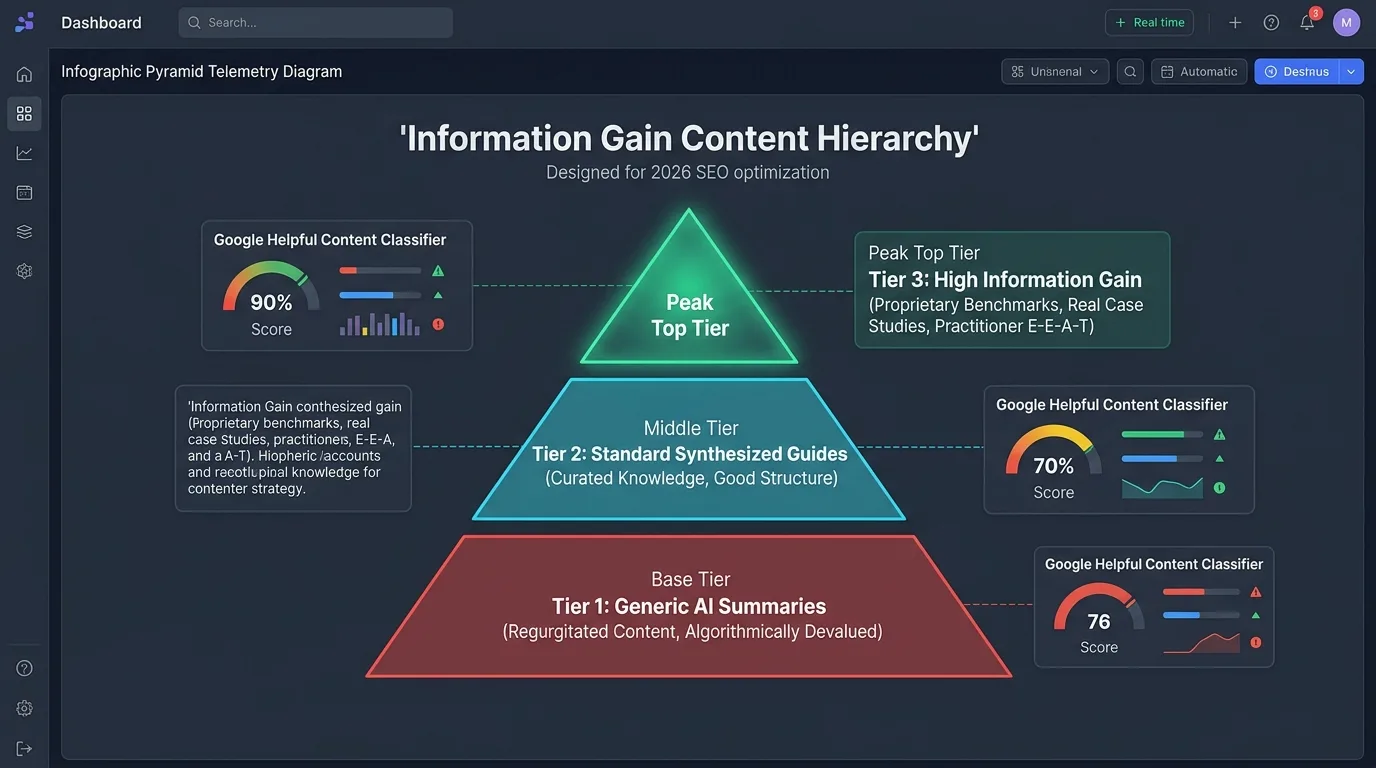
The Four Tiers of Content Value
Evaluate your article against the Information Gain Hierarchy to guarantee it resists generative AI displacement:
- Tier 1: Commodity Explanations (Zero Moat): Basic definitions and generic steps. LLMs synthesize these instantly; this layer carries zero conversion leverage.
- Tier 2: Synthesized Best Practices (Low Moat): Standard industry workflows collected from documentation. Helpful for novices, but rarely drives enterprise software trials.
- Tier 3: Practitioner Playbooks (Defensible Moat): Step-by-step tactical workflows, configuration scripts, SQL queries, and architectural schematics tested in production.
- Tier 4: Proprietary Empirical Telemetry (Unassailable Moat): First-party dataset analysis, benchmark reports, customer cohort case studies, and proprietary operational frameworks.

5. Content Architecture Comparison: Traditional vs High-Converting B2B
Review the fundamental operational differences between legacy content writing and modern revenue-driven content engineering in Table 1 below:
| Architectural Dimension | Traditional B2B Content Model | High-Converting Revenue Engine Model |
|---|---|---|
| Primary Objective | Organic search volume and raw impressions | Qualified pipeline, product trials, and qualified sales demos |
| Opening Hook Strategy | Generic definitions and industry platitudes | Contrarian insight, financial pain agitations, and empirical data |
| Information Density | Fluffy prose padded to hit arbitrary word counts | High-density code snippets, mathematical formulas, and flowcharts |
| Visual Asset Strategy | Stock photography and generic vector illustrations | Custom dark-mode technical architecture diagrams and telemetry charts |
| Internal Linking Topology | Random links in sidebars and generic footer lists | Contextual in-body anchors and rich visual post-embed cards |
| Conversion Mechanism (CTA) | Intrusive pop-ups and disconnected "Contact Sales" buttons | Frictionless audit templates, interactive calculators, and self-serve trials |
6. Designing High-Converting Contextual CTAs
The standard generic banner stating "Book a Demo Today" positioned at the bottom of an 3,000-word article suffers from abysmal 0.1% click-through rates. By the time an executive reaches the conclusion, banner blindness has set in. High-converting B2B content embeds value-aligned conversion triggers throughout the reading journey.
The Value-Ladder CTA Strategy
Align the commitment level of your calls-to-action with the reader's current degree of solution-readiness:
- Top of Funnel (Educational): Offer an un-gated spreadsheet, interactive ROI model, or downloadable technical checklist. Require zero form fields to build immediate goodwill and cookie the visitor for retargeting.
- Middle of Funnel (Comparative): Provide an automated diagnostic scan, CLI benchmarking tool, or sandbox environment where prospects can test your algorithms against their internal data.
- Bottom of Funnel (Commercial): Invite qualified leaders to a structured Technical Architecture Review or personalized proof-of-concept audit with senior engineering leads.
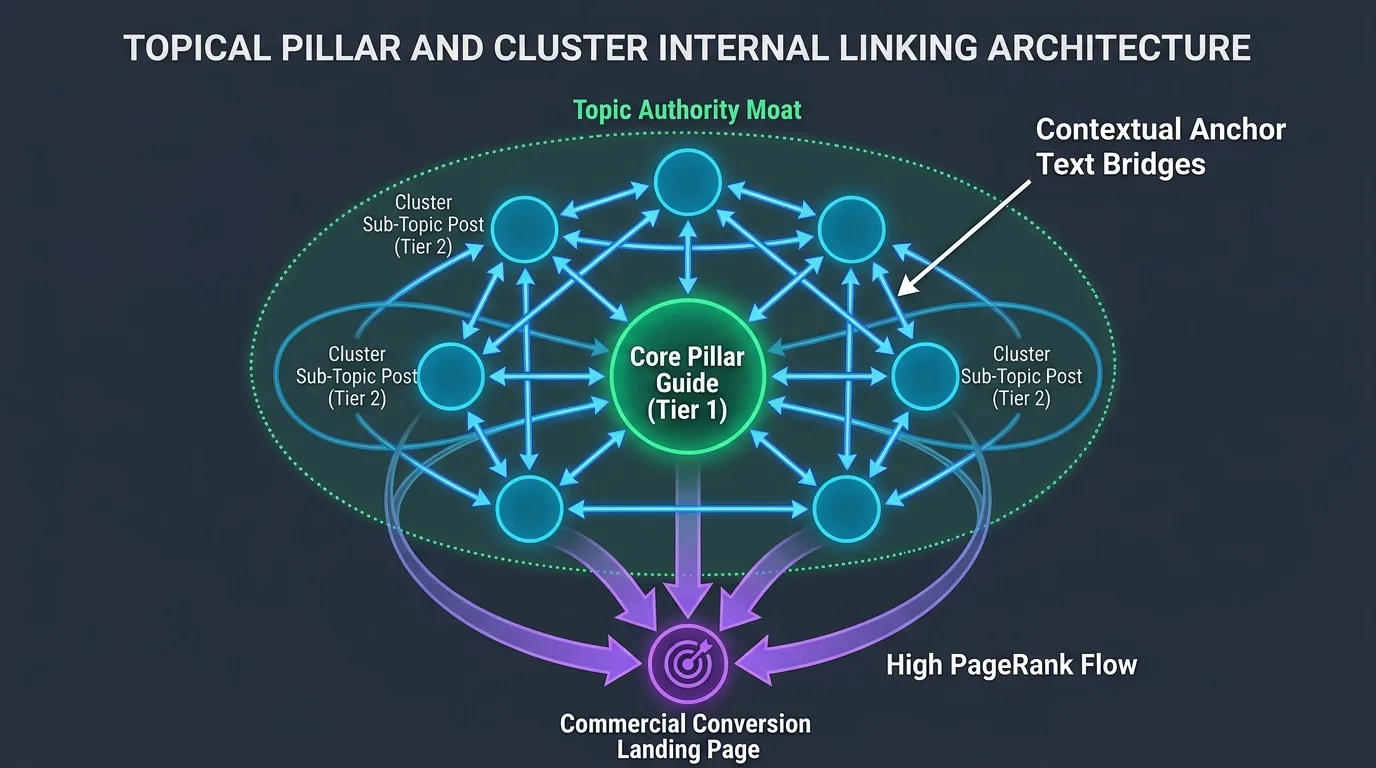
7. Topical Clusters and Conversion Link Pathways
A single high-converting blog post cannot perform in isolation. It must reside inside a structured semantic topic cluster. Search engines reward websites that establish comprehensive topical coverage by clustering related concepts around centralized pillar hubs.
Notice the relationship mapped in Figure 4: broad informational articles educate prospects on architectural paradigms, while contextual in-line anchors pass PageRank and qualified traffic downward into high-intent solution modules. By interlinking with precise semantic anchors—rather than lazy "click here" text—you reinforce search engine understanding of entity salience and shorten the buyer's conversion path.
8. Strategic Copywriting Frameworks Tailored for Technical Decision-Makers
Technical decision-makers—such as VP of Engineering, Chief Architects, and Principal SEO Directors—are intrinsically skeptical of hyperbolic marketing language. Emotional adjectives like "revolutionary," "game-changing," and "effortless" immediately trigger sales resistance. To establish credibility, your copy must adopt technical rigor, precise terminology, and falsifiable claims.
The PAS-T (Problem, Agitation, Solution, Telemetry) Framework
While consumer copywriters rely on traditional PAS (Problem, Agitate, Solution), enterprise B2B writers must append the fourth critical dimension: Telemetry.
- Problem: Define the technical failure mode with precision (e.g., "Distributed microservices generating cascading 504 gateway timeouts during flash sales.").
- Agitation: Demonstrate the downstream consequences on engineering on-call burden, customer churn, and SLA violation penalties.
- Solution: Introduce the architectural pattern that eliminates the root cause (e.g., asynchronous queuing, circuit-breaker patterns, or edge-based cache validation).
- Telemetry: Prove the efficacy using concrete system metrics (e.g., "Achieved 99.995% uptime and reduced P99 latency from 1,420ms to 84ms across 12 million daily requests.").
The "Before-After-Bridge" (BAB) for Software Architecture
When presenting your platform or methodology, utilize the BAB framework to contrast brittle legacy setups against resilient modern paradigms:
- Before: Manual spreadsheet tracking, disparate analytics silos, continuous crawl budget wastage, and unindexed faceted product URLs.
- After: Fully automated programmatic URL generation, sub-second edge response times, dynamic XML sitemaps, and automated schema graph validation.
- Bridge: The systematic adoption of our modular content engineering stack and internal linking orchestration.
9. Technical Performance Benchmarks for B2B Blog Pages
Conversion rates correlate directly with frontend rendering efficiency and mobile interactivity. The fastest content asset retains reader attention, whereas sluggish layouts trigger immediate bounces. Table 2 details the performance thresholds required for optimal B2B engagement:
| Web Vitals Metric | Target Threshold | Direct Impact on Reader Engagement | Remediation Protocol |
|---|---|---|---|
| Largest Contentful Paint (LCP) | < 1.2s | Reduces initial abandonment on mobile networks | Preload critical hero images and inline critical CSS paths |
| Interaction to Next Paint (INP) | < 150ms | Prevents input lag when clicking FAQ toggles and CTAs | De-prioritize heavy third-party tracking scripts via web workers |
| Cumulative Layout Shift (CLS) | 0.00 | Prevents reading jumps when embedded media loads | Reserve explicit width and height aspect-ratio boxes for all images |
| First Input Delay (FID) | < 50ms | Guarantees instant response to navigation clicks | Code-split JavaScript bundles and break long main-thread tasks |
| Time to First Byte (TTFB) | < 200ms | Ensures fast crawler discovery and indexing speed | Implement edge caching and server-side static page generation (SSG) |
10. Editorial Governance: The High-Converting Checklist
Before any B2B post is scheduled for publication, it must pass through rigorous technical and editorial quality gates:
- Verify the Lead Sentence: Does paragraph one state an unquestionable commercial reality, an agitating statistic, or a contrarian insight? If it begins with historical background, rewrite it immediately.
- Verify Custom Visual Evidence: Does the article feature at least four original, branded technical diagrams, data charts, or architecture workflows? Zero stock photography allowed.
- Inspect Internal Linking Hygiene: Ensure at least four contextual hyperlinks point to companion cluster articles using descriptive keyword anchors, supplemented by structured post-embed callouts.
- Test Interactive FAQ Accordions: Verify that collapsible questions render natively with valid HTML5 details elements and pass schema validation without blocking page rendering.
- Audit CTA Alignment: Does the article offer a low-friction asset that logically extends the tutorial rather than an abrupt, intrusive sales pitch?
11. Frequently Asked Questions (FAQ)
What is the optimal word count for an enterprise B2B blog post?
In competitive B2B software and technical services niches, top-ranking articles typically range between 2,800 and 4,000 words. However, length is a secondary consequence of exhaustive topical coverage rather than a standalone objective. Focus on maximizing Information Gain, embedding code snippets, and publishing original diagrams rather than fluffing prose.
How should the opening hook differ between B2B and B2C articles?
B2C hooks frequently appeal to individual lifestyle aspirations, entertainment, or immediate emotional gratification. In contrast, B2B hooks must appeal to professional accountability, risk mitigation, resource efficiency, and enterprise revenue growth. B2B readers evaluate content through the lens of corporate risk and career reputation.
Why are traditional "Book a Demo" pop-up banners so ineffective on blogs?
Pop-up banners interrupt the reader's cognitive flow while they are still in an informational discovery mindset. Asking an unvetted search visitor to commit 30 minutes of their day to an aggressive sales pitch creates extreme friction. Contextual, low-friction assets (such as checklists, open-source repos, or audit tools) generate significantly higher conversion rates.
How many internal links should be included in a 3,000-word B2B post?
A balanced 3,000-word technical post should incorporate between 5 and 8 highly relevant internal links. We recommend combining in-paragraph contextual hyperlinks with 2 to 3 rich visual post-embed cards that guide the user into logical companion guides within your topical cluster.
What role do original technical diagrams play in B2B conversion?
Custom technical diagrams serve as visual proof of practitioner expertise. They simplify complex architectures, increase page dwell time, earn high-authority editorial backlinks from third-party industry analysts, and prevent your content from being reduced to a generic AI summary.
How does Google's Information Gain patent affect B2B content strategy?
Google's Information Gain algorithms evaluate whether a document provides novel facts, unique statistics, or distinct perspectives beyond what existing search results already cover. Sites that publish derivative, regurgitated summaries are progressively demoted in favor of original research and first-hand practitioner telemetry.
Can an informational blog post directly generate qualified sales pipeline?
Yes. When an article clearly identifies the root cause of an expensive enterprise bottleneck and presents a proprietary methodology for resolving it, prospective buyers naturally conclude that the author's company is the most qualified partner to execute the solution, driving high-intent inbound inquiries.
What is the best way to format code snippets or technical examples in B2B posts?
Technical examples should be enclosed in clean pre and code blocks with syntax highlighting classes, accompanied by clear comments explaining parameter choices and production failure safeguards. Avoid posting unannotated or non-functional code fragments.
How frequently should established B2B blog posts be audited and updated?
High-priority pillar articles should undergo quarterly reviews to update outdated benchmarks, refresh screenshot examples, audit outbound references, and ensure all internal link targets point to the most relevant companion assets.
How do interactive FAQs improve both user engagement and search visibility?
Interactive HTML5 details and summary elements allow users to quickly scan answers to specific edge cases without cluttering the main reading flow. When paired with FAQPage schema, they signal structured clarity to search crawlers and improve eligibility for rich search snippets.



Ratings & reviews
No reviews yet. Be the first.