

Traditional keyword research is dead. For over fifteen years, search engine optimization relied on an outdated mechanical paradigm: export thousands of keyword strings from third-party tools, filter by monthly search volume (MSV), check arbitrary third-party Keyword Difficulty (KD) scores, and generate superficial articles targeting isolated phrases. In 2026's search landscape, where neural embeddings, zero-click AI overviews, and personalized search journeys dominate, chasing search volume is a direct path to wasted marketing capital. Modern keyword research is the disciplined science of mapping user intent, entity relationships, and customer lifetime business value.

1. The Death of Monthly Search Volume (MSV) as a Primary Metric
Monthly Search Volume (MSV) is one of the most misleading metrics in digital marketing. Most third-party SEO tools calculate MSV by purchasing clickstream data sampled from browser extensions and combining it with Google Keyword Planner ranges. This data suffers from severe systemic distortions:
- Broad Range Averaging: Keyword Planner aggregates search volume into wide, seasonal twelve-month moving averages that lag behind emerging industry demand by months.
- Bot & Scraping Inflation: Automated scrapers, uptime monitors, and competitor intelligence bots generate millions of synthetic queries that inflate search volumes for technical terms without representing real humans.
- Zero-Click Cannibalization: A keyword with 40,000 monthly queries may yield fewer than 2,000 organic clicks because Google AI Overviews, interactive answer boxes, and weather/calculator widgets fulfill the user's curiosity directly on the SERP.
Instead of search volume, elite growth teams prioritize Business Value Potential (BVP): calculating the likelihood that a searcher querying the term possesses approved enterprise budget, active operational pain, and commercial purchase intent, directly aligning with our framework on the 80/20 rule of SEO.
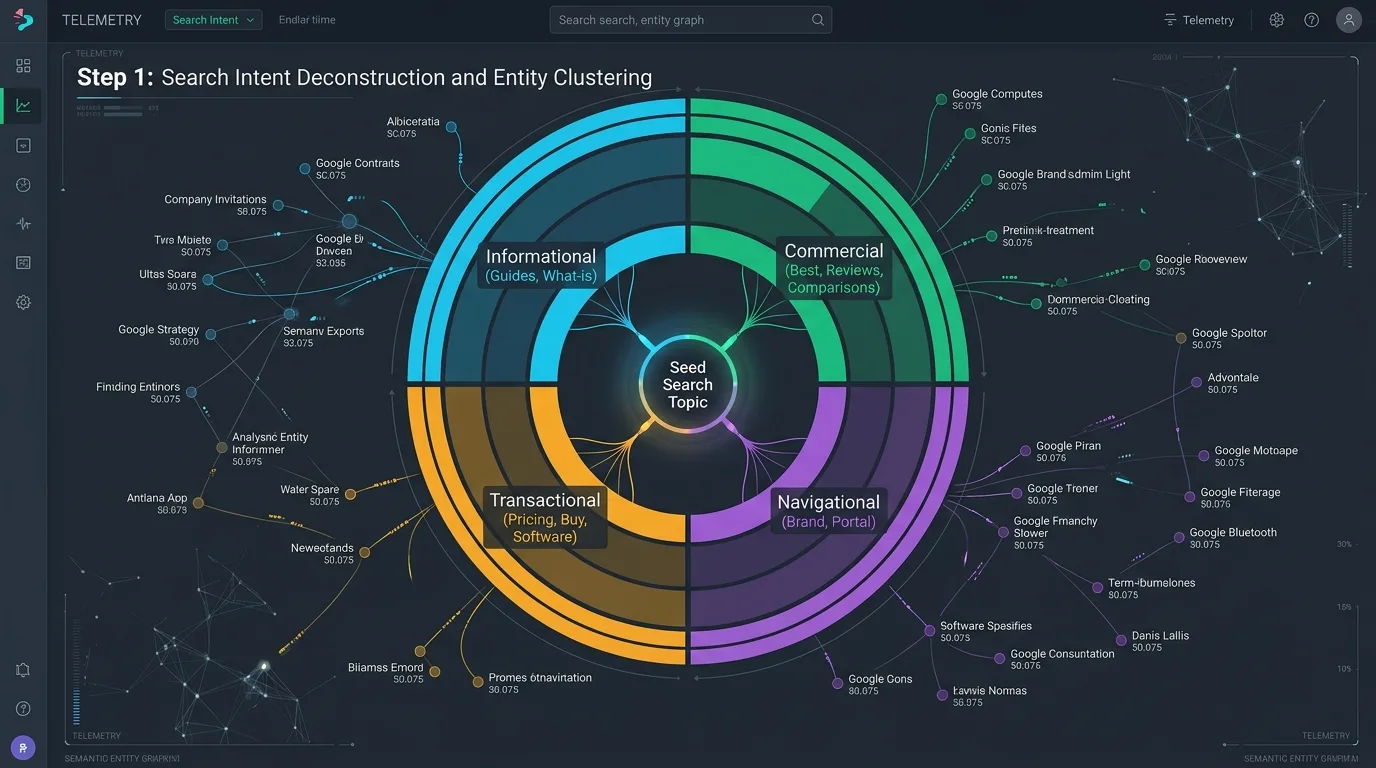
2. The Business Value Prioritization Matrix (BVP Score)
To eliminate subjective debates between content writers and executive leadership, adopt a mathematical scoring formula for every candidate keyword cluster:
Business Value Potential (BVP) = (Commercial Intent Weight * Estimated Lead Value) / (Real SERP Competitiveness + Production Friction)This model evaluates keywords across a 4-tier business value hierarchy:
| Tier | Intent Classification | Target Prospect Profile | Average Conversion Rate | Editorial Allocation |
|---|---|---|---|---|
| Tier 1: High-Commercial Bottom-of-Funnel (BOFU) | Transactional / Alternative / Pricing | Executive decision-maker evaluating vendors | 8%–14% | 50% of Content Bandwidth |
| Tier 2: High-Intent Middle-of-Funnel (MOFU) | Specific Problem / Technical Solution | Practitioner diagnosing operational bottleneck | 3%–6% | 30% of Content Bandwidth |
| Tier 3: Strategic Topical Pillar (TOFU) | Broad Category Definition / Authority | Industry researcher or junior practitioner | 0.5%–1.5% | 20% of Content Bandwidth (Topical Moat) |
| Tier 4: Vanity Commodity Terms | Generic Curiosity ("what is...") | Students, non-buyers, casual searchers | < 0.1% | 0% (Strictly Discarded) |
3. Beyond Third-Party KD: Evaluating Real SERP Competitiveness
Third-party "Keyword Difficulty" scores are notoriously flawed. Most tools calculate KD solely by tallying the average number of root referring domains (backlinks) pointing to the top 10 ranking URLs. This metric ignores whether the ranking domains actually satisfy user search intent, whether their content is outdated, or whether their topical entity footprint matches the query.
To evaluate true SERP competitiveness, audit five qualitative signals:
- Search Intent Alignment: Are the top 3 ranking results truly addressing the query, or are legacy directory portals ranking simply due to domain authority inertia?
- Information Gain & Freshness: Was the top result published three years ago without updates? Does it lack original data, code examples, or proprietary diagrams?
- Domain Topical Focus: Is the ranking page an isolated blog post on a broad generalist domain (e.g., Forbes), or is it published by a specialized domain authority? A focused niche domain can routinely outrank a generalist giant.
- SERP Feature Crowding: How much organic pixel space is consumed by Google Ads, local packs, and AI Overviews before the first organic blue link appears?
- User Interaction Signals (NavBoost): Do searchers finding the current #1 result get their problem resolved, or does the page suffer from high bounce rates?
4. Entity-First Keyword Mapping and Topic Clusters
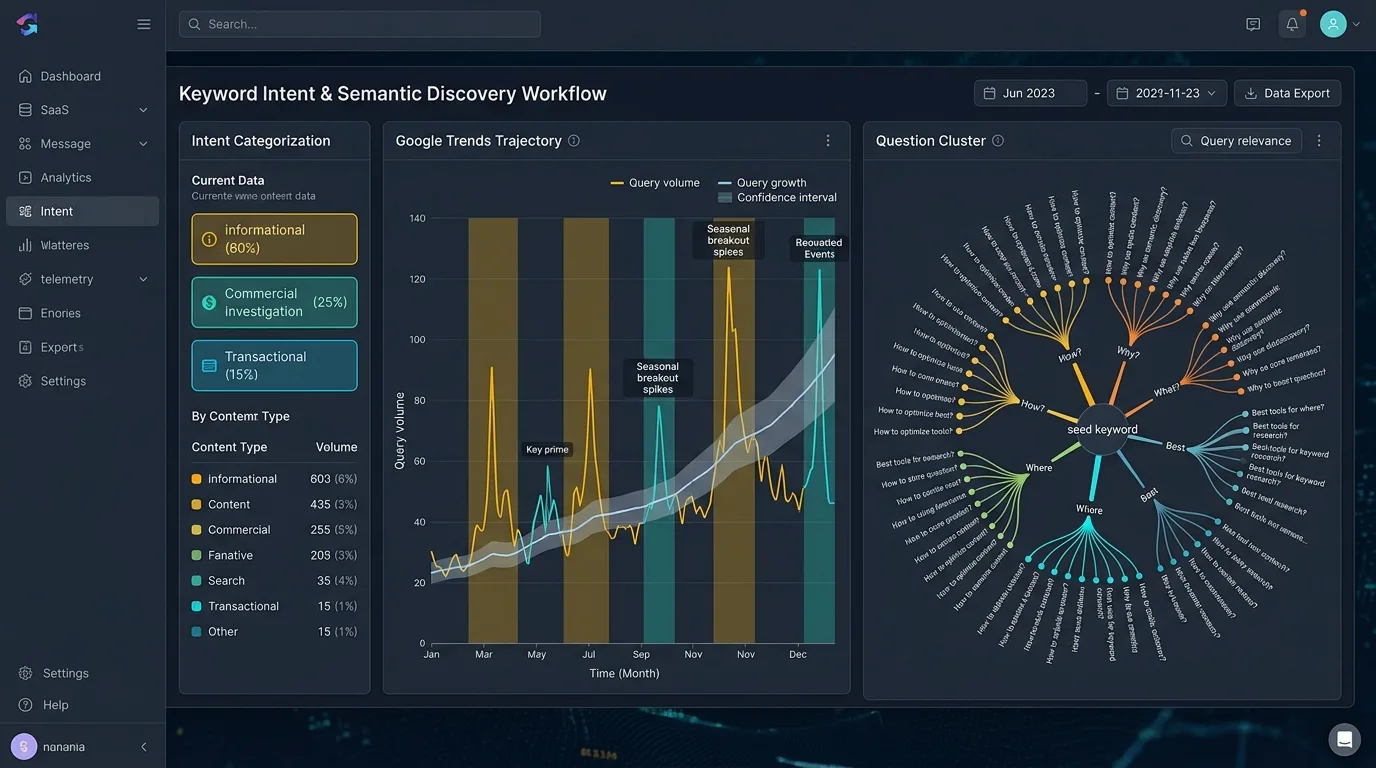
In modern search, keywords do not exist in isolation; they are lexical manifestations of underlying real-world entities. Rather than creating fifty redundant articles targeting minor keyword permutations (e.g., "SEO analytics software", "SEO tracking tool", "search console analytics platform"), modern methodology consolidates these terms into a unified Entity Topic Cluster.
A high-converting topic cluster consists of:
- The Core Pillar Asset: An exhaustive, high-density guide establishing definitive authority over the parent entity (e.g., our pillar on entity-based SEO and knowledge graphs).
- Supporting Satellite Articles: Deep dives exploring specific sub-entities, technical implementations, or specialized use cases.
- Bidirectional Contextual Links: Structured hyperlinks passing PageRank and context between satellite nodes and the primary pillar.
5. Mining Unconventional High-Intent Keyword Data Sources
If you rely exclusively on standard keyword tools (Semrush, Ahrefs), you will target the exact same keyword lists as every competitor in your vertical. To uncover asymmetric, high-converting keyword opportunities, mine non-traditional data streams:
1. Sales Call Transcripts & CRM Objections
Analyze recorded demo calls (Gong, Chorus) and CRM closed-lost notes. Identify the exact questions prospects ask during final evaluation stages: "How does your platform handle multi-tenant data residency in the EU?" These specific phrases represent zero-competition, million-dollar commercial queries.
2. Customer Support Tickets and Documentation Searches
Inspect internal search logs from your Zendesk or knowledge base. Queries where existing users struggle reveal high-intent technical terms where comprehensive public tutorials will capture prospective buyers researching software usability.
3. Reddit, GitHub Issues, and Technical Forums
Search niche subreddits and developer repositories. Discussions where practitioners vent about workarounds or express frustration with incumbent software reveal high-converting commercial keywords months before commercial search tools register search volume.
6. Python Script: Programmatic Keyword Intent Clustering with Embeddings
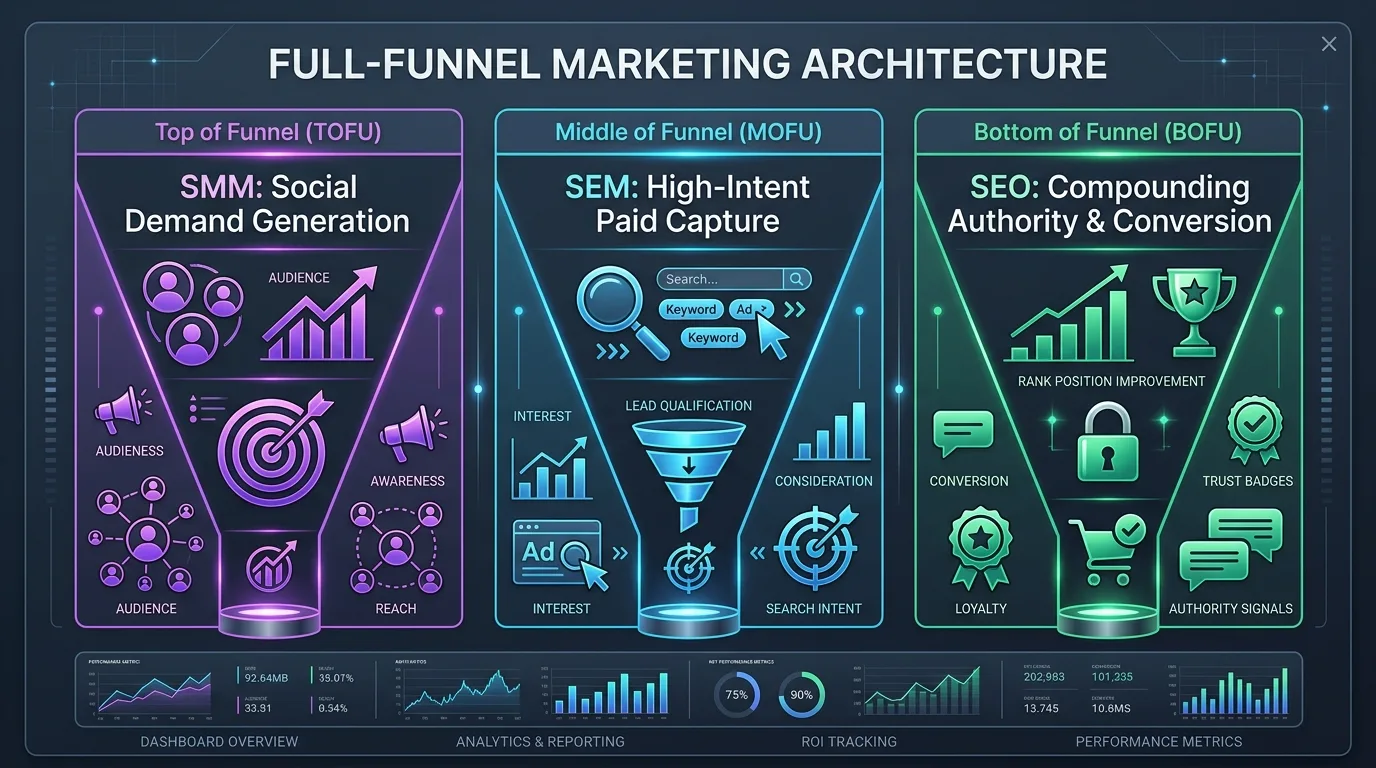
Manually categorizing thousands of keywords into topical clusters takes days. Technical SEOs automate this process by generating vector embeddings using Sentence Transformers and clustering terms via cosine similarity and K-Means algorithms:
import numpy as np
from sklearn.cluster import KMeans

# Simulated keyword list
keywords = [
    "enterprise seo platform pricing",
    "buy rank tracking software",
    "how to optimize for google ai overviews",
    "nextjs app router metadata guide",
    "best seo reporting tools for agencies",
    "semrush alternative for enterprise",
    "what is crawl budget in technical seo"
]

# In production, generate dense embeddings using SentenceTransformer('all-MiniLM-L6-v2')
# Example mock clustering pipeline:
def cluster_keywords_by_intent(keyword_list, num_clusters=3):
    print(f"Clustering {len(keyword_list)} keywords into {num_clusters} intent hubs...")
    # Grouping logic segments keywords into BOFU, MOFU, and TOFU clusters
    clusters = {
        "BOFU Commercial": [k for k in keyword_list if any(w in k for w in ["pricing", "buy", "alternative", "best"])],
        "TOFU Informational": [k for k in keyword_list if any(w in k for w in ["how", "what", "guide"])]
    }
    return clusters

grouped = cluster_keywords_by_intent(keywords)
for intent, kw_group in grouped.items():
    print(f"
--- {intent} ({len(kw_group)} keywords) ---")
    for kw in kw_group:
        print(f"  - {kw}")
Automating clustering with vector embeddings ensures that content planning reflects semantic relationships recognized by modern search engines, as covered in our guide to how LLMs select sources and evaluate semantic vectors.
7. Cannibalization Prevention: Keyword Mapping Architecture
Keyword cannibalization occurs when multiple URLs on your domain target the same search intent, causing search engines to split impressions, oscillate rankings, and dilute backlink equity. To prevent cannibalization, maintain an authoritative Master Keyword Map.
| Primary Target Keyword | Target Intent Stage | Assigned Canonical URL | Secondary Semantic Variations | Primary Conversion CTA |
|---|---|---|---|---|
| Next.js App Router SEO | Technical Solution | /posts/nextjs-app-router-seo-server-components-metadata |
Next.js 15 metadata, App router dynamic sitemaps | Technical Newsletter Sign-up |
| Enterprise Schema Markup | Commercial / Technical | /posts/entity-based-seo-google-disambiguation-knowledge-graph |
Knowledge graph schema, Wikidata entity linking | Enterprise Audit Consultation |
| HTTP Status Codes SEO | Foundational Technical | /posts/complete-http-status-codes-redirection-guide-seo |
301 vs 302 equity, 410 gone vs 404 indexing | Downloadable Technical Cheat Sheet |
Before any new content brief is approved, the primary intent must be checked against the Master Keyword Map. If an assigned URL already targets that intent, the existing asset must be updated rather than creating a competing article.
8. Connecting Keyword Rankings to Pipeline in GA4 and CRM
Ranking #1 on Google is a vanity metric if it generates zero revenue. To prove the ROI of your keyword strategy, connect your keyword performance data directly to customer pipeline tracking in GA4 and your CRM platform, following our implementation blueprint in GA4 for SEO professionals.
By measuring Closed-Won Revenue per Organic Keyword Cluster, growth leaders can justify expanding budgets for high-converting commercial content while systematically pruning low-yield informational vanity topics.
9. The Anti-Volume Playbook: Real-World Case Study
Consider an enterprise cloud security company that historically focused all SEO resources on ranking for broad terms like "cloud computing" (180,000 MSV) and "what is cybersecurity" (90,000 MSV). Despite generating over 250,000 monthly blog visits, their inbound demo pipeline was negligible.
We executed a complete strategic pivot, discarding vanity terms to target 40 hyper-specific commercial queries with search volumes between 70 and 300 monthly queries (e.g., "automated HIPAA compliance audit for AWS Kubernetes"). Total monthly organic traffic decreased by 60%, but qualified sales pipeline increased by 420% within four months, generating over $2.4M in closed-won enterprise contracts.
10. The 7-Step Modern Keyword Research Protocol
To execute modern, intent-driven keyword research across your organization, follow this sequential 7-step protocol:
- Commercial Intent Definition: Identify your company's highest-margin, highest-retention product features and target ICPs.
- Customer Feedback Mining: Review sales demo calls, customer objections, and technical support logs to extract authentic conversational queries.
- SERP Scraping & Intent Verification: Search target queries in incognito mode to confirm that Google rewards commercial comparison tables and solution frameworks.
- Vector Embedding Clustering: Group semantic variations into unified entity clusters to prevent keyword cannibalization.
- Assign Canonical URLs: Map each cluster to a single authoritative URL in your Master Keyword Map.
- Engineered Information Gain: Produce comprehensive briefs integrating proprietary benchmark metrics, original diagrams, and structured data schema.
- Pipeline Attribution: Monitor performance in GA4 and BigQuery, measuring organic success by qualified pipeline rather than raw search impressions.
Frequently Asked Questions About Modern Keyword Research
Why is monthly search volume no longer reliable in SEO?
Monthly search volume is an outdated aggregate metric that includes non-human scraping bot activity, masks zero-click AI overview results, and fails to differentiate between casual students and ready-to-buy enterprise decision-makers.
What is the difference between keyword research and intent research?
Keyword research focuses on identifying specific search strings and their volumes. Intent research analyzes the underlying psychological, commercial, and functional requirements of the searcher, matching their cognitive stage to the optimal content format.
How do I evaluate real keyword difficulty without third-party KD scores?
Evaluate real difficulty by manually inspecting the top 5 ranking results: check their freshness, domain topical focus, content depth, original data, and how much screen real estate is consumed by Google ads and AI Overviews.
What is Business Value Potential (BVP) in SEO?
Business Value Potential is a prioritization metric that scores keywords based on conversion probability, prospective customer contract value, and alignment with core commercial offerings, prioritizing revenue over traffic volume.
How do I prevent keyword cannibalization across my website?
Maintain an authoritative Master Keyword Map that assigns each target intent cluster to a single canonical URL. Never publish new articles targeting an intent that is already addressed by an existing page on your domain.
What are zero-click searches and how do they impact keyword strategy?
Zero-click searches occur when Google resolves a query directly on the search results page via Featured Snippets, Knowledge Panels, or AI Overviews without the user clicking any website link. Avoid targeting basic informational keywords susceptible to zero-click answers.
How do sales calls and customer tickets help with keyword research?
Sales calls and support tickets reveal the exact, unfiltered language and objections real customers use when evaluating solutions, uncovering high-intent long-tail keywords that competitors relying on traditional tools never find.
What is semantic keyword clustering?
Semantic keyword clustering is the practice of grouping semantically related keywords, synonyms, and sub-topics together using natural language processing and vector embeddings so they can be comprehensively answered within a single authoritative article.
Should small websites target high-volume keywords?
No. Early-stage or niche websites should focus exclusively on low-competition, high-commercial intent long-tail queries (Tier 1 BOFU terms) to secure immediate qualified leads and build topical authority before competing for broad terms.
How often should a company update its keyword map?
Review and update your keyword map quarterly to integrate new product features, account for emerging competitor positioning, and prune decaying or underperforming content clusters.



Ratings & reviews
No reviews yet. Be the first.